He was waiting for his son to return from the USS Lincoln. Then Border Patrol arrested him

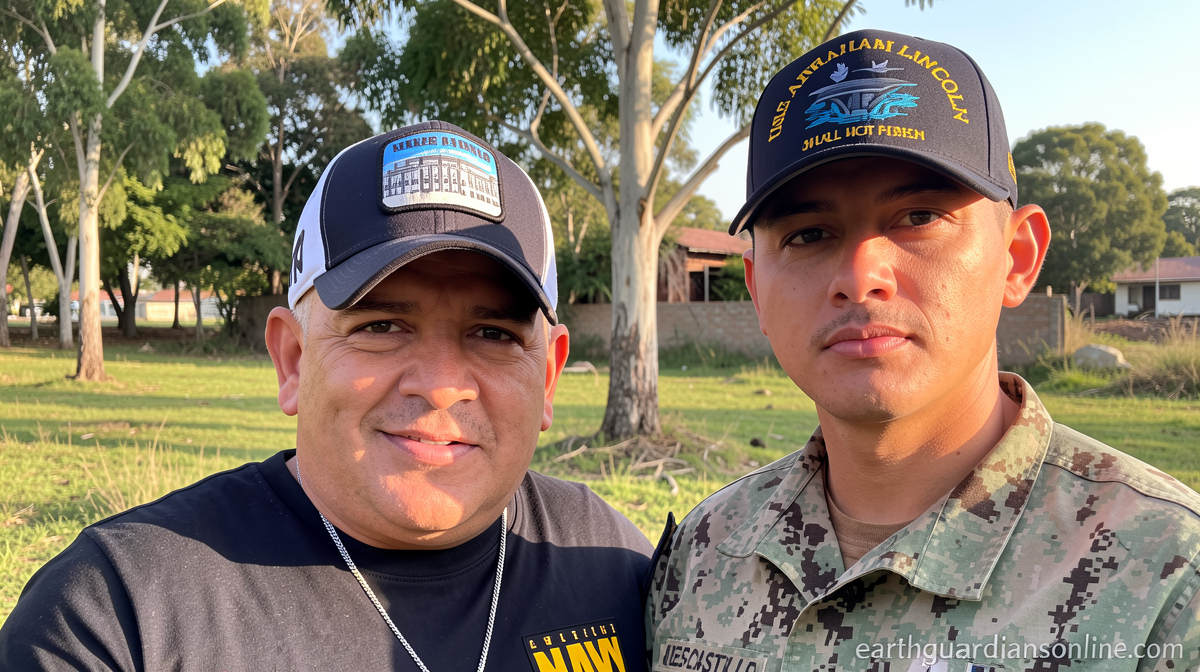
He Was Waiting for His Son. Then Border Patrol Came
Earthguardiansonline.com – He was waiting for his son to come home from the USS Abraham Lincoln, and instead he was taken into federal custody. Luis Manuel Aviles, a 48-year-old handyman in Key West, Florida, stepped out of his house one Saturday morning to drive his car to a local mechanic. He never came back. By the time his son — stationed aboard the Lincoln in the Middle East — got the phone call, the sailor had already logged more than 250 consecutive days of 12-hour shifts without a single day off, part of a deployment that shattered the U.S. military record for uninterrupted time at sea.
Aviles, a Nicaraguan-born resident who has lived in the United States for 19 years and holds a valid work permit, was picked up amid a broader wave of immigration enforcement aimed at families of active-duty troops. His wife, Argelia Aviles, 47, confirmed the circumstances and stressed that her husband has always maintained legal authorization to earn a living here.
“He dedicates himself only to work so he can put food on the table at home. He is a good father. He loves his children with all his soul,” Argelia said.
Military Families Under the Deportation Hammer
The arrest was not an isolated event. Under the current administration’s mass-deportation agenda, immigration protections previously extended to military families have been rolled back. An Associated Press accounting — the first systematic tally of such detentions, a category the government itself does not track — found that at least six family members of active-duty troops have been deported and one more self-deported. In one striking episode, a spouse who had spent over a month in federal immigration detention was pulled from a deportation flight bound for Brazil after the AP’s reporting drew public attention.
The Department of Homeland Security confirmed that Border Patrol agents took Luis Aviles into custody on Saturday in Key West and that he would remain in ICE detention while the government pursues deportation proceedings. The department’s language was pointed:
“Having a family member in the military is not a free pass to violate our nation’s laws,” the department said Sunday, adding that the administration “does not pick and choose which laws to enforce.”
He was waiting for his son to return from a record-breaking deployment, not to be processed in a detention facility. Yet that is exactly where he ended up, and the family now faces months of uncertainty while Joshua continues his watch aboard the Lincoln.
Military Parole-in-Place: A Benefit With Narrow Gates
Among the most widely publicized immigration advantages available to military households is “military parole-in-place,” a mechanism that permits spouses, children, and parents of active-duty service members and veterans to seek lawful status from within the United States rather than returning home to apply. The program, however, carries significant exclusions. Individuals who overstayed visas or who previously filed for status at a port of entry, for example, do not qualify. Whether Aviles fell within or outside those eligibility boundaries was not clarified in the department’s public statement.
The USS Lincoln: Record-Breaking Deployment and Its Human Cost
The Abraham Lincoln’s current mission has generated sustained concern across the defense community. The ship’s uninterrupted time at sea surpassed the previous U.S. military record, raising questions about food-supply adequacy, equipment wear, and the cumulative psychological toll on crew members isolated from shore for extended periods. Defense Secretary Pete Hegseth had earlier dismissed reports of hardship aboard the vessel, describing conditions as “completely misrepresented.” The Pentagon directed all inquiries to the Navy, which did not respond to an emailed request for comment by Sunday afternoon.
For Joshua Aviles, the deployment had already stretched beyond what his family anticipated. His sister, Katherine Delgado, 28, explained that Joshua enlisted partly because he believed military service would strengthen his father’s path to citizenship and spare him the constant anxiety of possible arrest.
“This is heartbreaking for me. I don’t know how I can mentally continue working 12+ hour days knowing that my dad is somewhere, possibly treated like a criminal,” Joshua Aviles wrote in a Facebook post on Saturday, describing how he learned of his father’s detention while still aboard the Lincoln, “fighting for a country that has given me everything.”
Katherine, whom Joshua calls his “best friend” and his “ride-or-die,” described the emotional toll of being separated from her brother for months at a time. After finally reaching him and learning that rations aboard the ship were insufficient, she began sending care packages loaded with food and hygiene supplies, spending hundreds of dollars in the process while also coordinating with immigration attorneys on the mainland to track her father’s case.
FAQ: What Families of Service Members Should Know
What is military parole-in-place, and who qualifies? It is an immigration mechanism allowing spouses, children, and parents of active-duty members or veterans to apply for lawful status from inside the United States. Key exclusions include prior visa overstay and prior applications filed at a port of entry. Eligibility is determined case by case by USCIS.
What happens after Border Patrol takes custody of a family member? The individual is typically transferred to ICE detention while deportation proceedings are initiated. Family members can contact ICE’s Office of Detention and Supervision to confirm location and request visitation. Retaining an immigration attorney early is advisable.
Does having a relative in the military automatically protect someone from deportation? No. As the DHS statement in this case made explicit, military affiliation does not exempt anyone from immigration enforcement. Protections that once shielded military families have been narrowed under current policy.
Where can families get practical help? The American Bar Association maintains a directory of immigration attorneys. The Department of Defense’s Family Readiness program offers guidance on benefits and legal resources for service-member households. Local legal-aid societies in places like Key West can also assist with initial consultations.