Evicted 87-year-old who became a symbol of Spain’s housing crisis has died

Daftar Isi
Maricarmen’s Death Deepens Spain’s Housing Crisis Debate
Earthguardiansonline.com – Maria del Carmen Abascal, an 87-year-old Madrid resident whose removal from her longtime home became a rallying point for housing activists across Spain, has died after spending weeks in hospital.
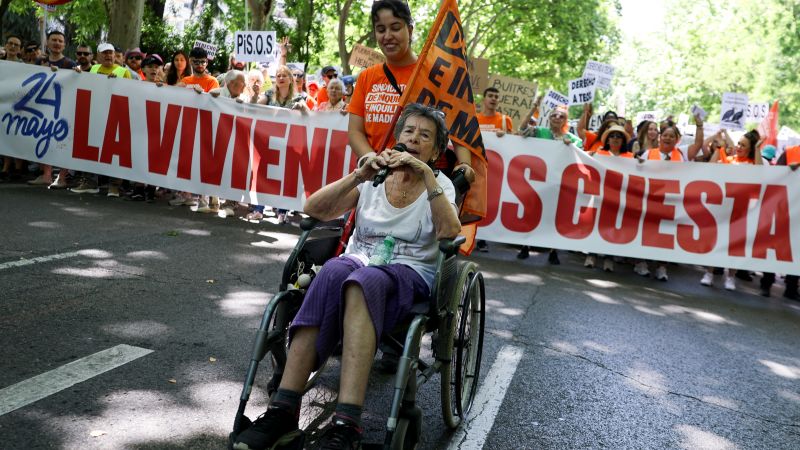
Known widely as Maricarmen, she had lived in her home for more than 70 years. Her case drew national attention in September when a large crowd gathered outside the building in Madrid’s affluent Retiro district in an attempt to stop the eviction.
Despite the demonstration, Maricarmen was taken from the property on a stretcher on September 23. The Madrid Tenants’ Union said she remained hospitalized from that day until her death.
“We regret to announce that Maricarmen has passed away today. As you all know, she was evicted on September 23, and has remained in hospital ever since,” the union said.
A rent increase beyond reach
The building’s private investment company owner had raised Maricarmen’s monthly rent from €500, roughly $560, to €2,650, or about $2,970. For a pensioner, the new amount was unaffordable.
Her eviction became a human face for a broader argument about the cost and availability of housing in Spain. The dispute prompted demonstrations around the country and led to a major tent encampment at Puerta del Sol, one of Madrid’s most recognizable public squares.
Hundreds of tents appeared at the site as protesters demanded action on housing affordability and protections for tenants. The Madrid Tenants’ Union, one of the groups involved in organizing the demonstrations, said around 950,000 people participated in protests nationwide over the weekend.
After public pressure intensified, the landlord agreed that Maricarmen could return to her home once she left hospital. But activists said the agreement was reached too late to change the outcome.
“Although a historic agreement was reached that would have allowed her to return to her home, this solution came too late,” the union said.
Tributes, mourning and renewed protests
News of Maricarmen’s death prompted grief as well as anger among people gathered in Madrid. Participants at the Puerta del Sol encampment lit candles, observed a minute of silence and then applauded.
Voices in the crowd repeated slogans including “Maricarmen lives, the fight continues” and “We are all Maricarmen.” Some protesters also shouted, “It’s not a death, it’s murder.”
A group later set off toward Spain’s parliament, where police barriers and a heavy security presence had been put in place. The housing demonstrations have generally remained peaceful, though there have been several confrontations between protesters and police.
In a video message from hospital last month, Maricarmen thanked those supporting her and urged them to continue defending their homes.
“Please fight,” she told supporters. “I send you all a very big hug and thank you for everything.”
Prime Minister Pedro Sánchez offered condolences to her relatives and friends, writing on X that the loss was felt by many beyond her immediate family.
“A hug also to all those who today feel this loss as our own. Rest in peace.”
Alberto Núñez Feijóo, leader of the conservative Popular Party, also expressed sympathy while calling for restraint in the political reaction to her death.
“No campaign, no parties, no self-interested exploitation. No more stones in the wall,” he wrote on X. “In the face of a person’s death, only respect is in order.”
Housing becomes a central election issue
Maricarmen’s case has unfolded during a period of growing political pressure over Spain’s housing shortage. The Bank of Spain has warned that the country lacks approximately 700,000 homes, a gap that has sharpened public concern about rents, supply and access to stable housing.
Last week, Sánchez’s government failed to win parliamentary approval for two housing measures. Days later, on Monday, the prime minister announced an early election for late November, seeking to regain momentum after the nationwide protests.
Sánchez has indicated that housing will be central to his appeal for public support in the campaign ahead. He argued that a stronger progressive parliamentary majority is needed to push through further social reforms.
“We need to renew people’s support,” Sánchez said. “We need to mobilize and win a much larger progressive majority in parliament, one that will allow us to overcome vested interests, deliver new social advances and continue transforming Spain.”
The Popular Party, which opposed the government’s proposed housing reforms, is leading opinion polls. Its position is that the crisis should be addressed primarily through construction of more homes rather than expanded regulation.
For many demonstrators, Maricarmen’s story has come to represent the personal stakes behind that political divide. Her death has not ended the debate over housing; instead, it has intensified attention on whether Spain can make rents more manageable and ensure that long-term residents are not forced from their communities when prices rise beyond their means.
Related Reading
Frequently Asked Questions
What is Evicted 87 year old who became?
Evicted 87 year old who became is the main topic of this guide. The article explains the context, practical details, and next steps readers should understand.
Why does Evicted 87 year old who became matter?
Evicted 87 year old who became matters because readers are looking for a useful answer, not just a short summary. Good content should match search intent and help them decide what to do next.