Her boss is in US prison. How the woman running Venezuela got Trump on her side

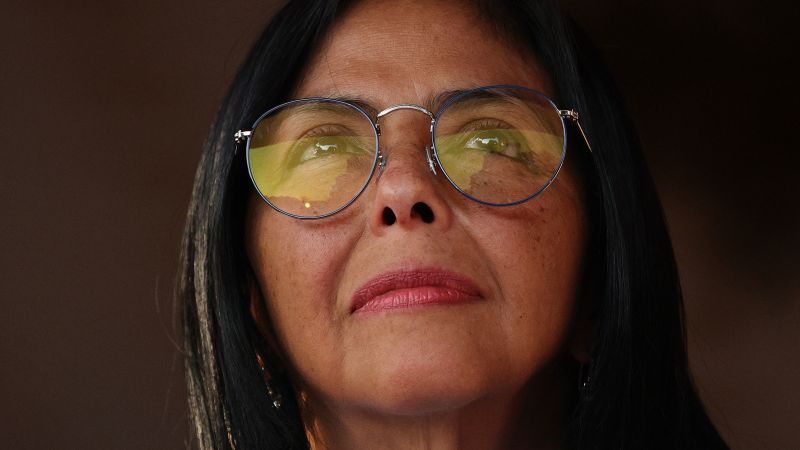
Her Boss in US Prison: How Venezuela’s Acting President Gained Trump’s Favor
The Interim Government’s Euphemism
Her boss is in US prison – Since the arrest of President Nicolás Maduro by US forces in early 2026, Venezuela has entered a period the interim government describes as a “new political moment.” This phrase, often used by officials to soften the impact of Maduro’s removal, underscores a significant shift in the nation’s leadership and foreign relations. The operation not only disrupted the Chavista regime’s grip but also initiated a major restructuring of the cabinet, alongside legislative changes that signal a more accommodating stance toward international investment.
A Strategic Flex in the Capital
A recent military exercise conducted at the US Embassy in Caracas highlighted this transformation. Three weeks ago, the display of US military presence in Venezuela’s capital, once unthinkable under Maduro, now serves as a testament to the Chavista government’s adaptive survival strategy. This move reflects the regime’s ability to recalibrate its approach in the face of external pressure, maintaining its core objectives while making pragmatic adjustments to secure continued support.
The Legacy of Chavismo
Venezuela’s acting president, Delcy Rodríguez, has inherited the mantle of a leader whose political ideology has shaped the country for decades. Under the leadership of Hugo Chávez, who first brought Chavismo to power in 1998, the nation embraced a model of centralized governance and socialist economic policies. Rodríguez, who has followed in her predecessors’ footsteps, continues to balance tactical concessions with the ultimate goal of preserving the political dominance of Chavismo. This strategy has allowed her to navigate the challenges of a weakened executive branch without fully relinquishing control.
While the anti-imperialist rhetoric that once dominated Venezuelan politics has waned, the fundamental structure of the regime remains largely intact. A concrete date for democratic presidential elections has yet to materialize, and the country’s repressive mechanisms, including its detention system, persist. Despite criticism from the United Nations International Fact-Finding Mission and ongoing investigations by the International Criminal Court, the government maintains that its actions are justified and not politically motivated.
US Influence and a Timid Political Opening
The political landscape has seen a cautious shift since Maduro’s capture. Opposition leaders, once sidelined, have gradually returned to public life, and some figures who had gone into hiding have emerged. However, this opening has not translated into meaningful reform. Over 400 political prisoners, as of May 25, remain incarcerated, according to data from the NGO Foro Penal. Their detention underscores the regime’s reliance on force to suppress dissent, even as it seeks to align itself with Washington’s interests.
Rodríguez’s relationship with the United States has become an unexpected alliance, especially given the historical tensions between the two nations. Seven days after Maduro’s arrest, she met with pro-government journalists to outline her strategy under US pressure. A leaked video of the session revealed her defining approach: “We must proceed with patience and prudence, with three very clear objectives, sisters and brothers. The first is to preserve the peace of the Republic, the second is to rescue our hostages, and the third is to preserve political power,” she declared in a blockquote.
“We must proceed with patience and prudence, with three very clear objectives, sisters and brothers. The first is to preserve the peace of the Republic, the second is to rescue our hostages, and the third is to preserve political power.”
Five months later, Rodríguez has successfully retained her position, with Washington’s backing. The US benefits from Venezuela’s oil supply, a critical resource amid its military campaign in the Middle East, which has intensified as November midterm elections approach. Despite the three-phase plan proposed by Secretary of State Marco Rubio, which prioritizes stabilization, recovery, and eventual democratic transition, there are few indications that a full shift toward democracy is a pressing concern for Rodríguez or the US administration.
Coordinated Operations and Enhanced Security Ties
The growing cooperation between Washington and Caracas was on full display this week as the two nations executed a joint operation targeting Tren de Aragua, a notorious Venezuelan gang designated as a Foreign Terrorist Organization by the US. In a statement, President Donald Trump claimed that Héctor Rusthenford Guerrero Flores, known as “Niño Guerrero,” was eliminated during a US military strike. “We must proceed with patience and prudence,” Trump reiterated, emphasizing the collaborative effort.
According to Trump, the operation was “coordinated closely with our friends in Venezuela, with whom we are working very well.” The Venezuelan government acknowledged the partnership, noting that intelligence sharing and technical support played a vital role. This level of security collaboration, once improbable under Maduro’s tenure, now symbolizes the new dynamic between the two nations. It also highlights the regime’s willingness to embrace US assistance, even as it maintains its ideological independence.
“Delcy Rodríguez is doing a fantastic job.”
Rodríguez’s alignment with Trump has been both strategic and symbolic. The US president has repeatedly praised her leadership, framing it as a testament to Venezuela’s resilience under foreign pressure. This endorsement comes as the country seeks to attract international investors and stabilize its economy, a goal that aligns with the goals of the US-led three-phase plan. However, the plan’s focus on economic recovery and gradual transition to democracy has not yet yielded tangible results.
Reforming the Law for US Interests
Recent legislative changes, including amendments to the Chávez-era Hydrocarbons Law, have further solidified this partnership. The original law had granted the state extensive control over oil production and increased royalties for the government. By revising it, the current administration has opened the door for greater participation by US and international companies in Venezuela’s energy sector. This move, while beneficial for foreign investors, has been met with skepticism by critics who argue it weakens the state’s economic sovereignty.
The joint operation targeting Tren de Aragua exemplifies the broader strategy of leveraging US military power to combat domestic threats. With Maduro behind bars, the regime has sought to distance itself from the former president’s legacy while capitalizing on the US’s global influence. The success of this operation, coupled with ongoing dialogue between Rodríguez and Trump, suggests that the Chavista government is adapting to its new reality without abandoning its long-term ambitions.
Despite the political maneuvering, the fundamental challenges facing Venezuela persist. The country remains trapped in a cycle of economic crisis and political repression, with its democratic institutions in disarray. While the interim government has made some concessions, the ultimate goal of maintaining Chavismo’s dominance remains unchanged. As the US continues its military campaign in the region, the question of whether this support will lead to genuine reform or merely consolidate power under new leadership remains unanswered.
Rodríguez’s ability to navigate this complex environment highlights the resilience of the Chavista movement. With Maduro’s imprisonment, the regime has shifted from a more confrontational posture to one of calculated diplomacy. Yet, the same repressive structures that once defined its rule remain in place, ensuring that the path to democracy remains uncertain. The US, in turn, has found a partner in Rodríguez that allows it to exert influence without fully committing to regime change—a balance that may serve both sides in the coming months.