He profits off raw milk that’s making people sick. The government isn’t stopping him.

He profits off raw milk that’s making people sick. The government isn’t stopping him.
ProPublica’s Investigation into Raw Milk Controversy
He profits off raw milk that – This article was first published by ProPublica, a nonprofit investigative journalism outlet dedicated to uncovering abuses of power. The piece explores the growing popularity of raw milk, a product associated with health risks, and its connection to a dairyman who has amassed significant wealth despite controversies. To stay informed, readers can sign up for ProPublica’s latest reports directly from their website.
A Morning Encounter with the Raw Milk Pioneer
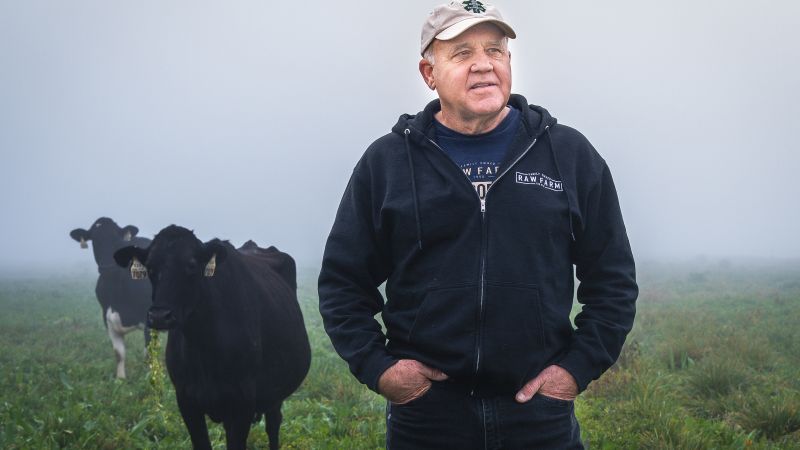
One misty February morning in California’s Central Valley, a white Ford pickup truck cut through the fog, its wheels crunching over a muddy path. From the cab stepped Mark McAfee, a 64-year-old dairyman whose presence was both imposing and warm. He greeted me with an enthusiastic embrace, insisting that he had known me “for a lifetime.” While I hesitated, noting my preference for reserved interactions, he welcomed me with open arms, embodying the spirit of a man who thrives on boldness. McAfee, the founder of Raw Farm, had previously shared his vision of raw milk’s benefits through emails and detailed presentations, framing it as a natural, health-boosting alternative to pasteurized milk.
Raw Milk: A Historical and Scientific Overview
Raw milk, as its name suggests, is unprocessed milk that has not been heated to eliminate harmful bacteria. Before the widespread adoption of pasteurization in the early 1900s, thousands of infants perished annually from illnesses tied to contaminated dairy. This practice, pioneered by Louis Pasteur, revolutionized food safety and drastically reduced the incidence of diseases like tuberculosis and diphtheria. Yet, despite this legacy, raw milk remains a contentious choice. Modern science generally agrees that pasteurized milk offers comparable nutrition and is far safer, with risks of foodborne illness exceeding those of its processed counterpart by more than 100 times. For McAfee, however, these findings are not definitive. He insists raw milk delivers unique health advantages, such as enhancing mood through its impact on serotonin and dopamine levels, and even treating asthma and saving lives.
The Rise of Raw Milk in the Mainstream
What began as a niche product has transformed into a mainstream trend, driven by a blend of political influence, wellness advocacy, and public skepticism toward institutional health standards. Sales of raw milk have surged by 65% nationally between 2023 and 2024, with over 10 million Americans now consuming it regularly. This shift reflects a broader cultural movement toward natural, unprocessed foods, often framed as a rebellion against industrial agriculture. McAfee’s Raw Farm, the nation’s largest raw-milk producer, generates around $30 million annually, fueling this growing demand. Yet, the product’s reputation is marred by recurring outbreaks of salmonella and E. coli, and even the detection of bird flu in its supply chain. These incidents raise critical questions about the safety of raw milk, particularly for vulnerable groups like children and the elderly.
McAfee’s Defiance and the Political Backing
McAfee’s success has not gone unchallenged. Federal and state regulators have linked his business to more than a dozen recalls and illnesses, including cases that required hospitalization. Despite these records, he has managed to avoid serious consequences, a feat that has drawn both admiration and scrutiny. In a sign of political alignment, the Biden administration initially aimed to tighten regulations on raw milk, but the transition to the Trump era brought a shift. The new administration entrusted leadership of health agencies to someone who had previously championed raw milk: Robert F. Kennedy Jr., a prominent figure in McAfee’s circle. Before his appointment as Secretary of Health and Human Services, Kennedy ran for president, criticizing the government for “aggressive suppression” of raw milk as a symbol of freedom. In the White House, he celebrated a federal report promoting health initiatives with raw-milk shots, reinforcing his support for the product.
A Farmer’s Passion and the Debate Over Safety
At Raw Farm, McAfee and his adult children manage the operation, which is located 20 miles southwest of Fresno. He describes the farm as a sanctuary of health, where meticulous screening of milk ensures its safety. “They think we’re some kind of a fringe, weird trend, and we are dead serious here,” he remarked during our meeting. This sentiment underscores his determination to challenge conventional wisdom. Yet, critics argue that even the most rigorous testing cannot fully eliminate risks. The presence of bird flu in Raw Farm’s milk, for instance, has sparked debate about whether the farm’s practices are sufficient to guarantee safety. McAfee, however, remains undeterred, framing his work as a necessary rebellion against what he calls an overregulated, profit-driven food system.
Why the Government Is Slow to Act
The government’s reluctance to curb raw milk sales has been a point of contention for health advocates. While scientific consensus highlights the dangers of unpasteurized milk, regulators have been hesitant to enforce stricter measures. This hesitation is often attributed to a combination of lobbying from dairy producers, public pressure from wellness communities, and a growing distrust of health institutions. McAfee’s case exemplifies this dynamic: despite two decades of legal battles with the FDA and Department of Justice, he has continued to operate with minimal oversight. His farm’s ability to navigate regulatory challenges while maintaining profitability has positioned him as a key player in the raw milk movement.
The Future of Raw Milk and Public Health
As raw milk gains traction, the debate over its safety intensifies. Advocates argue that the product is a natural alternative, while critics warn of the potential for severe illness. McAfee’s story is emblematic of a larger trend: the intersection of individual choice, scientific uncertainty, and political influence. His farm’s success raises questions about how far the government is willing to go to protect public health in the face of corporate and cultural resistance. Whether raw milk will continue to thrive as a symbol of freedom or be reclassified as a health hazard depends on the balance between consumer demand and the urgency of preventing illness. For now, McAfee remains a figure at the center of this contentious movement, selling not just milk, but a vision of health and defiance against the status quo.
“I’ve put a couple kids in the hospital, and they have been sick, but they recovered,” McAfee said before our visit. “But here’s the thing: I’m a pioneer. And I’m climbing a mountain they say you can’t climb.”
In a world where food safety and health are increasingly politicized, McAfee’s raw milk represents both a commercial opportunity and a public health dilemma. As more consumers embrace its benefits, the question of regulation looms larger. Can the government justify inaction in the face of documented health risks, or is raw milk’s growing popularity a testament to the power of consumer choice? The answer may shape the future of food safety in America for years to come.