How Russian ballistic missiles are exploiting holes in Ukraine’s air defenses

How Russian Ballistic Missiles Exploit Ukraine’s Air Defense Weaknesses
Earthguardiansonline.com – How Russian ballistic missiles are exploiting gaps in Ukraine’s air defense has become a defining feature of the ongoing conflict. The skies over Ukraine have grown increasingly dangerous as Moscow capitalizes on a critical vulnerability in Kyiv’s protective systems. While Ukrainian forces have successfully targeted Russian energy infrastructure—causing fuel shortages and disrupting commercial operations across the region—a more immediate threat has emerged. Ballistic missiles, arriving with minimal warning and overwhelming speed, now represent the primary concern for Ukrainian leadership and civilian populations.
The Interceptor Shortage Crisis
Ukraine’s air defense system, once considered robust, is operating with significantly reduced capacity. President Volodymyr Zelensky revealed to CNN that the nation now possesses two and a half times fewer interceptors than it maintained throughout 2025. Simultaneously, Russia has doubled its ballistic missile inventory, creating an asymmetrical threat environment that favors the attacker.
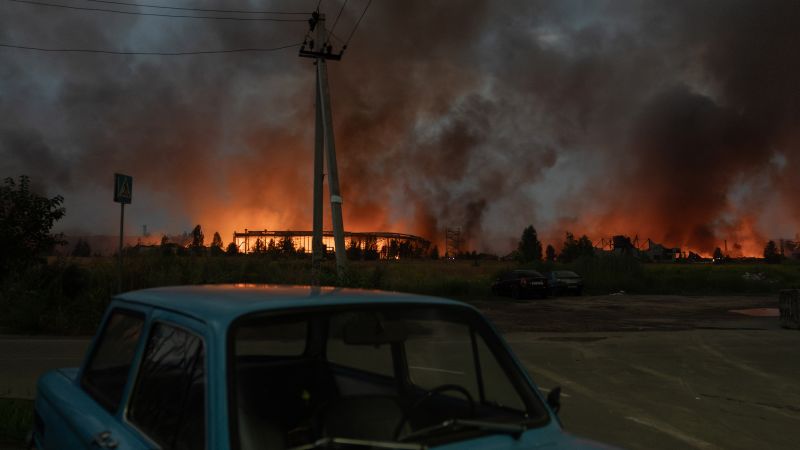
The urgency of this situation became starkly apparent during a single night last week when more than two dozen ballistic and anti-ship missiles descended upon the Kyiv region. Every projectile penetrated Ukrainian defenses, resulting in at least seventeen fatalities and dozens of additional injuries. This concentrated barrage exemplifies the growing danger facing Ukrainian urban centers.
On June 30, a particularly complex Russian offensive demonstrated the scale of the challenge. The Ukrainian Air Force documented an attack involving four anti-ship missiles, nine ballistic missiles, sixty-one cruise missiles, and approximately three hundred strike drones targeting facilities across multiple regions including Kyiv and Lviv. While all weapon types contributed to the damage, ballistic missiles have emerged as the most psychologically and strategically significant threat.
Historical Context and Technological Evolution
Ballistic missiles are not novel weapons in modern warfare. Nazi Germany introduced the V-2 rocket during World War II, marking the first large-scale use of ballistic projectiles against civilian targets. The Iran-Iraq conflict of the 1980s witnessed what historians termed the “war of the cities,” where Scud missiles—direct descendants of the V-2—caused widespread devastation to urban populations on both sides of the conflict.
However, the technology for intercepting these projectiles has evolved dramatically since the Cold War era. The Patriot system’s PAC-3 interceptor represents a significant advancement in defensive capability. Rather than relying on explosive warheads to destroy incoming threats, the PAC-3 employs kinetic energy, essentially achieving what military analysts describe as “a bullet hitting a bullet.” This precision approach minimizes collateral damage while maximizing interception success rates.
Zelensky’s Diplomatic Push
Ukraine’s leadership has intensified efforts to secure additional interceptors from international partners. In a recent public statement, President Zelensky emphasized the direct connection between interceptor availability and civilian survival.
Ballistic missile interceptors could have saved the lives of those killed today. It is very important that our partners understand that delays in supplying them, or an unwillingness to provide anti-ballistic systems, lead directly to such horrific casualties and destruction.
The President further noted that nations hesitant to deploy additional interceptor systems could still contribute through economic pressure. A significant portion of Russia’s ballistic missile manufacturing capacity remains outside existing sanctions frameworks, creating an opportunity for expanded diplomatic leverage.
Three Categories of Aerial Threat
The Russian assault on Ukraine operates across three primary dimensions, each presenting distinct challenges to Ukrainian defenders. Ballistic missiles follow high-arcing trajectories powered by rocket engines, reaching extreme velocities before descending toward their targets. The Russian Iskander system, for instance, achieves speeds exceeding six times the speed of sound during its terminal phase.
Cruise missiles operate differently, utilizing jet engines to maintain relatively low altitudes. The Kalibr, deployed from both surface vessels and submarines, typically cruises at approximately twenty meters above sea level or fifty meters above ground, making detection more difficult for traditional radar systems.
Drones represent the third category, with Russia mass-producing the Geran-2—a variant of Iran’s Shahed design. These platforms have undergone significant upgrades, including jet engine installations and decoy capabilities, enhancing their effectiveness against modern air defense networks.
Frequently Asked Questions
Why are ballistic missiles particularly difficult to intercept?
Ballistic missiles travel at extremely high speeds during their terminal descent phase, often exceeding Mach 6. Their high-arcing trajectory and rapid approach give Ukrainian air defense systems limited time to detect and engage them before impact.
How many interceptors does Ukraine currently have compared to 2025?
According to President Zelensky, Ukraine now possesses two and a half times fewer interceptors than it maintained throughout 2025, creating a significant gap in defensive capability.
What is the difference between ballistic and cruise missiles?
Ballistic missiles follow high-arcing trajectories powered by rocket engines and reach extreme velocities. Cruise missiles use jet engines to maintain lower altitudes and travel at more consistent speeds, making them harder to detect but generally slower than ballistic missiles.
How is Russia producing its ballistic missiles?
A significant portion of Russia’s ballistic missile manufacturing capacity remains outside existing sanctions frameworks, allowing Moscow to continue production and expansion of its missile inventory despite international restrictions.
For more detailed coverage of Ukraine’s air defense challenges, visit CNN’s comprehensive analysis of how Russian ballistic missiles are exploiting vulnerabilities in Ukraine’s protective systems.