
India’s youth are fuming. A Boston University graduate wants to fix that
India’s Youth Rising in Unison: A Satirical Movement Sparks Nationwide Protest
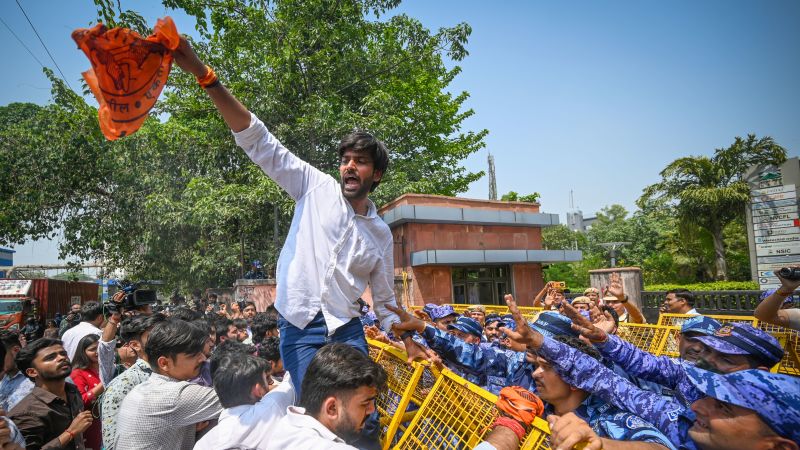
India s youth are fuming A Boston – India’s young population is at a crossroads. With growing discontent over exam irregularities, soaring unemployment, and the erosion of opportunities, a wave of frustration has transformed into visible unrest. From digital platforms to physical gatherings, the demand for systemic change is louder than ever. At the heart of this movement is Abhijeet Dipke, a 30-year-old Boston University graduate who has turned his personal outrage into a call to action, leading a protest targeting the nation’s education ministry.
From Online Frustration to Street-Level Activism
Dipke, founder of the viral satirical group Cockroach Janta Party, arrived in New Delhi last Saturday, ready to channel the pent-up anger of his generation into tangible protest. His group, which has gained significant traction on social media, now plans to rally at the iconic Jantar Mantar monument this weekend, demanding the resignation of Education Minister Dharmendra Pradhan. “My family is worried I might be detained at the airport,” Dipke shared in an Instagram post. “But how long can I fear jail? This country belongs to all of us, not just one party. Our future is at stake, and it’s being threatened daily.”
Security forces were present in force at the airport to monitor the situation. Despite the cautious approach, Dipke’s presence signals a shift from digital dissent to real-world confrontation. The movement, rooted in a blend of memes and sharp satire, has already drawn over 22 million followers in just one week, amplifying its voice beyond traditional media.
Exam Scandals and the Pressure of Perfection
The catalyst for this movement is India’s high-stakes university entrance exams, which are seen as gateways to success. For millions, these tests are not just assessments but life-defining events. However, the system has long been plagued by issues, from leaked papers to technical glitches, casting doubt on the fairness of outcomes. Students face relentless pressure, often from years before the exam itself, as families pour resources into their education, hoping for a secure future.
Veronica Madan, a 24-year-old who twice attempted the highly competitive medical school entrance exam, exemplifies this struggle. “The pressure starts long before the test,” she explained. “It’s the fear of letting myself down, of failing my family’s expectations.” Her journey, marked by repeated setbacks, led her to pursue a master’s in forensic science. “That rejection became my redirection,” she added, highlighting the emotional toll of a system that promises much but delivers little.
These exams are more than academic hurdles—they are societal expectations. The stakes are high, and the consequences of failure are felt deeply. For many, the dream of a prestigious college is overshadowed by the reality of financial strain and uncertain prospects. This disconnect has fueled the anger that now manifests in protests and online campaigns.
The Youth of India: A Demographic Powerhouse in Turmoil
India is the world’s most populous nation, with 1.4 billion people. Its young population, however, is even more striking: over 360 million individuals aged 15 to 29, according to a report by Azim Premji University in Bengaluru. This demographic, often described as better educated, tech-savvy, and increasingly connected, is reshaping India’s social landscape. Yet, their optimism is tempered by stark challenges. The transition from education to employment remains a persistent struggle, with nearly 40% of graduates under 25 unemployed and about 20% of 20- to 29-year-olds without jobs.
These figures underscore a growing concern: the promise of education as a path to opportunity is faltering. For many, the education system is not a launchpad but a proving ground, where the pressure to succeed is relentless. The anxiety surrounding exams, coupled with the fear of not meeting expectations, has created a perfect storm of dissatisfaction. This is where the Cockroach Janta Party finds its voice.
Chief Justice’s Remarks Ignite a Satirical Movement
The movement’s name is itself a response to a statement made by Chief Justice Surya Kant. His remarks, interpreted by many as labeling India’s unemployed youth as “cockroaches,” have become the rallying cry for this group. While the justice later clarified that he was referring to individuals using fake degrees, the metaphor struck a chord. The term “cockroach” symbolizes resilience and adaptability, but in this context, it highlights the feeling of being overlooked and discarded.
Dipke’s satirical approach has given this sentiment a platform. Through memes, AI-generated imagery, and sharp commentary, the Cockroach Janta Party has captured the attention of millions. Their virtual mascot, a cockroach, has become an emblem of defiance, appearing on social media, news outlets, and even in print. The movement’s rapid growth—exceeding 10 million Instagram followers—shows the urgency with which young Indians are seeking change.
As inflation rises and economic uncertainty deepens, the feeling of being ignored by those in power is intensifying. The Cockroach Janta Party is not just a critique of the system; it’s a demand for representation. “The youth are the ones driving the country’s progress,” said Amrita Singh, a follower of the movement. “We are the growth and development of this nation.” Her words reflect the belief that this generation is not only protesting but redefining what it means to be active in shaping the future.
A New Era of Youth Activism in India
While the movement has its roots in online discourse, its impact is now felt on the ground. The protest at Jantar Mantar is a symbolic step toward bringing attention to systemic failures. It represents a broader trend: young Indians are no longer content to voice their concerns in the digital realm. They are demanding action, accountability, and a reimagining of the structures that govern their lives.
As Dipke steps into the spotlight, his journey mirrors that of countless others. His decision to leave the comfort of academia and enter the political fray is a testament to the urgency of the moment. The Cockroach Janta Party, with its mix of humor and critique, is proving that social media can be a powerful tool for real-world change. Whether through a viral meme or a physical demonstration, the message is clear: the youth of India are not waiting for reform—they are driving it.
CNN has reached out to the Ministry of Education and the ruling Bharatiya Janata Party (BJP) for their perspective on the growing movement. As the protests gain momentum, the question remains: will the authorities respond with empathy, or will the youth’s fury continue to escalate? The answer may determine the trajectory of India’s future for generations to come.
