Inside an exclusive ‘man camp,’ where one woman is trying to save men from themselves

Inside an Exclusive ‘Man Camp,’ Where One Woman Is Trying to Save Men from Themselves
Inside an exclusive man camp where – Located in a secluded valley, the landscape speaks to the resilience of its people. Volcanic soil has long shaped the region’s history of endurance, adaptation, and rebirth. The vineyards here are delicate: harvested too soon, their fruit turns tart; left too long, it shrivels under the sun. Winemakers in the area know the balance is precarious, much like the men who now gather at a private estate in Sonoma, California, for a transformative experience. Three participants are striving for renewal, paying thousands for a week of emotional vulnerability, physical exertion, and introspection. Their journey mirrors the fragile vines, teetering between hardship and hope. By the end of their stay, they aim to emerge as renewed versions of themselves.
The Man Camp’s Vision
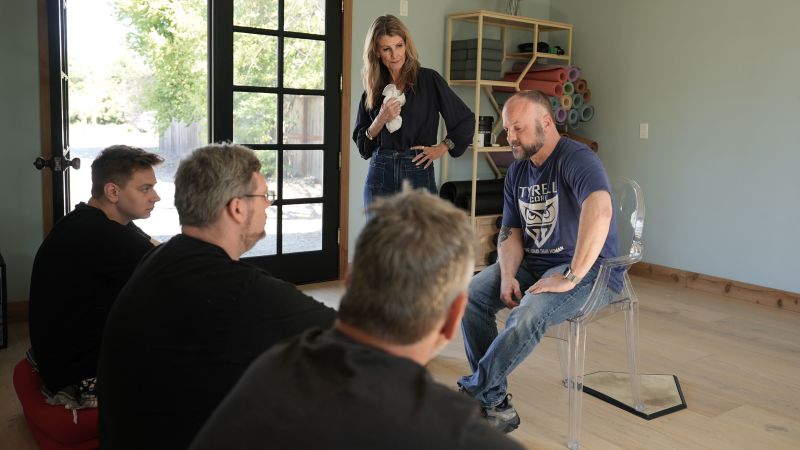
Lori Jean Glass, the founder of this retreat, has dedicated over a decade to reshaping men’s understanding of masculinity. Her program, branded as a “man camp,” invites men to explore their inner worlds through a blend of therapy, group activities, and experiential learning. Unlike traditional retreats, it is led by a predominantly female team of coaches, who guide participants through exercises designed to challenge rigid notions of strength. “This is a place where men can shed their armor,” Glass explains, her voice charged with enthusiasm. “It’s not about being tough—it’s about being real.”
“Men are struggling,” Glass tells CNN. “Some lack positive leaders. Others shut down too quickly.”
The retreat’s appeal has grown beyond its initial target audience. While many men initially joined at their spouses’ insistence, drawn by the idea of healing after the women’s programs Glass pioneered, recent demand has shifted. Now, more men arrive voluntarily, seeking solace in an era marked by isolation and shifting cultural norms. “They come because they feel disconnected,” Glass says. “They’re searching for a way to reconnect with themselves and others.”
The Manosphere’s Challenge
Yet Glass faces a formidable opponent: the manosphere, a hyper-online movement that redefines manhood as dominance, financial success, and emotional control. Figures like Andrew Tate, Adin Ross, and Myron Gaines have gained traction by advocating for toxic masculinity, casting vulnerability as a weakness. Their message resonates with millions, who see it as a path to power in a world that increasingly rewards assertiveness. For every five men who enter Glass’s camp, countless others are influenced by these leaders, who promote a lifestyle of wealth, fitness, and unshakable confidence.
Glass’s approach offers an alternative. Rather than equating manliness with aggression, her program emphasizes emotional intelligence and connection. Participants are encouraged to cry, embrace intimacy, and confront their insecurities. The retreat’s structure—morning yoga, one-on-one therapy, and group roleplay—aims to dismantle the barriers men often build around themselves. “We’re teaching them that strength isn’t about silence,” she says. “It’s about honesty.”
The Participants’ Stories
Among the attendees is Matt Sanders, a 61-year-old man grappling with the loss of his father. Jason Owens, 52, is mourning the death of his wife, while a third participant, whose name is not disclosed, seeks to navigate the complexities of modern fatherhood. Each carries a unique burden, yet they share a common thread: a desire to break free from societal expectations that have left them feeling unmoored. “It’s like a rebirth,” says one man, describing the emotional labor required to reframe his identity.
The program’s intensity is evident in its daily rhythm. Sessions blend mindfulness with deep psychological work, pushing participants to confront feelings they may have long suppressed. “It’s not just about talking—it’s about feeling,” says a coach, highlighting the retreat’s focus on embodied experiences. Art therapy and roleplay exercises are used to help men articulate their emotions, often in ways that feel revolutionary in a culture that prizes stoicism.
The Evidence of Struggle
Glass cites a wealth of data to support her mission. A recent Gallup survey revealed that one in four young American men reported feeling lonely the day before. The Survey Center on American Life, affiliated with the American Enterprise Institute, found that in 2021, one in six men claimed to have no close friends—a number five times higher than it was three decades prior. These figures underscore a growing crisis, one where emotional expression is often seen as a sign of weakness. “Men are suffering in silence,” Glass argues, “but they don’t have to stay that way.”
“American men are less likely than women to be diagnosed with depression, but four times more likely to die by suicide,” Glass notes. “The disparity is a warning.”
Her work has become a lifeline for many. Yet the manosphere’s influence looms large. As Glass’s camps gain attention, so too does her mission to counteract the movement’s rise. “They’re not just influencers—they’re storytellers who shape how men see themselves,” she says. “We’re trying to offer a different narrative.”
A Test of Commitment
CNN reporters Rob Picheta and David Culver joined the retreat to observe its impact firsthand. To gain access, they had to undergo the same “Pivot process” as the participants, immersing themselves in the program’s philosophy. The experience was both enlightening and grueling. Days began with yoga, followed by emotionally charged group exercises that left participants breathless and introspective. “It’s like a crash course in humility,” one reporter later reflected.
Despite the initial skepticism—many questioned whether the retreat’s Californian vibe and high cost justified its methods—the program revealed a deeper truth. The men were not soft or overly sensitive, but deeply human, navigating grief, self-doubt, and the pressure to be unbreakable. “They’re not just trying to be better men—they’re trying to be more whole,” one coach observed.
Glass’s vision extends beyond individual healing. She hopes to integrate her approach into American education, believing that boys should learn emotional resilience early. “If we can teach this in high schools, we might prevent the next generation from falling into the same traps,” she says. “It’s a fight, but I believe in it.”
As the sun sets over the vineyards, the participants gather to reflect on their journey. The camp’s secluded setting, with its imposing gates and serene ambiance, seems to echo their internal transformation. For Glass, this is not just a retreat—it’s a movement. One that challenges the hypermasculine ideals dominating the manosphere, offering a path to renewal where men can finally embrace their vulnerability without shame.