
Russia hammers Ukraine in biggest prolonged drone attack since war began
Russia Launches Largest Prolonged Drone Attack on Ukraine Since War Began
Russia hammers Ukraine in biggest prolonged – Overnight, a massive assault by Russian forces struck Kyiv, Ukraine’s capital, resulting in the deaths of at least 17 individuals and injuries to numerous others, as reported by Ukrainian officials. The strikes, which lasted for over 11 hours, targeted critical infrastructure and residential areas, marking a significant escalation in the conflict. President Volodymyr Zelensky noted that Russia had launched more than 1,560 drones since the start of Wednesday, making it the most extensive aerial barrage on Ukraine in a two-day span since the war began. Additionally, 56 missiles were deployed overnight, intensifying the bombardment.
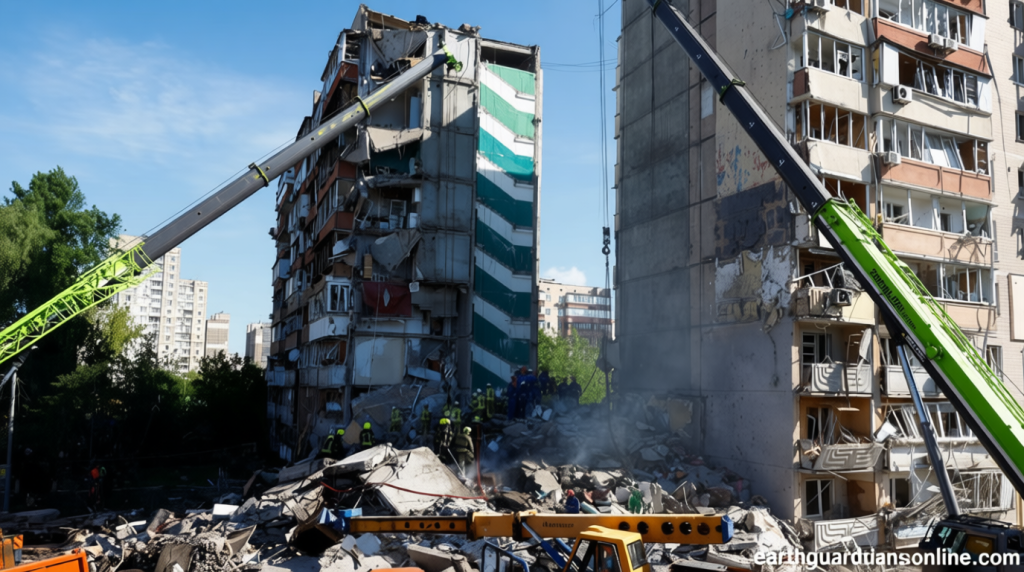
Zelensky highlighted the strategic intent behind the attack, stating that Russia had “stockpiled drones and missiles over a period of time and deliberately timed the strike to ensure its scale was significant and the challenges for our air defense were as great as possible.” The president emphasized that Ukraine is preparing a counteroffensive, though the immediate toll of the strikes has left the city reeling. Emergency services confirmed that at least 16 people were killed in an attack on a nine-story residential building, including a 12-year-old girl. Kyiv Mayor Vitali Klitschko added that a 15-year-old girl was also among the victims, underscoring the human cost of the assault.
Residents Describe Devastating Impact
According to CNN’s on-the-ground team, air raid alarms echoed throughout Kyiv on Wednesday and into the early hours of Thursday. Olena Suntovska, a 38-year-old mother of three, shared her harrowing experience during the attack. “I heard a powerful explosion. I rushed to the kitchen and saw people darting around the yard, shouting for assistance. Moments later, I exited the building and found the front entrance completely destroyed,” she told CNN. Suntovska expressed her fear, noting the stress of worrying about her children during the chaos.
“I was scared – it’s so stressful for me because I was worried about the kids,” Suntovska added.
Another resident, 76-year-old Polina, described the aftermath of the strike. “I never anticipated the extent of the damage. When I stepped outside, the sight was so shocking I couldn’t believe my eyes,” Polina said, using only her first name for identification. She recounted that her balcony window had been shattered, and the destruction around her apartment was beyond her expectations. “We don’t have a proper bomb shelter here. There’s only one in a nearby building, so we don’t go down (underground) anywhere,” Polina explained, highlighting the lack of preparedness in the city.
Major Damage to Infrastructure and Escalating Threats
The assault also disrupted energy and transportation networks, with significant damage reported in multiple regions. A power substation and a high-voltage power line were destroyed in Kyiv following a missile and drone strike, according to DTEK, a major energy company. In the Kharkiv region, a train locomotive was hit, causing injuries to several individuals. Ukrainian railways confirmed the incident, stating that the crew managed to evacuate before the damage became more severe.
Kharkiv faced its own wave of attacks on Thursday morning, leaving at least 28 people injured. In the Odesa region, two individuals sustained injuries, further spreading the impact of Russia’s campaign. The mayor of Kyiv, Vitali Klitschko, described the strike as “the enemy’s largest-scale attack on the capital” and announced that a day of mourning would be observed the following day. This declaration underscores the gravity of the situation and the deep emotional toll on the Ukrainian population.
Context and Strategic Implications
According to Zelensky, the two-day aerial barrage was meticulously planned to overwhelm Ukraine’s defenses. “The attack was timed to maximize its impact and challenge our air force to its limits,” he said. The sheer volume of drones and missiles suggests a coordinated effort to saturate Ukrainian airspace, creating a difficult environment for defensive systems. Analysts suggest that such attacks aim to weaken morale and divert resources from other fronts, though Ukraine has shown resilience in countering these threats.
While the Kyiv strikes were the most severe, other areas such as Poltava and Zaporizhzhia were also targeted. The damage to energy and railway infrastructure highlights the broader strategy of disrupting Ukraine’s ability to sustain its war effort. Residents in Kyiv remain in shock, with some still trapped under the rubble of the collapsed building. Emergency services reported over a dozen missing individuals, raising concerns about the long-term consequences of the attack.
The scale of the assault has drawn international attention, with reports of widespread destruction and civilian casualties. As Kyiv grapples with the aftermath, the government faces pressure to address the urgent needs of its people. Meanwhile, the ongoing barrage of drones and missiles serves as a stark reminder of the intensity of the conflict and the challenges Ukraine continues to face. Despite the devastation, Zelensky remains resolute, vowing to respond to Russia’s aggression with determination and strength.
Ongoing Efforts and Future Outlook
Efforts to rescue those trapped in the damaged building are underway, with teams working tirelessly to locate survivors. However, the scale of the destruction suggests that the operation may take days to fully assess. In the meantime, the Ukrainian military is reinforcing its defenses and preparing for potential follow-up strikes. Zelensky has also called for increased international support, emphasizing the need for resources to counter Russia’s relentless attacks.
As the conflict enters its second year, such large-scale drone assaults are becoming a hallmark of Russian military strategy. The use of hundreds of drones in a single operation demonstrates a shift in tactics, targeting not only military assets but also civilian infrastructure. This approach has proven effective in causing widespread disruption, though it has also drawn criticism for its impact on everyday life. With the war intensifying, the resilience of Ukraine’s citizens and military will be tested in the coming days, as the country strives to protect its people and maintain its position in the fight against Russian aggression.
