
First American pope marks July 4 on migrant island with plea for ‘compassion and generosity’
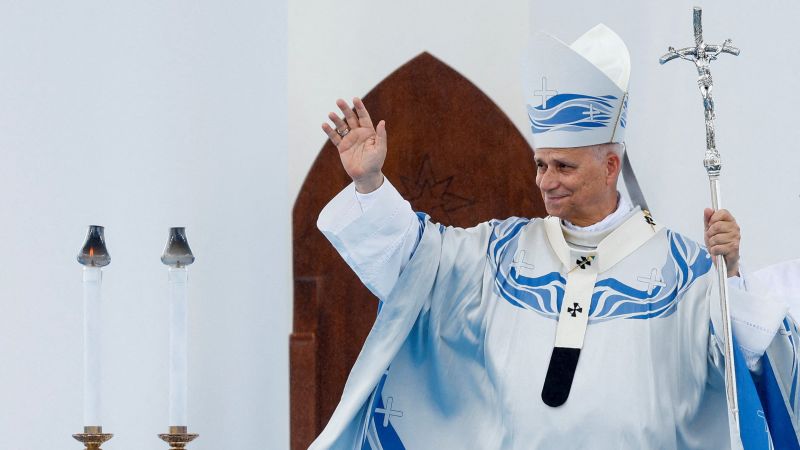
First American Pope Emphasizes Compassion Toward Migrants on July 4 Holiday
First American pope marks July 4 – On July 4, Pope Leo XIV commemorated the day by urging Americans to embrace immigrants with compassion and generosity, as he visited the frontlines of the Mediterranean migrant crisis. The pope’s arrival on the southern Italian island of Lampedusa, a key entry point for hundreds of thousands of mostly African migrants seeking refuge in Europe, marked a poignant moment for both the Church and the global community. His visit was accompanied by a heartfelt letter that underscored the deep connection between the United States’ history and the journey of immigrants.
A Message of Hope and Humanity
The first American pontiff began his journey on the island by addressing the memorial at the “Door to Europe,” a striking artwork that honors the thousands of lives lost or missing while attempting to cross the Mediterranean. Standing before the sculpture, he reflected on the enduring legacy of immigrants, who have shaped nations through their hopes, sacrifices, and contributions. “The United States was built on the foundation of those who sought freedom, opportunity, and a place to belong,” he wrote in the letter. “Their journey is not just a chapter in our nation’s history, but a mirror of the values we strive to uphold today.”
In his remarks, Pope Leo XIV highlighted the moral imperative of welcoming immigrants, framing it as an act of charity and a recognition of human dignity. “Protecting human life means welcoming, protecting, and assisting those who arrive on our shores,” he stated. “This is not merely a responsibility for governments, but a call to all of us to embody the spirit of compassion.” His words resonated deeply, especially as the island serves as a symbol of the challenges faced by migrants navigating the perilous sea routes.
Philadelphia’s Legacy of Welcome
Earlier in the week, the pope had already made a powerful statement in Philadelphia, where he accepted the Liberty Medal at a ceremony celebrating the nation’s heritage of openness. In his address, he recalled how successive waves of immigrants had played a pivotal role in building the country’s identity. “From the earliest settlers to the modern day, our nation’s strength has been fueled by the courage of those who dared to dream of a better life,” he said. “This tradition of hospitality remains a beacon for the world.”
The pope’s emphasis on welcoming immigrants was further reinforced during his visit to Lampedusa, where he met with migrants and visited the cemetery housing those who had perished in their journeys. Among the graves was that of Yusuf Ali Kanneh, a six-month-old infant who drowned in a boatwreck in 2020. His story, like many others, served as a stark reminder of the human cost of migration. “Every life lost at sea is a story that demands our attention and our action,” the pope noted, underscoring the urgency of his message.
A Personal Connection to the Island’s History
During his time on the island, Pope Leo XIV also blessed a dedication plaque honoring Pope Francis, who had visited Lampedusa in 2013 and drawn global attention to the plight of migrants. The plaque symbolized a continuity of care and advocacy, linking the two popes’ efforts to address the crisis. One of the migrants he met was a boy named Leo, who had arrived on the island a decade earlier after losing his mother in a tragic boat accident.
Leo, now a teenager, presented the pope with a letter and a ball, recounting how the toy had become a source of comfort during his darkest days. “I stopped crying the day they gave me this ball,” the letter read. “It stayed in my heart, and I never stopped playing.” The boy’s gesture was both touching and symbolic, representing the hope that migrants carry with them despite the hardships they endure. “I hope this ball can reach another child and make them happy just like it did me,” he added, highlighting the personal impact of such moments.
Pope Leo XIV’s visit also included a public event that drew a vibrant crowd of locals and visitors. The open-air Mass, held on the island’s shores, became a focal point of his mission to inspire collective action. Addressing the congregation, he called for gestures that would make the “world of today and tomorrow… more human.” His homily urged European leaders to develop comprehensive plans for integrating migrants, while also supporting developing countries to reduce the push factors driving people to leave their homes.
A Call to Action for Society and Institutions
“This task is not only for public institutions but also for civil society and the Church,” the pope declared, emphasizing the need for a unified effort. His message was clear: migration should be met with both practical solutions and a deep sense of empathy. “By ensuring that no one is forced to emigrate, we can create a more just and compassionate world,” he said. “But we must also be ready to welcome those who choose to come.”
The pope’s focus on compassion extended to his reflection on the United States’ 250th anniversary of independence. “The nation’s history is a testament to the power of resilience and renewal,” he wrote. “Immigrants have been at the heart of this story, bringing with them the courage to forge new paths.” His appeal to Americans was not just about policy but about rekindling the values that have long defined the country’s spirit of inclusivity.
As the sun set over the Mediterranean, the pope’s visit to Lampedusa left an indelible mark on those who witnessed it. The island, often referred to as the “Door to Europe,” had become a stage for a message that transcended borders. “The stories of those who arrive on our shores are the stories of our shared humanity,” he said. “They remind us that every person, regardless of origin, deserves a chance to build a future.”
Two prominent figures in the U.S. Catholic Church told CNN that the pope’s decision to commemorate July 4 on the island was a deliberate move to connect the American narrative of freedom with the global reality of migration. “This visit sends a powerful signal to the United States about the importance of immigration policy,” one of them noted. “It’s a reminder that our values must be lived, not just celebrated.”
Leo XIV’s journey through Lampedusa, from the cemetery to the Mass, was a testament to his belief that compassion and generosity are not abstract ideals but actionable commitments. “The Church has a role to play in this,” he said, “but so do every citizen and every community. Together, we can turn the tide of despair into the promise of hope.”
As the event concluded, the pope’s words lingered in the minds of those who had gathered. His visit served as both a tribute to the past and a blueprint for the future, urging a renewed dedication to the principles that have long guided the United States. “Let us not forget the lessons of history,” he said, “and let us build a world where every person can find a home.”
With the Mediterranean still a critical artery for migration, Pope Leo XIV’s message resonated far beyond the island. His appeal to Americans to embrace immigrants with open hearts and hands was a reminder that the journey of migration is as much about the destination as it is about the path taken to get there. “In every generation, the arrival of new arrivals has redefined the nation’s character,” he wrote. “Today, that character must be rooted in kindness and solidarity.”
