
Inside the epicenter of the Ebola outbreak in DRC as the virus spreads
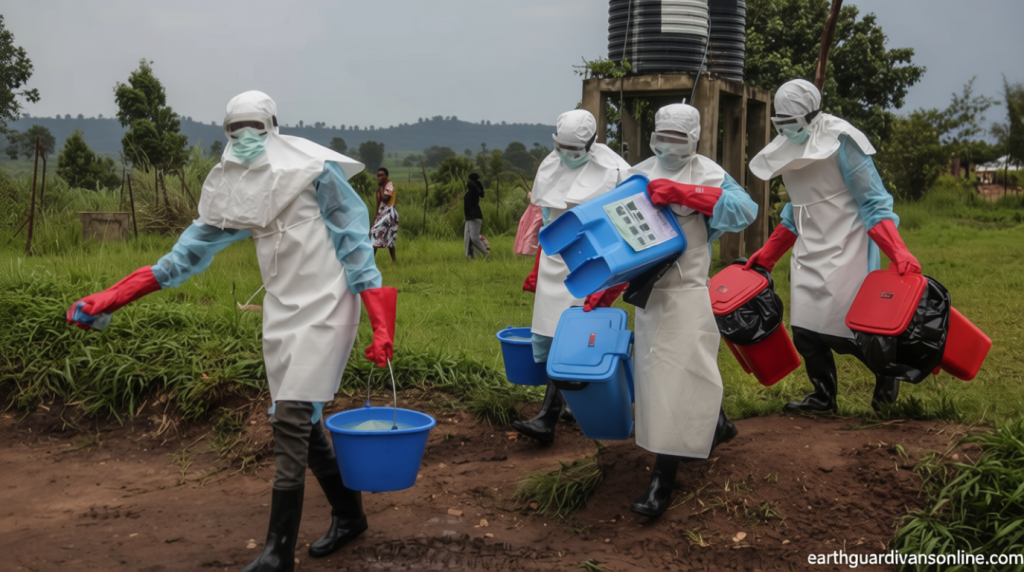
Inside the Epicenter of the Ebola Outbreak in DRC as the Virus Spreads
Inside the epicenter of the Ebola – In the heart of the Democratic Republic of Congo (DRC), Hélène Akilimali continues her daily work as a cocoa seller with a heightened sense of vigilance. She consistently wears a face mask in public, a precautionary measure against the deadly virus that has turned her town into a focal point of the current outbreak. However, her efforts are met with mixed reactions from the community, where some residents remain skeptical about the virus’s severity. Akilimali’s concerns are echoed by many in the region, who argue that misinformation and a lack of awareness are exacerbating the crisis.
“Ebola is a real disease. People need to stop deluding themselves,” Akilimali emphasized, recounting her experiences while speaking with a CNN journalist stationed in the area. “I always wear my face mask, but the customers, when they arrive, may or may not follow suit. You can’t force them to change their habits.”
Residents of Ituri and North Kivu provinces, the two regions most affected by the outbreak, share similar frustrations. They describe a struggle not only with the virus’s spread but also with persistent myths that undermine public health initiatives. Élie Ilunga, a Bunia resident and father of a family, recounted his evolving perspective on the disease. “At first, people thought it was a joke. But now, seeing the toll it’s taking, we know it’s real,” he said, adding that he personally set up a washbasin at home to safeguard his loved ones.
The World Health Organization (WHO) reported that at least 177 deaths have been linked to the ongoing epidemic in DRC, with nearly 750 suspected cases confirmed to date. The virus originated in a remote rural area but has since reached urban centers such as Bunia and Goma, demonstrating its rapid mobility. Neighboring Uganda has also reported five confirmed cases and two fatalities, indicating the outbreak’s reach beyond the DRC’s borders.
On Friday, the WHO raised its risk assessment to “very high” for DRC and “high” for the regional level. Despite this escalation, the organization maintains that the global risk remains relatively low. “The case numbers are likely to continue rising because the virus was circulating for an extended period before detection,” the WHO warned. This delay in response has allowed the outbreak to gain momentum, complicating containment efforts.
Amidst the growing concern, tensions in Ituri province reached a peak on Thursday when relatives of an Ebola victim attempted to retrieve the body from Rwampara Hospital without following quarantine protocols. The confrontation escalated into a protest, culminating in the burning of two hospital tents. “They tried to take the body by force, which is a major risk,” a local politician told CNN. “The fire was a direct result of their refusal to comply with health guidelines.”
Health officials have highlighted the role of traditional mourning practices in accelerating the spread of the virus. In Bunia, a community mobilizer pointed to the custom of mourners touching the deceased as a potential contributor to the rise in infections. “These rituals are deeply ingrained, but they also create opportunities for the virus to transmit,” the official explained. The WHO has since advocated for the modification of such practices, urging communities to adopt safer alternatives during the outbreak.
The situation in eastern DRC is further complicated by its status as a conflict zone. With an estimated two million displaced individuals, the area’s fragile infrastructure is under immense pressure. Healthcare facilities, already strained by years of underfunding, are now overwhelmed by the influx of patients and the need for additional resources. “The virus is spreading faster than we can contain it,” said a local health worker, emphasizing the challenges of maintaining basic hygiene in crowded living conditions.
Another significant factor is the lack of an approved vaccine or treatment for the specific strain currently circulating. This absence of medical solutions has left communities relying on preventative measures and community-based education. “Without a vaccine, we’re in a constant race to reduce transmission,” noted Dr. Tedros Adhanom Ghebreyesus, the WHO Director-General, following the recent hospital fire. “Building trust in these communities is critical to our response.”
Aid workers have also raised concerns about the impact of recent funding cuts. The dismantling of the US Agency for International Development (USAID) and reduced financial support before the outbreak began have hindered efforts to mobilize resources effectively. “We’re operating on a tight budget, which means we have fewer supplies and less capacity to respond quickly,” said Greg Ramm, Save the Children’s DRC country director, after returning from a humanitarian visit to Ituri. His team has been working closely with local authorities to distribute disinfectant and chlorine to clinics, but he acknowledged the strain on their operations.
Ramm’s comments underscore the broader challenge of maintaining essential services amidst limited funding. “We’re in a game of catch-up. There are not enough health resources to meet the demand,” he stated. This shortage has forced aid organizations to prioritize basic infection prevention measures, such as handwashing and mask-wearing, over more advanced interventions.
Despite the challenges, local leaders are taking steps to curb the spread. In response to the hospital fire, authorities in Ituri have imposed restrictions on public gatherings and banned wakes to prevent large crowds from gathering around infected individuals. These measures aim to reduce the risk of transmission, but they also highlight the growing frustration within the community as they navigate both health and cultural concerns.
The epidemic’s trajectory continues to raise alarms, with the WHO warning that the number of cases could rise further if current trends persist. While the virus remains a localized threat, its ability to spread to cities and neighboring countries underscores the need for a coordinated international effort. “The situation is dire, but we’re not giving up,” Ramm said, expressing hope that increased collaboration and resource allocation could turn the tide.
As the outbreak persists, the battle against Ebola in the DRC has become a multifaceted challenge. From combating misinformation to reinforcing public health measures, the fight requires not only medical expertise but also a deep understanding of the social and political landscape. The resilience of individuals like Akilimali and Ilunga, who are taking personal steps to protect their families, serves as a testament to the community’s determination. However, the road to recovery remains long, and the success of the response will depend on the collective effort of all stakeholders involved.
