
Is Britain ungovernable?
Is Britain ungovernable?
Political Turmoil and Leadership Uncertainty
Is Britain ungovernable –
Anthony Seldon, a historian specializing in British political figures, has chronicled the lives of eight consecutive prime ministers. In the 1990s, when he initiated this project, the task was both ambitious and manageable. At the time, leaders of the United Kingdom typically served multiyear mandates, allowing him to analyze their impact with a fair degree of depth. However, the past decade has upended this rhythm. The Conservative Party, once a stable force, has seen its leadership shift rapidly, cycling through three prime ministers in a single year. Seldon, now 72, faces a daunting challenge as he prepares his biography of the current Labour leader, Keir Starmer, and the possibility of a new administration within months.
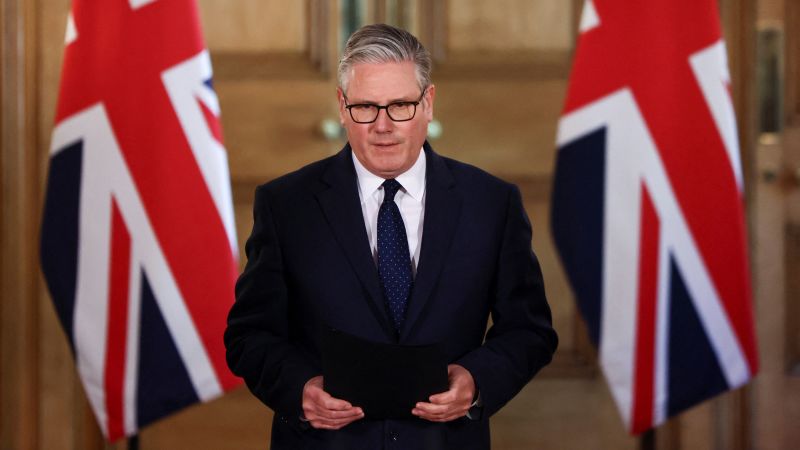
Starmer’s ascent to power in 2024 marked a turning point, with his Labour Party securing a significant parliamentary majority. The promise of a “decade” of national rejuvenation seemed to offer clarity amid the chaos. Yet, just under two years into his tenure, the seeds of doubt have begun to sprout. Recent local elections in England, Scotland, and Wales have delivered a clear message: voters are disenchanted with Labour’s approach. These results have left Starmer’s allies questioning his continued leadership, raising the specter of a leadership challenge that could redefine the political landscape.
Seldon’s upcoming biography of Starmer’s predecessor, Rishi Sunak, is set to release in August. By that time, the UK may have already transitioned to a sixth prime minister in seven years, a trend that has become increasingly common. This rapid turnover has prompted many to ask whether the country has reached a breaking point, where governance is no longer stable or effective. Seldon, who has studied the dynamics of British leadership for decades, is not convinced that the nation has lost its capacity to govern. Yet, he admits the current pace of change is testing even his resilience.
Economic Strains and Structural Challenges
The UK’s political instability is rooted in a complex web of economic and social issues. The aftermath of the 2008 financial crisis left the country grappling with long-term stagnation, a situation that has only worsened with the pandemic and Russia’s invasion of Ukraine. Inflationary pressures have driven modest wage increases, but overall living standards remain stagnant. The cost of living crisis, compounded by high energy prices and a shrinking economy, has fueled public frustration.
Britons have also felt the consequences of Brexit, with the UK’s departure from the European Union estimated to reduce GDP per person by as much as 8%. The loss of seamless trade agreements and the complexity of new regulatory frameworks have disrupted industries and added to the nation’s economic uncertainty. Meanwhile, productivity growth has remained sluggish, and government debt has surged, placing British bonds at the top of the G7 yield rankings. These factors have created a backdrop of economic strain, making it harder for leaders to consolidate power or implement long-term policies.
The electoral system, which has historically favored a two-party duopoly, is now under siege. For over a century, Labour and the Conservatives dominated British politics, ensuring predictable governance. But the rise of centrist Liberal Democrats, progressive Greens, hard-right Reform UK, and nationalist parties has fragmented the political landscape. In England, the five-party competition has led to volatile parliamentary outcomes, while in Scotland and Wales, the fragmentation is even more pronounced. This shift has made forming stable coalitions or clear majorities increasingly difficult, contributing to the perception of political chaos.
Scotlands integration into the UK dates back to 1707, and Wales to 1536, yet the current political climate suggests a growing appetite for independence. The nationalist movement, bolstered by rising regional identities and economic grievances, has intensified. This has not only complicated the work of central government but also placed pressure on national leaders to address diverging interests across the UK.
A Leadership Crisis and Comparative Parallels
For Seldon, the challenge of documenting Starmer’s leadership is compounded by the likelihood of a new prime minister emerging before his book is published. “I’ll be on to ‘Angela Rayner at Number 10’ before too long,” he remarked in a CNN interview, hinting at the potential for a leadership change. This uncertainty mirrors the instability he has observed in previous administrations, particularly those led by his predecessors.
Starmer’s tenure differs from the erratic leadership of his Conservative forerunners. While figures like Boris Johnson and Liz Truss have often been compared to American leaders—Johnson as a “Rooseveltian” in ambition but lacking in execution, and Truss as a “Reaganite” in ideology but reckless in practice—Starmer’s style seems more personal than partisan. “There’s elements of Jimmy Carter,” Seldon noted, suggesting a leader who is more focused on public service than grand political projects. This contrast highlights the broader tension between a parliamentary system designed for stability and the unpredictable forces shaping modern British politics.
The legacy of the Conservatives is one of missteps that have tested the nation’s resilience. Boris Johnson, known for his expansive vision and populist rhetoric, struggled to translate ambition into results. His government’s focus on big government policies, such as increased public spending and a commitment to “left-behind” regions, aimed to address inequality but often backfired. Liz Truss, in her brief 49-day stint, epitomized the risks of ideological overreach. Her tax-cut plan, introduced in 2022, nearly triggered a financial crisis, leading to her swift ousting by the party. Rishi Sunak, in contrast, has advocated for fiscal conservatism, favoring tight monetary policies and a smaller state. However, by the time he assumed office, the public had grown weary of Conservative rule, and the damage inflicted by Truss’s policies left Sunak’s prospects dim.
Seldon argues that while the UK is far from ungovernable, the succession of flawed leaders has eroded public confidence. “Britain is categorically not ungovernable, although some recent prime ministers have tried darn hard to make it so,” he told CNN. This assessment underscores the idea that the problem lies not in the structure of governance but in the quality of leadership. The current system, with its first-past-the-post electoral model, has allowed for shifts in power, but the lack of coherent policy from leaders has left the country in a state of flux.
Looking Ahead: The Path to Stability
As the UK navigates this turbulent period, the question remains: can stability be restored? Seldon believes that while the current leadership may face challenges, the system itself is not broken. “The country has always had its ups and downs,” he said. “What matters is whether leaders can adapt to the changing environment.”
Starmer’s challenge is to demonstrate that his approach can deliver results in a landscape where traditional party lines are blurred. His focus on national renewal and centrist policies may appeal to a broad coalition, but the recent local election losses suggest that his message has not yet resonated with all voters. If he is to survive, Starmer must address the root causes of discontent, including economic inequality, inflation, and the ongoing impact of Brexit.
For Seldon, the key to understanding Britain’s political future lies in recognizing the cyclical nature of leadership crises. While the nation’s problems are significant, they are not insurmountable. “The British political system has endured centuries of change,” he observed. “It’s not the system that’s failing—it’s the leaders who are.”
With the upcoming release of his Sunak biography, Seldon will have the opportunity to reflect on the patterns of leadership that have defined the past decade. Whether the UK is truly ungovernable or merely experiencing a period of turbulence depends on how leaders respond to the challenges ahead. For now, the revolving door at 10 Downing Street continues to turn, leaving the nation in a state of constant transition.
