
Israel kills most senior Hamas military leader in Gaza strike
Israel Kills Most Senior Hamas Military Leader in Gaza Strike
Targeted Attack in Gaza City Claims High-Profile Hamas Commander
Israel kills most senior Hamas military – In a dramatic escalation of the ongoing conflict, Israeli forces executed a targeted strike in Gaza City, resulting in the death of Izz al-Din al-Haddad, the organization’s most senior military leader, according to a joint statement released by the Israel Defense Forces (IDF) and the Israeli Security Agency. The operation, conducted on Friday, reportedly killed at least seven individuals and left over 50 others injured, with many transported to Al-Shifa Hospital for treatment. The IDF emphasized that al-Haddad was eliminated through a “precise strike,” underscoring their claim of minimizing civilian casualties in the attack.
Reactions from Hamas and the Local Community
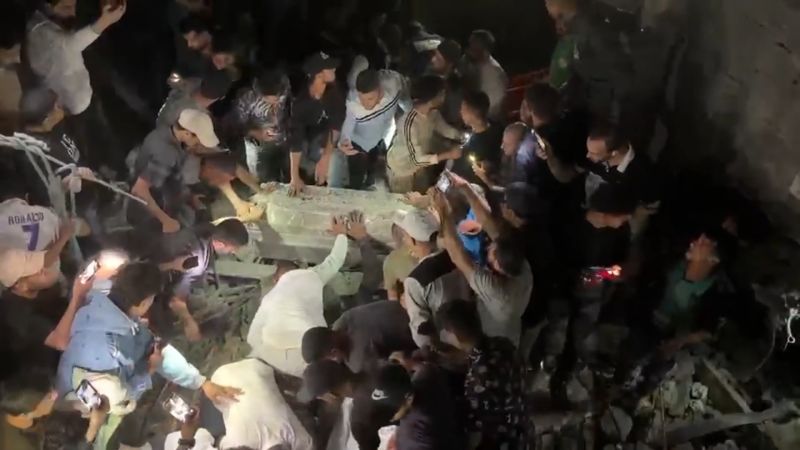
Hamas confirmed al-Haddad’s death on Saturday, with its spokesperson Hazem Qassem describing him as “one of the greatest fighters of our Palestinian people.” Social media platforms quickly shared footage of his funeral procession, showing his coffin being carried through the streets of Gaza as crowds gathered to pay their respects. In the video, a mourner referred to him by his local nickname, “Abu Suhaib,” and declared, “Rest in peace Abu Suhaib, and we will continue the struggle,” highlighting the symbolic weight of his leadership.
“One of the greatest fighters of our Palestinian people.”
Background on the Targeted Leader
Al-Haddad, known as the “Ghost of al-Qassam,” was a prominent figure within Hamas, leading the Izz al-Din al-Qassam Brigades, the group’s military wing. His strategic role in orchestrating attacks and maintaining operational secrecy made him a critical target for Israeli forces. Following the assassination of other key leaders, including Yahya Sinwar, his brother Mohammed Sinwar, and Mohammed Deif, al-Haddad emerged as one of the highest-ranking decision-makers in the organization.
Context of the October 7 Attack
The strike comes amid continued Israeli efforts to dismantle Hamas infrastructure. Al-Haddad was accused of being a primary architect behind the October 7, 2023, attack that devastated Israel and triggered the current conflict. Israeli officials also alleged that he resisted efforts to disarm Hamas and demilitarize the Gaza Strip, particularly the agreement brokered by former US President Donald Trump. This stance, they claimed, posed a direct threat to the security of Israeli forces and the broader region.
Impact on the Ceasefire and Gaza’s Infrastructure
Despite the fragile US-brokered ceasefire in place since mid-October, Israel’s military actions have persisted. The latest strike targeted a residential building in the al-Rimal neighborhood near Gaza City, followed by a second attack on a vehicle on a nearby street. According to Mohammed Abu Salmiya, director of Al-Shifa Hospital, the medical facility received the remains of three women and a child among the seven fatalities. Paramedics from the Palestine Red Crescent Society transported nearly 30 injured individuals to Al-Saraya Field Hospital, revealing the ongoing strain on Gaza’s emergency services.
Ceasefire Challenges and UN Perspectives
The ceasefire agreement, though intended to bring stability, has faced significant challenges. A senior official overseeing its implementation acknowledged that the truce remains “far from perfect,” while noting it has created “relative stability” in the region. Nickolay Mladenov, a former UN Special Coordinator for the Middle East Peace Process, highlighted the key obstacles during a press briefing. “The plan is clear: Hamas needs to step back from governance of Gaza, its weapons need to be decommissioned, and Gaza must be deradicalized,” he stated, emphasizing the need for comprehensive disarmament.
“The plan is clear: Hamas needs to step back from governance of Gaza, its weapons need to be decommissioned, and Gaza must be deradicalized.”
Israeli Vows to Continue Campaign
Following the strike, IDF Chief of Staff Lt. Gen. Eyal Zamir reiterated Israel’s commitment to “pursue our enemies, strike them, and hold accountable everyone who took part in the October 7th massacre.” This declaration reflects the Israeli military’s strategy of targeting Hamas leadership to disrupt its operations and assert control over the territory. The attack also aligns with ongoing efforts to eliminate key figures linked to the Hamas-led assault that began the current hostilities.
Broader Implications of the Conflict
Since the ceasefire took effect in mid-October, Israeli strikes have claimed over 850 lives in Gaza, according to the Palestinian Ministry of Health. While the agreement was designed to halt hostilities, Israel has continued its aerial and ground operations, citing the need to neutralize threats to its forces and the occupied areas. The repeated attacks have raised concerns about the effectiveness of the truce, with local officials and international observers noting the persistent violence.
Strategic Significance of the Al-Rimal Neighborhood
The al-Rimal neighborhood, where the strike occurred, is a densely populated area within Gaza City. Emergency services reported that the first attack hit a residential building, causing widespread damage and casualties. The second strike targeted a car, which may have been used to transport weapons or supplies. This dual approach suggests a deliberate strategy to disrupt Hamas logistics while targeting high-profile figures, such as al-Haddad, who played a pivotal role in the organization’s military operations.
Future of the Ceasefire and Regional Dynamics
Mladenov’s comments underscore the delicate balance required to sustain the ceasefire. He stated that Israel’s full withdrawal from Gaza depends on Hamas meeting specific conditions, including complete disarmament and the establishment of civil governance. These demands reflect the broader geopolitical tensions, as both sides seek to consolidate their positions. The strike on al-Haddad may accelerate Hamas’s internal restructuring, with his death potentially shifting the group’s strategic direction and leadership dynamics.
Public Response and Ongoing Conflict
Residents of Gaza expressed mixed reactions to the strike, with some mourning al-Haddad’s death and others viewing it as a necessary step to weaken Hamas. The funeral procession in the city symbolized both the loss of a key leader and the resilience of the Palestinian people in the face of sustained attacks. As the conflict continues, the balance between military operations and diplomatic efforts remains precarious, with the stakes growing higher for both Israel and Hamas.
Historical Context of the October 7th Attack
The October 7, 2023, attack marked a turning point in the conflict, with Hamas launching a surprise assault that resulted in hundreds of casualties and the capture of Israeli hostages. Al-Haddad’s alleged role in planning and executing this attack has made him a prime target for Israeli retaliation. His death may not only weaken Hamas’s operational capacity but also serve as a psychological blow to the organization’s morale and international support.
