It can be lonely at the top. And that’s just how China’s leader likes it

Daftar Isi
Xi’s Anti-Corruption Drive Deepens China’s Political Silence
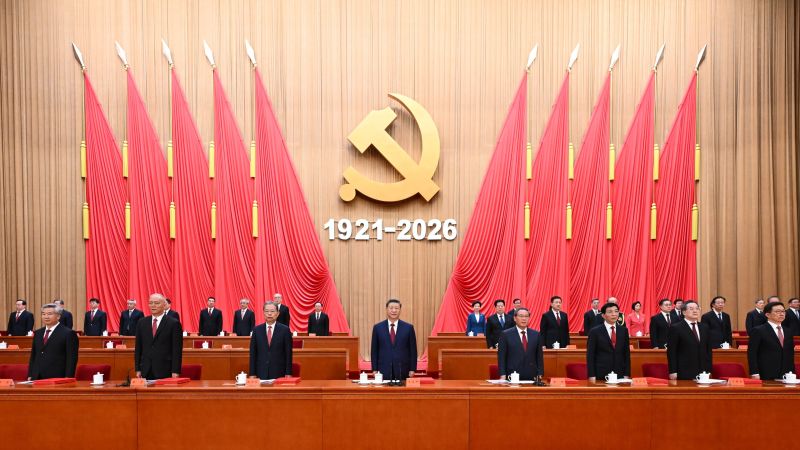
Earthguardiansonline.com – China’s political establishment is heading into a major closed-door meeting in Beijing with an unusually thin attendance list, a visible consequence of the anti-corruption campaign that has reshaped the Communist Party under Xi Jinping.
More than 200 senior party figures are expected to gather this week, but the ranks of China’s governing elite have been reduced by investigations, expulsions and removals. The meeting comes a year before a more consequential leadership gathering next fall, when Xi is widely expected to seek an unprecedented fourth term in power.
For officials across the country, the central question is increasingly simple: who will be targeted next?
The campaign has reached into institutions once viewed as politically insulated. It has taken down a former senior judge, an intelligence chief, military officers and even officials responsible for enforcing party discipline. Some of those caught up in the drive had been regarded as close to Xi, underscoring how little protection personal connections may offer.
A campaign without an end date
Xi, now 73, has made the battle against corruption one of the defining features of his leadership. Since taking power more than 14 years ago, millions of lower-level officials have faced disciplinary action or removal. The scale of the campaign has dismantled potential rival networks while reinforcing the authority of the party’s top leader.
In 2022, Xi urged officials to “turn the blade inward,” calling for scrutiny of the party personnel charged with policing misconduct. His message has grown no less forceful since then. Earlier this year, he said corruption remained a serious problem and warned that the party still contained “two-faced people.”
“Never-ending struggle.”
That description of the anti-graft effort signals that no final phase is in sight. In recent months, the pace of investigations has accelerated to levels not seen for decades, creating an atmosphere in which a public appearance today offers little assurance about an official’s position tomorrow.
From 2012 through 2022, more than 500 ministerial-level officials were investigated and subsequently convicted, dismissed or expelled from the party over corruption. More than 410 additional officials have been purged during the past three years alone.
Empty seats at the top
The effect is clear inside China’s highest political bodies. The Central Military Commission, normally made up of seven members and responsible for the party’s top military decisions, has been reduced to two members. Xi is one of them.
The 24-member Politburo, another pillar of the party’s leadership system, now has just 21 members. These absences matter not only because of the officials involved, but because they demonstrate how deeply the campaign has entered the upper reaches of the state and military apparatus.
Unlike leaders operating within competitive electoral systems, Xi does not face a constitutional two-term limit or an immediate national election that could threaten his political future. His standing appears increasingly secure as other prominent figures disappear from official life, lose party status or fall under investigation.
The upcoming Beijing meeting is therefore likely to be watched for more than policy signals. Its participant list, personnel changes and language on discipline may offer clues about the continuing consolidation of power before next year’s leadership gathering.
Sudden falls from public view
Recent cases have illustrated the unpredictability surrounding the campaign. Huang Qifan, a longtime mayor of Chongqing, was placed under investigation in a development that reverberated through political circles. Huang had built a reputation as a skilled survivor, serving under six Communist Party secretaries in Chongqing and outlasting turbulent shifts in the city’s leadership.
Two of those former party secretaries were later jailed, including a onetime rival of Xi. After leaving office, Huang remained highly visible, appearing at conferences and on television to discuss China’s economy. Following his downfall, people who had publicly associated with him moved quickly to erase references to their former colleague from social-media accounts, a familiar response when a politically connected figure falls under scrutiny.
Beijing deputy mayor Xia Linmao was still carrying out public duties shortly before his disappearance. State television had shown him in a meeting with Walmart chief executive John Furner and other American business executives. Xia listened and took notes while Beijing’s leadership encouraged the visitors to expand their activities in the capital.
Within days, he had vanished from public view.
Other investigations emerge only after months of unexplained absence. Ma Xingrui, an aerospace engineer who became a senior party official and previously led the vast western region of Xinjiang, was not seen publicly for five months before authorities announced an investigation in April.
The political cost of investigation
In China, a formal corruption investigation almost always marks the effective conclusion of an official career. Those found guilty generally disappear from public life, including after completing prison sentences. The process has made official visibility itself a source of speculation, with missed events, unexplained absences and deleted online posts often drawing attention.
Xi’s campaign has been presented as an effort to strengthen party discipline and confront entrenched misconduct. Its wider political consequence has been to narrow the space for alternative centers of influence within the Communist Party. The removal of senior officials across government, security services and the military leaves fewer prominent figures capable of forming independent networks.
As China prepares for another critical leadership cycle, the message to party cadres is unmistakable: the campaign is still active, the criteria for safety remain uncertain, and loyalty alone may not guarantee survival. For Xi, the political landscape appears increasingly clear. For nearly everyone else at the top, it may be lonelier than ever.
Related Reading
Frequently Asked Questions
What is It can be lonely at the top?
It can be lonely at the top is the main topic of this guide. The article explains the context, practical details, and next steps readers should understand.
Why does It can be lonely at the top matter?
It can be lonely at the top matters because readers are looking for a useful answer, not just a short summary. Good content should match search intent and help them decide what to do next.