
‘Leave or return in a coffin’: The threat driving migrants out of South Africa
‘Leave or return in a coffin’: The threat driving migrants out of South Africa
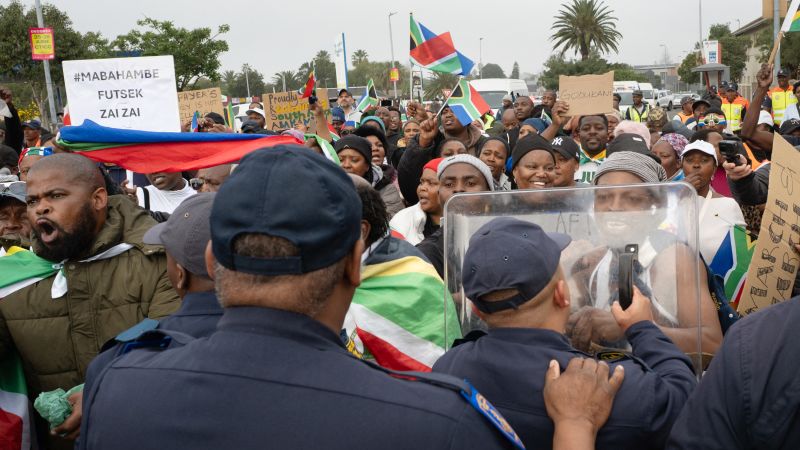
Leave or return in a coffin – As tensions over migration in South Africa reach a boiling point, some community groups have issued a stark warning to foreign nationals: leave the country or face dire consequences. This ultimatum, delivered to Kaunga Nyirenda, a Malawian gardener living in a Johannesburg suburb, has become emblematic of the growing fear among migrant communities. In early June, two individuals confronted Nyirenda at his home, demanding that he vacate the country by the end of the month or risk losing his life. “They asked me: ‘When are you going to leave the country? We want to fix our country. If you don’t leave now, you’re going to leave in a coffin because we don’t need anyone after the 30th of June,’” he recounted. The message is clear—fear is being weaponized to push migrants out of South Africa.
The Backdrop of Rising Anti-Migrant Sentiment
For months, anti-immigrant rhetoric has been simmering in South Africa, fueled by concerns over job competition, crime, and the strain on public resources. Now, this sentiment has escalated into organized action, with groups like March & March and Operation Dudula taking center stage. These organizations, which claim to represent grassroots movements, have mobilized thousands of supporters to protest the presence of foreign nationals. Their campaigns, often framed as efforts to protect local interests, have led to confrontations in communities across the country.
Operation Dudula, in particular, has gained notoriety for its aggressive tactics. The group, whose name in Zulu translates to “push back” or “force out,” has targeted foreign-owned businesses, stopped individuals in the streets to verify their legal status, and blocked access to public hospitals for non-citizens. Their actions have been described as a form of “community activism,” though critics argue they are driven by xenophobia. Another key figure, Nkosikhona Ndabandaba, known as “Phakel’umthakathi” or “The Sword,” has been a vocal leader in the movement. With over 1.7 million followers on Facebook, he has rallied supporters in traditional Zulu warrior attire, emphasizing the urgency of the June 30 deadline.
Government Response and the Threat of Violence
South Africa’s government has distanced itself from the protests, rejecting the so-called “deadline” imposed by the groups. President Cyril Ramaphosa, in a recent address, warned that the nation would not tolerate any efforts to destabilize it, regardless of the method used. “We are not allowing anyone to use marching or other forms of protest to undermine our country,” he stated. However, he also condemned the violence directed at foreign nationals, asserting that it does not reflect the will of South Africa’s people or the policies of his administration.
Ramaphosa attributed the unrest to “opportunists” who exploit the grievances of the poor under the guise of activism. He has called for security forces to remain vigilant, anticipating a potential surge in attacks as the deadline approaches. Yet, the fear of violence has already taken root in poor neighborhoods and informal settlements, where migrants are preparing for the worst. “June 30 is the deadline, but you don’t have to wait until then—leave now,” Ndabandaba told CNN, suggesting that the situation could spiral out of control after Tuesday.
The escalation of tensions has led to several violent incidents, with police investigating multiple cases of xenophobic attacks. In late May, two Mozambican men were killed in Mossel Bay, a coastal town in the Western Cape, during clashes that also saw over 50 shacks in an informal settlement burned. Mozambique later confirmed that five of its citizens had died in what it described as “xenophobic attacks.” Similarly, a Malawian man was allegedly killed by a mob in Pietermaritzburg, near Durban, prompting hundreds of migrants to flee to churches and mosques for safety, according to state broadcaster SABC.
Deportation Trends and the Migrant Exodus
Amid the rising anxiety, thousands of foreign nationals have begun leaving South Africa voluntarily. The Border Management Authority reported that over 13,000 individuals, including approximately 9,000 Malawians, 3,000 Zimbabweans, 900 Ghanaians, and 300 Nigerians, have been repatriated or deported in the last two weeks. This exodus has been driven by the fear of being targeted by mobs, with some migrants reporting that they are being forced to leave their homes without proper documentation.
Some of those leaving express a sense of urgency, citing the threat of violence as the primary reason for their departure. Nyirenda, whose story has been widely shared, said the message he received was chilling. “They told me they would fix the country, and if I didn’t leave by June 30, I’d be leaving in a coffin,” he explained. This sentiment has spread rapidly, with social media amplifying the fear. A video circulating online shows a young man brandishing a machete and counting down to the deadline, further stoking panic among migrant communities.
Broader Implications and Community Impact
The current crisis has exposed the deep-seated frustrations of many South Africans, particularly those in impoverished areas who feel the economic burden of immigration. While the groups claim their actions are justified, critics argue that the attacks are not just about jobs but also about scapegoating foreigners for broader societal issues. The violence has disrupted daily life for migrants, who now live in constant fear of being assaulted or killed.
Ramaphosa’s government has acknowledged the challenges posed by undocumented immigration but insists it is working to address them. “We understand the concerns of the public, and we are taking steps to manage the situation,” he said. However, the president has faced criticism for not doing enough to curb the violence. The protests, he said, are being fueled by “opportunists” who are using the public’s anger to advance their agenda. Despite this, the government has not yet taken decisive action to protect migrants, leaving them vulnerable as the deadline looms.
The impact of the protests extends beyond the immediate violence. Migrants are now hesitant to seek employment or access essential services, fearing that their presence will be seen as a threat. This has led to a slowdown in economic activity, particularly in sectors reliant on foreign labor. Meanwhile, the broader South African population is divided—some support the movement, seeing it as a necessary measure to protect their national interests, while others view it as an attack on diversity and human rights.
As the June 30 deadline approaches, the situation remains volatile. The anti-migrant groups have not yet announced their next move, but the atmosphere of fear continues to build. Nyirenda, like many others, is now preparing for the worst. “Every day, people are asking if they will be safe,” he said. “We don’t know what will happen after the 30th.” The exodus of migrants, driven by a combination of fear and pressure, highlights the complex interplay between xenophobia, economic anxiety, and political rhetoric in South Africa. Whether the deadline will lead to widespread violence or simply mark the beginning of a sustained campaign remains to be seen.
Voices from the Ground
“June 30 is the deadline, but you don’t have to wait until then—leave now,” said Ndabandaba, a prominent leader of the anti-migrant movement. His words, shared in a video, have resonated with many in the community, though they have also raised questions about the group’s methods and motives.
Ndabandaba has denied that his supporters have engaged in violence, instead blaming other groups for the unrest. However, the deaths of foreign nationals
