
Man who killed Minnesota lawmaker and her husband pleads guilty to murder in federal case
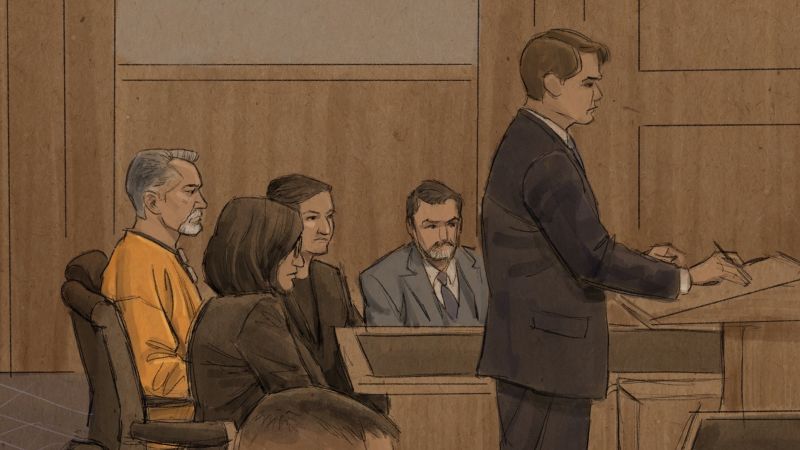
Minnesota Lawmaker and Husband Killed in Political Shooting, Perpetrator Pleads Guilty
Federal Plea Ensures Life Without Death Penalty
Man who killed Minnesota lawmaker and her – Vance Boelter, a 58-year-old man accused of murdering a former Minnesota House Speaker and her husband, has accepted a federal plea deal that will spare him from the death penalty. The agreement was finalized on Thursday during a court session in Minneapolis, marking the end of a dramatic legal journey that began with a tragic act of violence. Boelter’s guilty pleas to murder, stalking, and firearms offenses were part of a broader resolution that included a sentence of two consecutive life terms plus an additional 40 years in prison. The decision was made nearly a year after the incident, which left two lawmakers dead and another couple severely wounded.
The manhunt that led to Boelter’s capture was described as the most extensive in Minnesota’s history, spanning 43 hours and concluding with his arrest in a field near his home in Green Isle. Authorities stated that he had meticulously planned the attacks months in advance, including disguising himself as a police officer to execute his deadly strategy. The Hoffmans, a family of three, were among those in the courtroom gallery when Boelter’s fate was sealed, their presence a poignant reminder of the personal toll of the crime.
The Tragic Morning of the Shootings
The violence unfolded on a seemingly ordinary day in Champlin, Minnesota, when Boelter arrived at the Hoffman residence under the guise of a law enforcement officer. John Hoffman, the state senator, answered the door, only to be confronted by a man claiming there had been a shooting. Hoffman, unaware of the danger, responded that no guns were in the house, a detail that would later prove critical. Boelter then instructed the family to raise their hands, before opening fire with a heavy weapon. The attack left John and his wife, Yvette, critically injured but ultimately survived after emergency medical care.
Boelter’s plan was even more sinister when he targeted the Hortmans. Approaching their suburban home north of Minneapolis, he donned a police uniform, a wig, and a silicone mask, blending seamlessly into the neighborhood. As he pounded on the door, he shouted, “Police, welfare check!” Mark Hortman, the former House Speaker, opened the door to find Boelter standing menacingly outside. The assailant quickly claimed that shots had been fired, catching the victim off guard. “Good God, I was asleep,” Hortman reportedly said, his voice trembling as he tried to process the situation.
Boelter’s calculated actions escalated rapidly. After confirming that Melissa Hortman was the only other person in the house, he brandished his weapon and shot her multiple times as she attempted to flee upstairs. The confession of this point-blank execution was a particularly harrowing moment for the courtroom audience, with relatives of the victims weeping quietly as the truth unfolded. The Hoffmans, who had been in the gallery, later shared their grief in a heartfelt statement, emphasizing the lasting scars of the event.
Prosecutors’ Strategy and the Plea Deal
Minnesota’s top federal prosecutor, Daniel Rosen, highlighted that Boelter’s readiness to accept the maximum possible prison terms was the key factor in dropping the death penalty. “When you have a defendant prepared to plead guilty to consecutive life sentences plus 40 years, ensuring he will never see freedom again, that was an opportunity we couldn’t pass up,” Rosen explained during a press conference. The plea agreement, which was approved by Acting U.S. Attorney General Todd Blanche, reflects a strategic choice to prioritize life imprisonment over capital punishment.
Rosen also noted that the agreement was a shared decision between himself and the attorney general, underscoring the consensus on Boelter’s culpability. “There is absolutely no daylight between me and the attorney general on this,” he said, adding that the deal would allow the victims’ families to voice their anguish at a formal sentencing hearing later this summer. The Hoffmans, who had initially called 911 to report the attack, were among the first to share their story with the court, their account detailing how Boelter had managed to evade capture for hours before the final confrontation.
The Aftermath of a Statewide Manhunt
Boelter’s escape during the initial attack demonstrated his premeditated approach. After shooting the Hoffmans, he fled the scene, only to later target the Hortmans. Authorities revealed that he had left behind a list of potential victims and weapons in his vehicle, including three AK-47 assault rifles and a 9mm handgun. This evidence, combined with his detailed confession, painted a chilling picture of his intent to carry out politically motivated violence.
The search for Boelter involved coordinated efforts across multiple jurisdictions, with law enforcement officials working tirelessly to track him down. His capture in Green Isle, a mile from his home, was the culmination of a frenzied chase that spanned several hours. The incident left the community in shock, with many questioning the motives behind the attack and the role of political tensions in the tragedy. Boelter’s ability to disguise himself and manipulate the situation into a welfare check further complicated the investigation, as it initially misled witnesses and authorities.
During the court hearing, Boelter’s admission of guilt provided clarity about the events of that day. He confessed to wearing a tactical vest and using a police-style badge to mimic the authority of law enforcement. This detail, along with his methodical approach to targeting the lawmakers, revealed a master plan that blended fear and deception. The victims’ families, who had been in attendance, expressed both relief and sorrow at the conclusion of the legal proceedings, acknowledging the justice served while recognizing the emotional burden of the case.
Victims’ Families Reflect on Loss and Healing
“There is no justice for Mark and Melissa Hortman, and there is not justice when our family and our state will never truly heal,” the Hoffman family stated in a public declaration following the court session. Their words captured the deep sense of loss and the lingering questions about the future of political safety in Minnesota. While the legal system offers accountability, they argued that true healing requires collective effort and a commitment to prevent such tragedies from recurring.
Boelter’s actions have sparked a broader conversation about the intersection of politics and violence. The fact that he targeted two prominent lawmakers, whose presence in public life often made them high-profile figures, suggests a deliberate attempt to send a message. His admission of planning the murders for months and using a disguise to avoid suspicion has added layers to the case, illustrating the lengths to which he went to execute his plan.
The courtroom hearing also highlighted the victims’ resilience. Despite the physical and emotional trauma of the attacks, John Hoffman and Yvette Hoffman survived, their experiences serving as a testament to the strength of the human spirit. Meanwhile, the Hortmans’ fate remains a painful chapter in Minnesota’s recent history, with their names etched into the memory of those who witnessed the events or were affected by them. As the formal sentencing proceeds, the community awaits the next steps in a case that has shaken the state to its core.
With the plea deal finalized, Boelter’s fate is now set, but the impact of his actions lingers. The details of his plan, the weapons he used, and the victims’ accounts will be central to the sentencing hearing, where their voices will be heard alongside the legal arguments. For now, the focus remains on the justice served and the hope that such a tragedy will not be repeated in the future.
