
Market sell-off accelerates as traders raise odds for Fed rate hikes
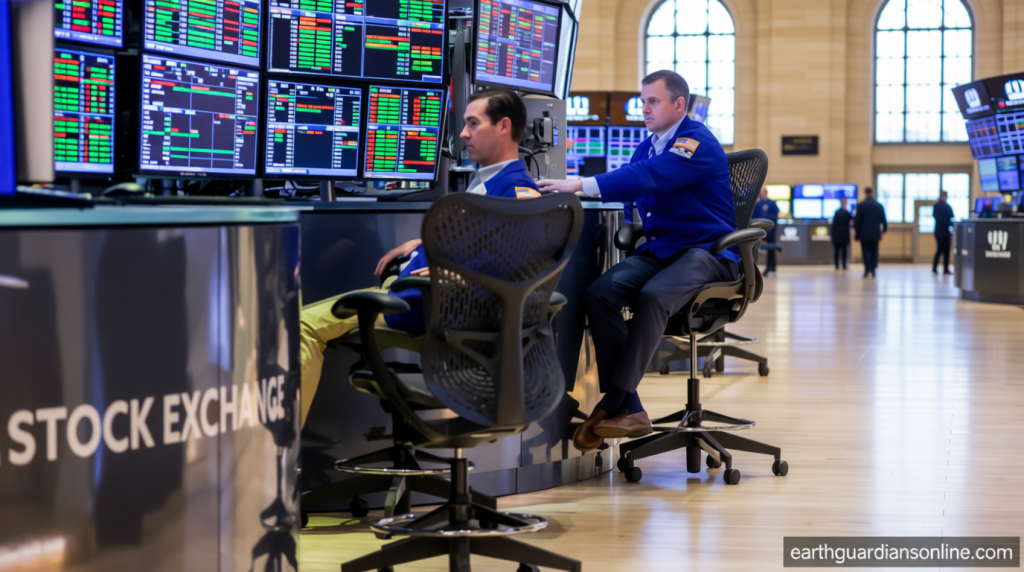
Market Sell-Off Intensifies as Fed Rate Hike Prospects Gain Momentum
Market sell off accelerates as traders – Friday saw a significant drop in equities, fixed-income securities, cryptocurrencies, and precious metals as traders recalibrated their expectations following a robust jobs report. The data suggested the Federal Reserve may need to tighten monetary policy this year to curb rising inflation, sending markets into a tailspin. The S&P 500 index plunged 1.8%, marking a weekly downturn and ending a nine-week upward trend. Meanwhile, the Nasdaq Composite Composite fell 3%, poised for its worst single-day performance since October. The Dow Jones Industrial Average also dipped by 407 points, or 0.8%, reflecting broader concerns about economic stability.
Market volatility surged this week as investors cashed in on recent gains and grappled with shifting forecasts for Federal Reserve actions. The strong jobs data, released by the Bureau of Labor Statistics, indicated the U.S. economy added 172,000 positions in May—surpassing pre-existing estimates. This figure comes after earlier inflationary pressures driven by the oil price spike linked to the Iran conflict, prompting speculation that the central bank’s focus is shifting toward curbing price growth. The Fed’s potential rate hikes, once seen as a distant possibility, now appear more likely, with traders increasing their belief in a December rate increase to 43%, up from 26% a month prior.
AI Stocks and Semiconductor Sector Under Pressure
The tech sector faced sharp declines, with AI-related stocks retreating as concerns about economic slowdowns grew. A popular exchange-traded fund tracking memory chip stocks dropped 12%, signaling a broader sell-off in the semiconductor industry. This trend contributed to the Nasdaq Composite’s third consecutive loss, breaking a nine-day winning streak. The index’s performance highlights the fragility of the tech market, which had previously benefited from optimism about artificial intelligence advancements.
Bitcoin, the leading cryptocurrency, also experienced a notable slump, falling over 3% and trading near $61,000. This marks its lowest level since October 2024, a period when the asset reached record highs. The decline was exacerbated by a key industry player selling some bitcoin for the first time since 2022, amplifying fears of a broader risk-off sentiment. Over the week, bitcoin’s price dropped more than 17%, reflecting uncertainty about its future amid rising interest rates and economic volatility.
Gold prices, a traditional safe-haven asset, also fell more than 3%. Higher interest rates, which typically reduce the appeal of non-yielding assets like gold, have intensified this trend. As the Fed considers tightening its monetary policy, investors are increasingly shifting their funds to assets offering higher returns, such as bonds and equities. The 10-year Treasury yield, a critical indicator for mortgage rates, rose to 4.54%—its highest level in weeks—further pressuring stock markets.
Expert Perspectives on Fed Policy and Market Outlook
“In the near term, the data confirms that Fed easing is off the table this year, and markets continue to worry that the next move could be a hike,” said James McCann, a senior economist at Edward Jones. His analysis underscores the growing tension between inflation control and economic growth.
McCann emphasized that the Fed’s decision-making process remains challenging, with a need for “more persistent spikes in inflation” before any tightening cycle is initiated. However, the recent jobs report has complicated this calculus, providing a strong case for maintaining higher rates. “One report does not make policy, but a report of this magnitude changes probabilities,” added Nigel Green, CEO of DeVere Group. “And markets have recognized that immediately.”
The jobs data not only reinforced the case for rate hikes but also highlighted the resilience of the labor market. With 172,000 new jobs added in May, the economy appears to be holding steady despite inflationary pressures. This has led to a shift in investor sentiment, with focus moving from rate cuts to the possibility of hikes. The Fed’s next move will depend on whether these job gains translate into sustained economic growth or signal underlying inflation risks.
Market Sentiment and the Fear and Greed Index
Meanwhile, the CNN Fear and Greed Index, a gauge of investor sentiment, has transitioned from “greed” to “neutral” territory. The index had remained in the “greed” phase since April 15, coinciding with the S&P 500’s first record high during the Iran war. However, recent market fluctuations suggest a more cautious outlook, with traders prioritizing risk management over speculative bets.
Oil prices, a key driver of inflation, also declined on Friday. Brent crude futures dropped 2.3% to $92.90 per barrel, while U.S. crude futures fell 3.4% to just below $90. This development has shifted the dynamic between oil and Treasury yields, which had previously moved in tandem. Despite falling oil prices, yields rose sharply, indicating that traders are now fixated on the jobs report’s implications rather than energy market trends.
Green noted that the market had been seeking reasons to believe the Fed would cut rates for months. “Today’s jobs report gave policymakers a reason not to do so,” he explained. The report’s strength has raised the bar for rate cuts, with investors now prioritizing inflation control over economic expansion. This sentiment is reflected in the broader market’s reaction, where a mix of caution and uncertainty dominates. The Fed’s upcoming decisions will be pivotal in determining whether the current trend of selling off assets continues or if a recovery is on the horizon.
Broader Implications for the Economy and Investors
The sell-off has exposed vulnerabilities across multiple asset classes, from equities to cryptocurrencies. While the tech sector remains a key driver of market movements, its recent performance highlights the risks of overvaluation. Semiconductor stocks, in particular, have faced headwinds as demand for AI-related technologies slows, prompting investors to reassess their exposure to high-growth sectors.
For investors, the focus has shifted to balancing risk and reward. The strong jobs report has bolstered confidence in the Fed’s ability to manage inflation, but it has also introduced uncertainty about future monetary policy. The challenge for policymakers lies in navigating between tightening rates to control inflation and avoiding a downturn that could stifle economic activity. As Kevin Warsh, the new Fed Chair, prepares for his first meeting, the committee’s internal divisions will be critical in shaping the path forward.
With the market’s mood turning more cautious, the coming weeks will be crucial for determining the trajectory of financial markets. The Fed’s decisions, coupled with evolving economic data, will continue to influence investor behavior and asset prices. Whether the market will stabilize or face further declines hinges on the interplay between inflation trends, labor market strength, and the central bank’s response to these factors.
As the S&P 500 and Nasdaq Composite struggle to regain momentum, the broader market remains in a state of flux. The jobs report’s impact has been felt across all major indices, with traders adjusting their strategies in light of new risks. While the Fed’s rate hike odds have climbed, the path to higher rates will require sustained inflationary pressures, which could take time to materialize. In the meantime, investors are left navigating a complex landscape, where every economic indicator holds significant weight.
