
One way to improve your sleep? Imitate the habits of hunter-gatherers
Revisiting Ancient Sleep Patterns: A Path to Better Rest
One way to improve your sleep – Modern sleep guidelines suggest that adults should aim for approximately eight hours of uninterrupted rest in a cool, dark environment. Consistently adhering to this pattern, experts claim, could contribute to longer, healthier lives. Yet, this ideal remains elusive for many individuals today. According to the newly released book *The Sleepless Ape: The Story of Sleep in Human Evolution*, published on May 19, 2026, such sleep habits are not the norm for humans throughout most of our evolutionary past. Instead, the book argues that our ancestors developed distinct sleep behaviors, shaping the way we rest today.
Decoding Human Sleep Through Ancestral Habits
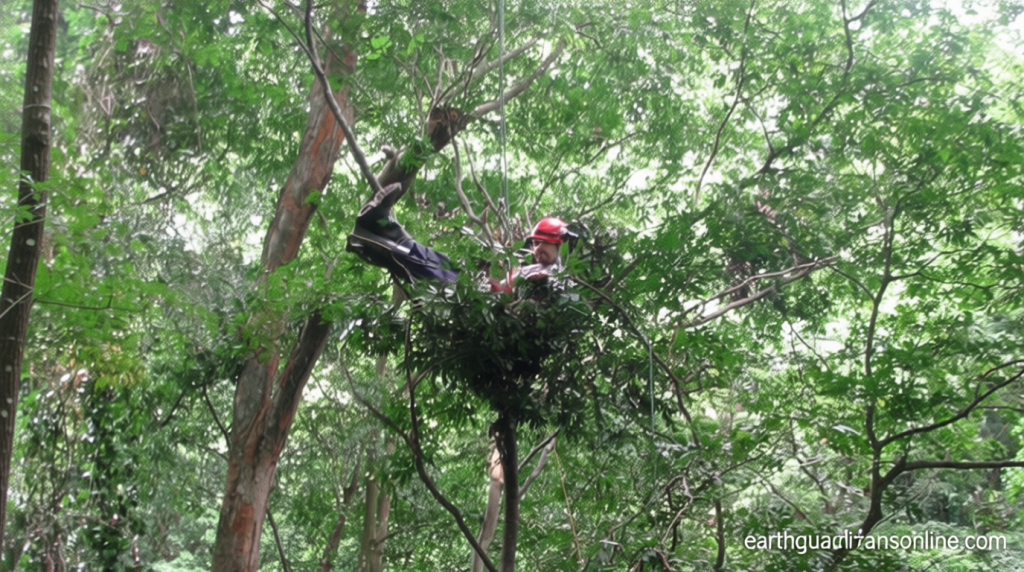
Anthropologist David Samson, the author of *The Sleepless Ape* and an associate professor at the University of Toronto, has spent years immersing himself in the study of sleep across species. His research includes climbing trees to examine chimpanzee nests and engaging with remote communities to uncover how early humans adapted their sleep routines. Samson’s findings challenge the conventional wisdom that eight hours of sleep is the gold standard, revealing how our species evolved to sleep less while achieving greater flexibility in sleep cycles.
Samson’s work suggests that early humans, unlike their ape-like predecessors, developed sleep patterns that prioritized efficiency over duration. He explains that these changes allowed for more time spent on activities such as crafting tools, fostering social bonds, and migrating across vast distances. “Human sleep patterns became shorter, deeper, and more adaptable,” Samson notes, “which freed up cognitive and physical resources for innovation and survival.” This shift, he believes, was pivotal in shaping the behaviors that define our species today.
“Sleep governs so much of our mental and physical performance throughout the day,” Samson told CNN. “How is it then that we are the shortest sleeping primate on the planet?”
The book explores the evolutionary leap that enabled humans to transition from arboreal rest to ground-based sleep. Samson attributes this change to advancements in shelter construction, the controlled use of fire, and the development of social sleeping structures. By creating safe, communal spaces, early humans could sleep more soundly without the constant threat of predators. “This shift created a new environment for sleep,” he explains, “one that was more secure and allowed for complex interactions.”
The Mystery of REM Sleep and Human Evolution
One of the book’s central arguments revolves around the unique sleep characteristics of humans. Despite sleeping fewer hours than other primates, humans allocate a significantly higher proportion of their sleep to REM (rapid eye movement) cycles. This phenomenon, Samson suggests, is linked to our cognitive abilities and creative potential. “REM sleep is famously associated with dreaming, creativity, and innovation,” he says. “These traits were essential for our species to thrive.”
Samson’s research highlights how the development of “sleep shells”—safe, group-oriented sleeping environments—enabled humans to maximize REM sleep. In contrast, other primates rely on extended sleep periods to compensate for their less efficient rest. “For our ancient ancestors, being in REM sleep was a costly endeavor,” he states. “But with the advent of secure sleeping arrangements, they could afford to prioritize this stage.” This adaptation, he argues, was a key factor in human cognitive evolution.
“Many of your readers may think: ‘For me to get the perfect amount of sleep, I need isolation from people, I need isolation from stimulus,’” Samson says. “But almost all the small-scale environments I’ve studied are highly dynamic. There’s a pervasive sense of safety once you return to the camp—like a bubble or a shell where you can finally let your guard down.”
Samson’s fieldwork with chimpanzee nests offers insight into how sleep evolved. He describes the intricate designs of great ape beds, which serve multiple purposes: providing warmth, shielding from predators, and repelling insects. “These nests are not just places to rest—they’re adaptive solutions to environmental challenges,” he explains. By studying these structures, Samson hopes to understand the transition from solitary, tree-based sleep to cooperative, ground-based rest in human societies.
Why Humans Sleep Less Than Other Primates
Samson’s book also addresses the contradiction between our sleep duration and the amount of REM sleep we obtain. While other primates sleep up to 10.5 hours, humans average around seven hours. This discrepancy, he argues, is not due to a lack of rest but rather a shift in how sleep functions. “The model predicted humans would sleep longer, but we’re an evolutionary outlier,” Samson says. “Our sleep is shorter, yet we achieve more REM, which suggests a different kind of efficiency.”
He emphasizes that this efficiency stems from the “shell” concept—group sleeping arrangements that allowed early humans to distribute vigilance across the night. In a typical hunter-gatherer camp, some members remained awake to guard against threats, while others slept deeply. This system, he suggests, reduced the need for long sleep periods and created a more resilient sleep schedule. “It’s like a shell that protects you, allowing you to rest more fully without constant danger,” Samson elaborates. “This balance of safety and activity may have been crucial for our survival.”
“Humans are not only the shortest sleeping primate, but we also get the greatest proportion of REM sleep of any primate on the planet,” Samson says. “The book tries to disentangle how this came to be, linking it to the social and environmental innovations that defined our evolution.”
Samson’s research challenges the notion that modern sleep habits are the pinnacle of human health. Instead, he advocates for a return to ancestral practices, which may offer solutions to contemporary sleep issues. “Today’s sleep-deprived humans can learn from how our ancestors used to rest,” he adds. “Understanding the flexibility and adaptability of ancient sleep patterns might help us optimize our own.”
By examining the interplay between sleep, social structures, and environmental adaptation, Samson’s work underscores the importance of context in sleep science. His findings suggest that the way humans sleep today is shaped by a complex history of survival strategies, innovation, and cultural evolution. As the book explores these themes, it invites readers to reconsider the role of sleep in human development and its potential to enhance modern well-being. “Our sleep habits are not just about rest—they’re about how we evolved to thrive,” Samson concludes. “By learning from the past, we can reclaim the quality of sleep that defines us.”
Samson’s journey into the world of sleep began with a simple question: Why do humans sleep less than other primates? Over 15 years of research, he gathered data that revealed our species’ unique sleep profile. The answer, he believes, lies in the interplay of factors like fire, group dynamics, and the ability to sleep in safer environments. This synthesis of scientific analysis and cultural observation provides a fresh perspective on sleep, one that bridges the gap between ancient practices and modern challenges.
As the book delves deeper into these insights, it paints a picture of human evolution as a story of adaptability. The shift from tree-based to ground-based sleep, the rise of REM sleep, and the role of social structures in shaping rest are all interconnected. By studying these patterns, Samson aims to uncover the evolutionary advantages that have made human sleep both efficient and essential. “The Sleepless Ape” is not just a study of sleep—it’s a narrative about how our ancestors’ survival strategies continue to influence our lives today.
