
Robots are redefining the war in Ukraine – and forcing Russia onto the back foot
Robots are redefining the war in Ukraine – and forcing Russia onto the back foot
Robots are redefining the war in Ukraine – For the first time in four years of conflict, the battlefield in eastern Ukraine hums with a different rhythm. A low whirr, a swirl of dust, and a fleeting pause as a grainy image recalibrates—then, a thunderous explosion. The event unfolds underground, miles away from the visible front lines, where former urban combat veterans now oversee a new form of warfare. Unlike the gritty, close-quarters battles of Avdiivka and Bakhmut, this approach relies on machines that operate without human presence, their actions guided by operators in control rooms and tracked through live feeds. Ukraine, enduring months of personnel shortages and uncertain support from the United States, has pivoted to a strategy that minimizes risk and maximizes precision. Unmanned systems now dominate critical operations, offering a fleeting advantage over a weary and overstretched Russian invasion force.
The Rise of Unmanned Warfare
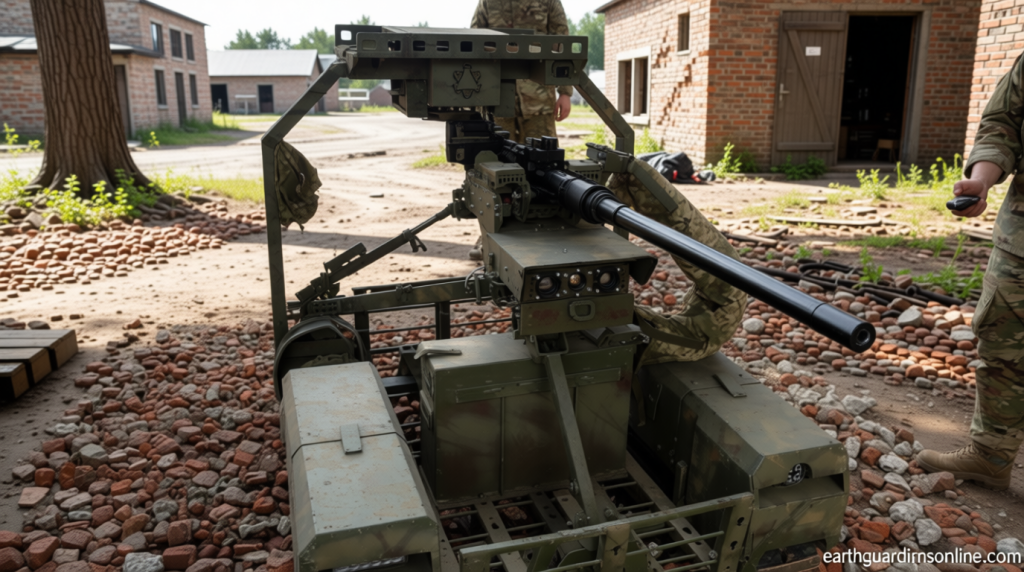
What began as a desperate response to dwindling manpower has evolved into a formidable technological initiative. Drones, remote-controlled tanks, and autonomous robots now shoulder tasks once reserved for soldiers. These machines, often referred to as “silent death” by Russian forces, have redefined the dynamics of combat. Their silent approach allows them to strike without warning, their payloads capable of flattening fortified positions. A recent mission involved six coordinated strikes against Russian targets, executed entirely from behind screens and remote hubs. The process begins with a drone scanning the terrain, followed by a series of calculated explosions that disrupt enemy defenses and clear the way for further incursions. This shift has forced Russia into a reactive posture, struggling to counter an enemy that no longer relies on its traditional strengths.
President Volodymyr Zelensky highlighted this transformation in April, declaring that a Russian position had been captured through the combined efforts of robotic and drone units. The claim underscores a broader trend: since the war’s start in January, these machines have executed over 22,000 missions. The impact is palpable. Ukrainian commanders, once reliant on human troops, now use algorithms and data streams to direct operations. The result is a faster, more efficient method of warfare, though its sustainability remains uncertain. As the Third Assault Brigade’s “NC13” unit notes, a task requiring 2,300 soldiers in past campaigns now demands fewer resources, with only a fraction of personnel needed to achieve the same objective. The loss rate for human soldiers has also dropped significantly, with unmanned systems reducing casualties and altering the psychological toll of war.
From Battlefield to Control Room
Life for Ukrainian military personnel has changed dramatically. Former combatants, now stationed in control centers, describe a war that feels distant, almost surreal. The sound of explosions is no longer accompanied by the screams of wounded allies or the smell of smoke. Instead, operators monitor feeds from reconnaissance drones, their hands steady on joysticks and keyboards. “Back then, war was more about skill and discipline,” recalls Bar, the deputy commander of the NC13 unit. “Now, it’s about how well we coordinate these machines.” His words reflect a broader sentiment: technology has become the primary determinant of success. The machines, mounted on four-wheel chassis and carrying explosive payloads, are described by Russian forces as “silent death.” Their stealthy advance leaves enemies unaware until the final moment, when the shock of a blast reveals their presence.
The battle is not without its challenges. A single robot may stumble over debris, its wheels spinning in vain as it navigates treacherous terrain. Yet, once it reaches its target, the result is devastating. A drone above captures the aftermath—a mushroom cloud of white heat, a thermal footprint that signals the end of a mission. This sequence repeats as the unit deploys additional robots to flank and overwhelm Russian positions. The strategy is clear: use technology to bypass traditional barriers and deliver precision strikes. For Bar, this approach has saved hundreds of lives. “If we had this equipment four years ago, more of my comrades would have survived,” he says. The reality is that each robot represents a human life spared, a calculated risk that has become the cornerstone of Ukraine’s modern defense.
Adapting to the Future
While the military’s transformation is evident, the broader implications of this shift are just as significant. The war has become a test of adaptability, with Ukraine leveraging its smaller population and industrial capacity to outpace Russia’s logistical delays. The country’s early adoption of drones, combined with mass production of precision-guided systems, has turned the tide in critical regions. This strategy is not merely defensive; it’s offensive. Ukraine’s goal is to inflict 35,000 Russian casualties each month, a target designed to pressure Moscow into unpopular recruitment efforts. The strategy has already begun to take effect, with the British spy agency GCHQ estimating that over 500,000 Russian soldiers have been killed or injured since the war began. The numbers are staggering, and the message is clear: the war is no longer about who has the most soldiers, but who can deploy them more effectively.
Yet, the human element remains vital. Gora, a 22-year-old embedded hardware and software engineer, exemplifies the new generation of warfighters. “I’m not just a software engineer—I’m a systems integrator,” she insists, her voice carrying through a live feed from a repair facility in Kyiv. The war has reshaped her career, drawing her from a quiet life in IT to the front lines of innovation. “The key is how we connect the machines,” she explains. “It’s not the vehicles themselves, but the minds that control them. The communication between operators and drones, between systems and soldiers—it’s the glue that holds the operation together.” Her perspective highlights a growing reliance on expertise rather than brute force, a trend that has redefined the role of Ukrainian personnel in the conflict.
As the war enters a new phase, challenges persist. The Salamander 6, a critical drone model, has been spoofed by Russian forces, forcing operators to recalibrate their tactics. This incident underscores the evolving nature of the conflict, where both sides must constantly innovate to maintain the upper hand. Despite these hurdles, Ukraine’s approach has proven resilient. The use of unmanned systems has not only saved lives but also disrupted Russia’s ability to sustain its frontline operations. The cost of the war has shifted from the battlefield to the control room, where the battle for dominance in technology is as intense as any physical engagement. With each new mission, the balance of power continues to tilt, and the future of warfare in Ukraine is being written by those who once simply observed from the sidelines.
The impact of this technological shift is felt beyond the front lines. In the repair shops and factories where these machines are assembled, the war has become a catalyst for innovation. Engineers work under the glow of computer fans and ambient lights, their focus unwavering as they tweak and refine systems that have become lifelines for Ukrainian forces. The machines, once a symbol of distant sci-fi, now stand as tangible tools of survival. For those who operate them, the war is a blend of strategy and intuition, a dance between human ingenuity and machine precision. As the conflict continues, the role of technology in warfare will only grow, and Ukraine’s ability to adapt may determine the outcome of the war. The robots may not shout or bleed, but their impact is undeniable, reshaping the battlefield and the lives of those who fight it.
