
Some of the world’s last Maoist rebels are in India. Their decades-long rebellion is in its death throes
India’s Maoist Rebels: A Revolution on the Brink of Collapse
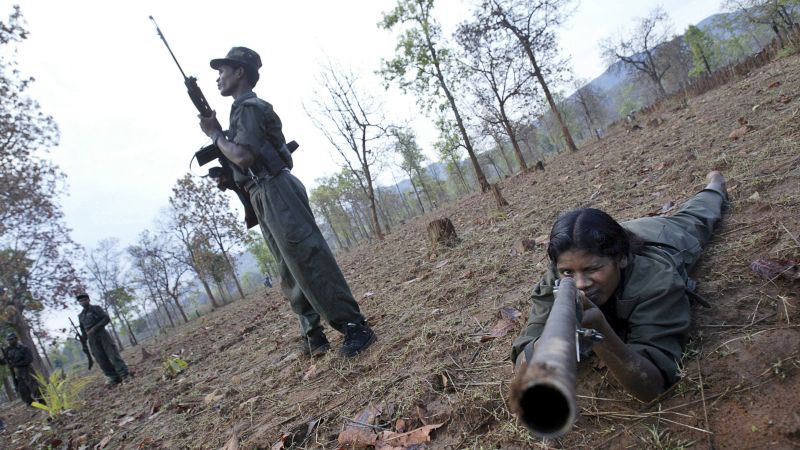
Some of the world s last – As the sun rose over the dense forests of central India, Papa Rao, a 50-year-old former insurgent, stepped out of the shadows with a weathered shirt, worn trousers, and tattered sneakers. He carried a rifle slung across his back, a relic of a conflict that had spanned decades, while a $26,000 reward for his capture loomed like a specter. Behind him, a small contingent of rebels followed, their faces etched with the weight of years spent in the fight against the Indian state. These individuals, dressed in simple sandals and bearing Puma-branded backpacks, represented the final remnants of a global revolutionary movement that once sought to dismantle capitalism. Their mission—to seize control of India and establish a classless utopia—had begun nearly a century ago in China, but now, their rebellion stands at a critical juncture.
The Decline of a Movement
Once a formidable force, the Maoist insurgency in India has seen its momentum wane in recent years. Security forces have intensified their operations, eliminating key leaders and persuading rank-and-file members to lay down their arms. The government, under the leadership of a Hindu-nationalist coalition, has framed the rebels as a threat to the country’s democratic ideals and economic progress. With India’s capitalist economy expanding rapidly, the Maoists’ vision of a communist future appears increasingly out of reach.
Despite these challenges, the Maoists’ influence has persisted, particularly among marginalized communities. Their ideology resonated deeply with Adivasis—indigenous tribes often excluded from the benefits of modernization—many of whom viewed the rebels as champions against exploitation. For decades, Maoist guerrillas operated in remote regions, using hit-and-run tactics to disrupt government operations. Their actions, which included bombings, assassinations, and attacks on public institutions, once dominated headlines and inspired a generation of activists across Asia.
The Birth of a Revolutionary Legacy
The roots of India’s Maoist movement trace back to a pivotal moment in Chinese history. In 1949, Mao Zedong’s reinterpretation of Marxist-Leninist theory enabled the Communist Party to seize power, marking the beginning of a new era. This doctrine, tailored to the conditions of rural China, spread to other nations, including India, where it took root in the 1960s. The term “Naxals” originated from a 1967 uprising in Naxalbari, a village in the northeastern state of West Bengal. This revolt, led by peasants opposing landowners, became the blueprint for a broader movement.
By the early 1970s, the Naxalite movement had gained traction, with Maoist principles influencing activists across the country. The Peking Review, China’s official publication, praised Indian peasants for embracing “Mao Zedong Thought” and dismantling oppressive systems. However, the CIA offered a more cautious perspective, noting that while the rebels inspired fervor, their methods—though effective in provoking fear—had not yet secured lasting victory. This duality defined the Maoist struggle in India: a blend of idealism and pragmatism, often clashing with the realities of governance.
A Long and Turbulent Journey
Over the decades, the Naxals carved out a vast network of support in what became known as the “Red Corridor”—a region spanning multiple states in central and eastern India. This area, characterized by its rugged terrain and dense forests, provided an ideal backdrop for guerrilla warfare. The rebels’ message of social justice struck a chord with local populations, particularly those in poverty-stricken areas where government neglect was rampant. Sukhmati Dhruv, a 45-year-old former Naxalite, recalls the harsh conditions that drove her to join the cause. “The forest officials forced us to pay taxes for every log we cut and every house we built,” she explained to CNN. “They beat us, and there was no end to the violence.” Her story reflects the broader appeal of the Maoist movement among the rural poor.
Papa Rao’s experience mirrors that of many in his group. “The state had no regard for our rights,” he said in a recent interview, describing the rebels’ struggle as a fight for dignity and self-determination. Yet, as the years passed, the movement faced internal divisions and external pressures. While some factions remained committed to armed resistance, others sought political alliances or compromises. This fragmentation weakened their ability to sustain a prolonged campaign, leaving them vulnerable to government crackdowns.
The Symbolism of Surrender
On a recent day, Papa Rao and 17 others emerged from the jungle to participate in a public ceremony that symbolized the end of their insurgency. The event, held in a modest village hall, featured rows of cameras and a backdrop declaring their “return to the mainstream.” Their old weapons, including decades-old L1A1 and Lee-Enfield rifles, were displayed in a row, each labeled as a testament to their past. Nearby, ammunition clips formed the Hindi word for “sacred vow,” a deliberate nod to their ideological commitment.
As the cameras captured the moment, each former rebel was handed a rose and a copy of the Indian constitution, a gesture meant to signify their new allegiance. They listened to speeches by local politicians, stood for photographs with security forces, and then were led away, their rebellion effectively dissolved. For many, this marked the final chapter of a movement that had once challenged the very foundations of the Indian state. Yet, for others, it signaled a shift from armed struggle to political engagement, a transition that the government hoped would eradicate Maoist ideology permanently.
The Naxal movement’s decline has been gradual but decisive. With the ruling party’s electoral dominance and the economy’s steady growth, the rebels’ cause has lost momentum. Still, their legacy endures in the hearts of those they once inspired. Maoism, though no longer a dominant force, continues to shape the discourse on inequality and resistance in India. As Papa Rao and his group step into the political arena, the question remains: will their transition from rebels to politicians bring the change they once envisioned, or will the state’s victory remain a tale of resilience against a fading ideal?
Their journey, spanning nearly a century, began in the classrooms of Chinese revolutionaries but found its unique expression in the forests of India. From Naxalbari to the Red Corridor, the movement evolved, adapting to local conditions while carrying the echoes of its global origins. Today, as the last of the Maoist rebels surrender, their story serves as a reminder of the complexities of revolution—and the challenges of translating it into lasting change.
