
Scientists are cracking the code of interspecies communication. Is that a good thing?
Scientists are cracking the code of interspecies communication. Is that a good thing?
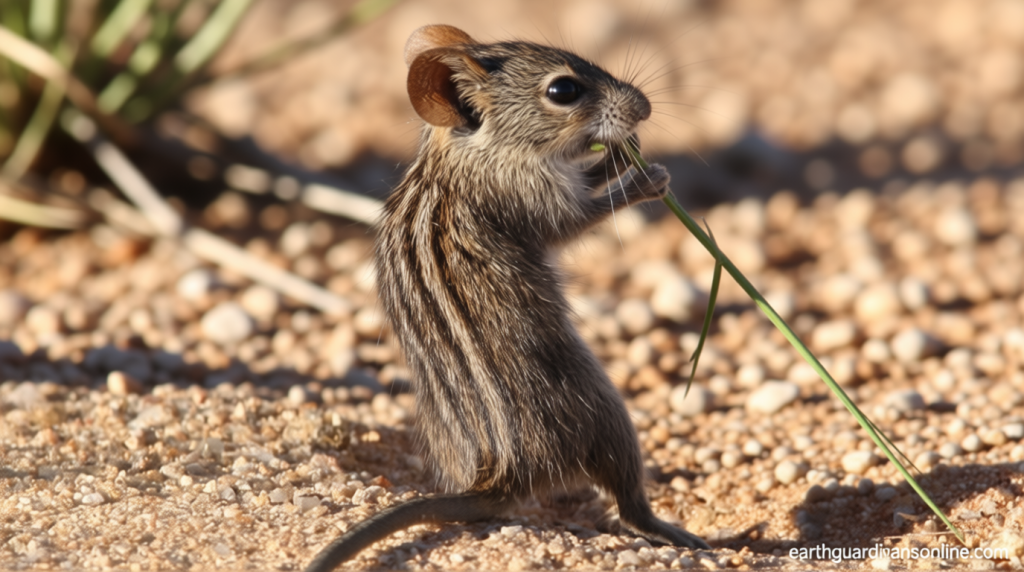
Scientists are cracking the code of interspecies – Deep in the Karoo region of South Africa, where the landscape stretches in endless waves of rust-colored earth, a small African striped mouse stretches out under the morning sun. Unbeknownst to the rodent, the silence it enjoys is about to be broken by a series of high-pitched squeaks, invisible to human ears. These sounds, emitted by audio equipment placed near its nest, mimic the calls of neighboring mice, triggering a visible reaction. The mouse lifts its hind legs, a deliberate posture of alertness, as if recognizing a threat. Yet, when the same call is played from a mouse within its own nest, it remains undisturbed, continuing its routine as if nothing has changed. This subtle distinction, observed by researchers, highlights the complexity of animal communication—and raises questions about the implications of understanding it.
The Hidden Language of the Karoo
The study, led by Nicolas Mathevon, a professor at the University of Saint-Etienne in France, marks the first time scientists have decoded the vocal patterns of mice in their natural habitat. Using an array of microphones and machine learning tools, the team recorded thousands of squeaks over multiple days, uncovering a nuanced system of interaction. “When it’s a vocalization from a neighboring individual, they pay a lot more attention,” Mathevon explained. “They really look at the speaker. They are disturbed.” This insight suggests that mice use specific sounds to signal the presence of outsiders, a behavior that could have evolutionary significance. But what about the calls from mice they know? The response is more passive, indicating a hierarchy of attention based on familiarity.
“If it’s from a complete stranger, then we see an even stronger reaction, like the mouse fleeing into the bush because they are really surprised.”
Mathevon, author of The Voices of Nature: How and Why Animals Communicate, has long explored the communication systems of diverse species, from birds to crocodiles. His work on mice builds on this broader curiosity, revealing that vocal exchanges are far more intricate than previously believed. The project also marks a step toward bridging the gap between animal and human communication, a goal that has long captivated scientists. While the mice’s calls are not immediately audible, they carry layers of meaning that could one day be interpreted by humans.
Decoding the Silent Symphony
Over 12 days, the research team captured 122,619 squeaks from dozens of African striped mice, using 23 microphones strategically placed across four nest bushes. The data revealed at least seven distinct types of vocalizations, each serving a different purpose. Some calls were used within the nests, while others echoed across the territory, signaling to distant listeners. The team trained an artificial neural network, similar to the systems behind large language models like ChatGPT, to categorize these sounds. This approach enabled them to identify unique vocal signatures for each nest, and later, for individual mice. “Machine learning is absolutely essential,” Mathevon emphasized. “You have too many calls, too many vocalizations, you cannot handle them without it.”
While the study focuses on static information—like identifying a mouse’s identity—the next phase aims to uncover dynamic data, such as stress levels or emotional states. These variables, which shift over time, could provide deeper insights into how mice navigate their environments. Mathevon noted that such findings challenge the notion that human language is uniquely complex. “Animals are not just making simple noises; they’re creating a language with meaning,” he said. The work on mice is one of four projects shortlisted for this year’s Dolittle Prize, a prestigious award for breakthroughs in animal communication research.
The Dolittle Prize, sponsored by British billionaire Jeremy Coller, offers $100,000 for significant progress in decoding animal speech. Additionally, it promises a $10 million investment or $500,000 in cash to any team that demonstrates a species can communicate independently with researchers without recognizing human presence. The prize’s vision is ambitious: a future where humans and animals interact in a fluent, two-way dialogue. “The goal is to create genuine, meaningful contact,” said Jonathan Birch, a prize judge and philosophy professor at the London School of Economics. “But we’re still a ways from achieving that.”
The mice study is just one example of a growing trend in bioacoustics. Researchers have increasingly turned to technology to parse the soundscape of the natural world, uncovering patterns that once seemed impenetrable. From dolphins’ whistles to the cries of human infants, the field is expanding to explore communication as a universal phenomenon. Mathevon’s work, for instance, has included analyzing the vocalizations of hippos, a project that is yet to begin. “The idea is that animals have their own language systems, and we’re trying to understand them,” he said.
Some experts are optimistic about the potential for two-way communication. If humans can interpret and respond to animal calls, it could revolutionize fields like conservation, medicine, and environmental science. Imagine a scenario where researchers can calm anxious animals, or even warn them of approaching danger. However, others caution that such interactions might alter natural behaviors, potentially leading to unintended consequences. “We need to ask whether this is beneficial for the animals themselves,” Mathevon added. “Are we helping them, or changing their instincts?”
Despite these questions, the research continues to push boundaries. The Dolittle Prize, which will announce its winner on June 25, has already celebrated a milestone in 2025, when a team discovered a language-like system in wild dolphins’ whistles near Sarasota, Florida. This achievement, along with the current mouse study, underscores the evolving understanding of animal communication. As technology advances, so does the possibility of humans stepping into the role of interpreters for the natural world. Whether this is a step forward or a disruption remains a topic of debate—but one thing is certain: the silent symphony of the Karoo is now a subject of scientific fascination.
The implications of these findings extend beyond the Karoo. If mice can communicate with such precision, what other species might hold similar secrets? The ability to decode animal vocalizations opens a door to a deeper appreciation of their social structures and emotional capacities. Yet, it also invites ethical considerations. Will two-way communication enhance their survival, or create new dependencies on human intervention? As researchers continue to refine their methods, these questions will shape the future of interspecies dialogue. For now, the African striped mouse remains a symbol of the mysteries still waiting to be unlocked in the animal kingdom.
