
The biggest brawl at Trump’s UFC night may be with the weather
The Biggest Brawl at Trump’s UFC Night May Be With the Weather
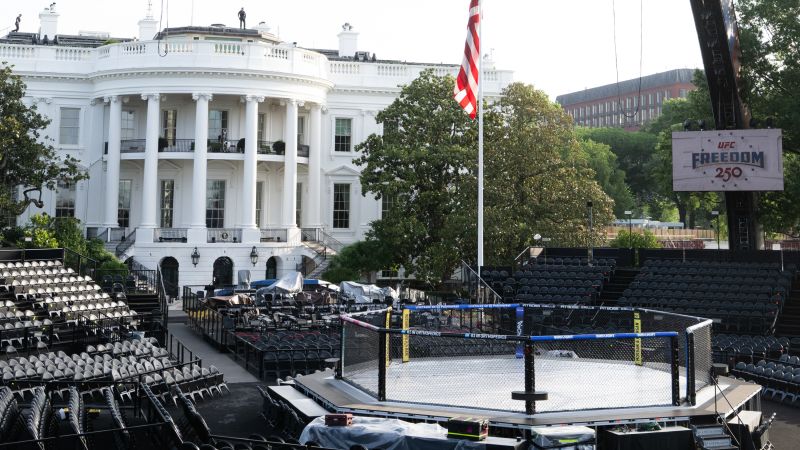
The biggest brawl at Trump s UFC – As the world gears up for the highly anticipated UFC event on Sunday, the focus is not only on the martial arts showdown but also on the unpredictable elements of nature that could complicate the festivities. The event, set to take place on the South Lawn of the White House, coincides with President Donald Trump’s 80th birthday, adding a layer of historical significance to the occasion. With over 100,000 spectators expected to gather for the spectacle, organizers face a unique challenge: ensuring the safety of attendees while maintaining the integrity of the event. The weather forecast, however, suggests that the most intense battles may not be confined to the Octagon but could unfold above it, as severe thunderstorms loom on the horizon.
The storm system threatening the event has been a topic of discussion among meteorologists and event planners for weeks. With lightning strikes and high-speed gusts projected as the primary threats, the $60 million gathering is under scrutiny for its vulnerability to weather disruptions. Forecast models indicate that the storm activity will peak in the late afternoon, potentially interfering with the fight schedule and creating chaos for the thousands expected to witness the action. The weather’s role in the event’s success has become a critical concern, as the organizers must balance the thrill of the fight night with the urgency of monitoring atmospheric conditions.
A Weather Forecast as Intense as the Fight
Thunderstorms are anticipated to intensify as the afternoon heat builds, with the first waves possibly arriving as early as 2 p.m. ET. The storm’s timing overlaps with the main event, creating a scenario where the sky could become as unpredictable as the combatants inside the Octagon. According to the National Oceanic and Atmospheric Administration’s Storm Prediction Center, the Washington, D.C., region faces a level 2-of-5 severe weather risk, the highest in the country, spanning from Virginia to New Jersey. This forecast underscores the gravity of the situation, as the city’s iconic landmarks, including the White House, will be in the path of the storm.
The thunderstorms are expected to move through the area between 3 p.m. and 6 p.m., bringing with them frequent lightning and wind gusts exceeding 50 miles per hour. These conditions could pose a serious risk, especially for the large crowd assembled on the Ellipse and the additional 4,000 spectators on the South Lawn. The combination of high winds and lightning could lead to disruptions in both the audience experience and the event’s logistics. As a result, organizers are preparing contingency plans, including real-time monitoring of the weather and potential adjustments to the schedule if conditions deteriorate.
The ‘Claw’ Structure: A Double-Edged Sword
Amid the weather uncertainty, the venue itself stands as a remarkable feat of engineering. The centerpiece of the event, the “Claw,” is a towering 100-foot lighting grid designed to illuminate the Octagon during the fights. While this structure ensures optimal visibility for the audience, it may also serve as an unintended conductor of electricity during severe thunderstorms. The “Claw” has already drawn attention in aerial photographs of the nation’s capital, but its potential to attract lightning could become a deciding factor in whether the event proceeds as planned.
Though the “Claw” is a symbol of the event’s grandeur, its presence raises questions about the safety of the space. The towering metal framework, necessary for the fight’s visual impact, may amplify the risk of lightning strikes, particularly if the storms intensify. Event planners have reportedly coordinated with the U.S. military to enhance their monitoring capabilities, ensuring that any weather-related threats are addressed promptly. This partnership highlights the seriousness with which the organizers are approaching the possibility of a natural disruption to their plans.
CEO Dana White’s Weather Woes
The UFC’s top executive, Dana White, has openly expressed his concerns about outdoor events, citing the challenges posed by unpredictable weather. In an interview with Fox News, White emphasized that while the organization is prepared to adapt to changing conditions, lightning remains the most formidable adversary. “If it rains, we’re going. If it snows, we’re going,” he stated, highlighting the UFC’s commitment to proceeding regardless of the elements. However, the CEO also warned that lightning could be the final factor in determining whether the event is canceled or rescheduled.
“The only thing that kills us is lightning,” White said, underscoring the severity of the threat. His comments reflect a broader industry concern, as outdoor combat sports are often at the mercy of the weather. While the UFC has a history of managing weather-related risks, the scale of this event—hosted at the White House—adds an extra layer of complexity. The organizers are not only vying for the attention of fans but also for the approval of weather experts, who will play a crucial role in assessing the safety of the venue.
Despite the challenges, the event remains a major draw for both sports enthusiasts and political observers. The anticipation surrounding Trump’s 80th birthday has fueled a surge in ticket sales, with crowds expected to fill the Ellipse and South Lawn in record numbers. However, the threat of thunderstorms means that every moment of the event could be shadowed by the possibility of a weather delay. Organizers are working closely with meteorologists to track the storm’s movement, using advanced technology to predict its intensity and timing.
As the date approaches, the question of whether the weather will be the event’s undoing becomes increasingly relevant. While the UFC has demonstrated resilience in the face of previous weather challenges, the stakes are higher this time. The White House’s iconic setting, combined with the high-profile nature of the event, means that any disruption could have broader implications. Nevertheless, the fighters and their teams are determined to see the event through, regardless of the conditions. For the spectators, the risk of inclement weather may only add to the excitement, as the challenge of weathering the storm becomes part of the experience.
Historically, outdoor events have relied on a combination of preparation and luck to avoid weather-related setbacks. The UFC has used this strategy in the past, but this year’s forecast has forced organizers to take a more proactive approach. With the storm system expected to arrive during peak hours, the team is implementing measures to ensure the safety of the crowd, such as setting up temporary shelters and deploying weather tracking drones. These efforts are part of a larger plan to mitigate risks while maintaining the event’s festive atmosphere.
For the fans, the excitement of witnessing a major UFC event at the White House is tempered by the knowledge that the weather could disrupt the experience. However, the unpredictability of the storms has also created a sense of urgency and anticipation, as the event’s success hinges on a delicate balance between human effort and natural forces. The organizers are hopeful that the storm will pass without incident, but they are also prepared to make quick decisions if necessary. As the day unfolds, the battle between the fighters and the elements may prove to be the most compelling story of the night.
In the end, the event’s outcome will be determined by a combination of factors: the skill of the athletes, the preparedness of the organizers, and the whims of the weather. Whether the storms will be a minor inconvenience or a major disruption remains to be seen. But one thing is certain—the fight for the spotlight at Trump’s UFC night will be as fierce as the thunderstorms threatening to overshadow it.
