
UK’s Starmer hits out at people ‘trying to interfere in our democracy,’ after Vance blames Nowak death on mass migration
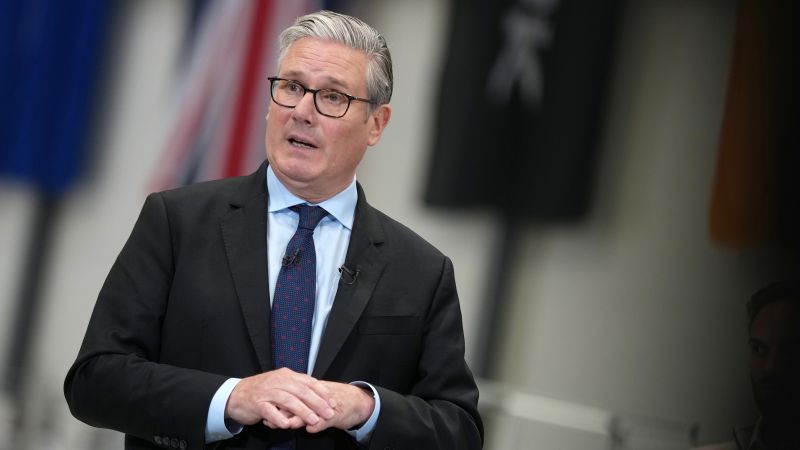
UK’s Starmer Condemns Interference in Democracy Amid US Vice President’s Comments on Nowak Murder
UK s Starmer hits out at people – UK Prime Minister Keir Starmer has condemned individuals attempting to undermine British democracy, following a sharp critique from US Vice President JD Vance. Vance’s remarks linking the recent killing of Henry Nowak to “mass migration” have reignited a national debate, with Starmer’s office warning against efforts to inflame divisions. The incident, which occurred on December 3, 2025, involved the death of Nowak, an 18-year-old White finance student, during an attack by Vickrum Digwa, a 23-year-old Sikh man.
The Tragic Incident and Its Aftermath
Nowak was traveling home from a night out with friends when he was stabbed five times by Digwa, according to local police. The attack left him with severe internal bleeding from a chest wound, and he died shortly afterward. Bodycam footage released by Hampshire Police later showed Nowak struggling as officers restrained him, despite his repeated pleas that he was “I can’t breathe” and “I’ve been stabbed.”
“I don’t think you have, mate,” an officer reportedly said, responding to Nowak’s cries for help.
Digwa initially claimed to police that he had been the victim of a racist attack, a narrative that was later debunked. He was eventually convicted of murder and sentenced to life in prison. The case, however, has been seized by far-right groups to accuse British institutions of bias against White citizens, framing the incident as a symbol of systemic discrimination.
Vance’s Blame on Mass Migration
On Friday, Vance joined the discourse, attributing Nowak’s death to the “flow of mass migration.” In a post on X, he argued that the student would still be alive if “the last few generations of European elites had stood their ground against the politics of self-hatred and the mass invasion of migrants.” His comments echoed a broader argument among right-wing figures that migration policies have led to a decline in cultural values and increased tensions within society.
Vance’s statement has been seen as a political maneuver, aiming to highlight perceived failures in immigration control. The US Department of State later echoed similar sentiments, expressing condolences to Nowak’s family while suggesting “two-tiered policing” contributed to the incident. This idea, that ethnic minorities receive preferential treatment, has become a central point of contention in the UK’s political landscape.
Starmer’s Defense of Democratic Integrity
Starmer’s spokesperson swiftly responded to Vance’s remarks, accusing critics of “interfering in our democracy” and “stirring division on our streets.” The statement emphasized the importance of respecting the Nowak family’s wishes, who have stated they do not want the tragedy to fuel further conflict. “The system is working,” said Deputy Prime Minister David Lammy, countering claims of biased policing.
Lammy added that while mistakes can occur in any public service, ongoing investigations are necessary to uncover the full truth. “We don’t recognise the characterisation of two-tiered policing,” he clarified, defending the integrity of the UK’s judicial process. This exchange underscores the growing polarization between progressive and conservative factions in the UK over immigration and racial dynamics.
Political Implications of the Nowak Case
The Nowak case has become a flashpoint in the UK’s political discourse, with both sides using it to advance their narratives. On one side, critics argue that the police’s handling of the incident reflects a broader trend of favoring minorities over White citizens, citing the bodycam footage as evidence. On the other, supporters of the current administration insist the system is fair and that the case is being examined thoroughly.
Starmer’s government has faced accusations of being overly accommodating to immigrant communities, a charge that Vance’s remarks have amplified. Meanwhile, the US Department of State’s statement appears to align with the UK’s right-wing critics, suggesting that institutional biases in policing are part of a larger civilizational shift. “Ideological conditioning and two-tiered policing are glaring symptoms of civilizational decline,” the statement claimed, urging rejection across Western nations.
Reactions and the Path Forward
As the debate continues, the UK’s political leaders are under pressure to address concerns about policing practices while maintaining their stance on immigration. The Nowak family’s grief remains at the center of the discussion, with their desire for unity contrasting against the rhetoric of division. Starmer’s office has emphasized the need for a calm, evidence-based approach to the case, urging citizens to avoid using it as a tool for political attacks.
Meanwhile, the US’s engagement with the UK’s situation highlights the interconnectedness of democratic debates across the Atlantic. Vance’s comments, while controversial, have sparked a renewed focus on how migration policies impact social cohesion. As the case moves forward, it will likely serve as a barometer for public sentiment on both sides of the Atlantic, testing the resilience of democratic institutions in the face of ideological clashes.
Nowak’s death has not only shaken his community but also ignited a broader conversation about identity, justice, and the role of immigration in shaping societal tensions. The bodycam footage, which captures the moment of his final pleas, has become a powerful symbol in the debate, with some interpreting it as evidence of systemic favoritism and others as a testament to the effectiveness of police protocols. As the UK grapples with these issues, the incident serves as a reminder of the complex interplay between individual tragedies and national policy.
The fallout from the Nowak case also reflects the increasing influence of social media in shaping public opinion. Vance’s use of X to frame the murder as a consequence of mass migration has amplified the issue on a global scale, drawing comparisons to similar debates in the US. This cross-border exchange of ideas underscores the shared challenges of modern democracies in balancing inclusivity with cultural preservation. For now, the focus remains on ensuring that the case is resolved with fairness, while the political discourse continues to evolve in response to public sentiment and media narratives.
A Broader Context for the Debate
Experts suggest that the Nowak case is part of a larger trend of using high-profile incidents to question institutional loyalty. In recent years, similar events have been leveraged to critique policing methods, immigration policies, and multicultural integration. This pattern highlights the role of media and political leaders in framing narratives that resonate with specific audiences.
Starmer’s government has been accused of downplaying concerns about migration, a move that critics say risks alienating parts of the population. Yet, the administration maintains that integration efforts have strengthened the country’s social fabric. As the debate intensifies, the Nowak family’s stance—seeking to avoid further polarization—will be crucial in determining how the incident is remembered and what lessons are drawn from it.
In conclusion, the Nowak murder has become a focal point for contrasting views on democracy, migration, and policing. While Vance and the US State Department emphasize the role of mass migration in the incident, Starmer and his team defend the integrity of British institutions. The case exemplifies the challenges of addressing complex social issues through political discourse, where individual stories are often used to reflect broader national anxieties. As the UK and US continue their exchange of perspectives, the outcome of this debate may shape future policies and public trust in both nations’ democratic systems.
