What was it all for? US-Iran agreement brings bitter rivals full circle

What was it all for? US-Iran agreement brings bitter rivals full circle
What was it all for US Iran – As tensions between the United States and Iran reach a fever pitch, a 60-day deadline has been set for Iran to finalize a nuclear deal, with the specter of American military action hanging over the negotiations. President Donald Trump, despite his reputation for brinkmanship, has publicly voiced hopes for a breakthrough, even as Tehran’s leadership remains steadfast in its opposition. The parallels to a previous cycle of conflict are striking, yet the path to resolution has grown increasingly complex and volatile. This repetition of events suggests a pattern that has defined US-Iranian relations for years, though the stakes have never been higher.
The Cycle of Conflict
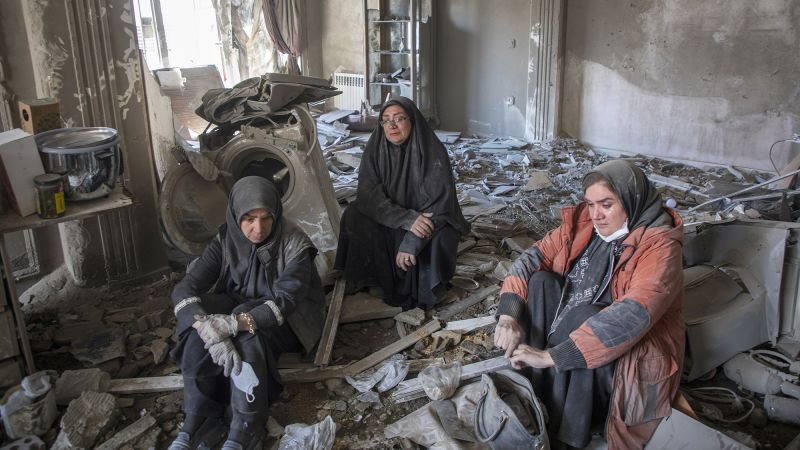
Historically, the Middle East has witnessed similar moments of crisis. In April 2025, the region stood on the brink of war, with Israel preparing to strike Iran’s nuclear facilities and the United States poised to intervene. The situation then mirrored the present, but the outcome was far more devastating. After a 12-day war that saw Israel dismantle a significant portion of Iran’s security infrastructure and the US follow up with its own attack, the consequences were catastrophic. Over 3,000 Iranian lives were lost, with nearly half being civilians, according to monitoring groups. In Lebanon, the toll surpassed 3,600, many of whom were also civilians, as reported by the country’s health ministry. This cycle of violence, though familiar, has deepened the scars on both sides.
“We are not here to make peace, but to make sure Iran can’t make a bomb,” Trump declared in a recent press briefing, his tone resolute yet tinged with impatience. The statement reflects a strategy that has been tried before—pressuring Iran with military threats to force compliance in nuclear negotiations.
Three years prior, Trump had already initiated a similar approach. In March 2025, he sent a letter to then-Supreme Leader Ayatollah Ali Khamanei, demanding a two-month window to reach an agreement or face a US-led attack. His envoy, Steve Witkoff, was dispatched to Oman to spark diplomatic talks, but the effort collapsed when Israel’s “Operation Rising Lion” struck first. The operation, which targeted Iran’s nuclear capabilities and security apparatus, set the stage for the broader conflict that followed. Trump’s insistence on a deadline, combined with Israel’s aggressive stance, created a situation where military action seemed inevitable.
The Human Cost of the Cycle
The repetition of this scenario has raised questions about its effectiveness. For the Trump administration, the cycle of strikes and negotiations has become a defining feature of its foreign policy in the region. Yet, the human toll has been immense. The first round of violence in 2025 resulted in thousands of casualties, with families and communities in both Iran and Lebanon bearing the brunt. The current round, with its 60-day timeline, feels like a continuation of that same brutal rhythm. Trump’s history of pursuing this strategy—first in 2025, now again—has led to a situation where military force appears almost preordained.
While the initial strikes were a calculated move to weaken Iran’s position, the aftermath has left the country in a state of existential uncertainty. The damage to its nuclear facilities, coupled with the loss of key leadership figures, has forced Tehran to reconsider its strategic priorities. However, the fear of further attacks has also hardened its resolve. The question remains: does this cycle of conflict bring the parties closer to a deal, or does it merely prolong the struggle?
The Challenge of Succession
One of the most pressing challenges for the Trump administration is the evolving leadership in Iran. The survivors of the 2025 attacks, or their successors, now hold the reins of power. Supreme Leader Mojtaba Khamenei, whose family was killed in the strike that injured him, has become a symbol of Iran’s resistance. Yet, his willingness to negotiate is questionable, especially given the trauma of his loss and the political chaos that followed.
Iran’s leadership structure has long been a factor in its ability to respond to external pressures. The decapitation of key figures in previous conflicts has often led to a shift in power dynamics, with younger, more radical leaders taking the helm. This trend is evident in the aftermath of the 2025 attacks, where the death of the previous supreme leader and the destruction of Iran’s security apparatus have created a vacuum that hardliners are now filling. The resulting leadership is more entrenched in its opposition to the US, making compromise difficult.
“I have the power to end this crisis,” Trump said during a televised address, “and I will use it to ensure Iran’s compliance.” His rhetoric underscores the belief that military pressure is the most effective tool for securing concessions, a philosophy that has driven his approach to the Iranian nuclear program.
Comparisons to the Afghan conflict are inevitable. In that war, US-led raids on Taliban leadership often left their children and successors to carry the torch of resistance. Similarly, the attacks on Iran’s leadership in 2025 have ensured that the country’s most ardent hardliners remain in control. This has made the prospect of a negotiated settlement more elusive, as the new leaders are less inclined to cede ground. The situation in Iran is now defined by a combination of fear, anger, and strategic calculation, all of which complicate the path to diplomacy.
The Unanswered Questions
Two critical questions linger over this latest attempt at a deal: What has been gained from the past year of violence, and has the cycle of conflict made an Iranian nuclear weapon more or less likely? The answer to the second question is clear. After the destruction of its nuclear facilities and the loss of key scientific expertise, Iran’s capacity to develop a bomb has been significantly weakened. The previous peak in enrichment capabilities, which existed in April 2025, is now a distant memory. Any nuclear weapon Tehran might build today would require a rapid acceleration of efforts, with every step under intense scrutiny from the US and Israel.
Yet, the first question remains more ambiguous. The violence has reshaped the political landscape, with Iran’s leadership forced to adapt to a new reality. The survivors of the attacks, whether by chance or design, now hold the keys to the country’s future. Trump’s hope is that this renewed leadership will be more open to negotiation, but history suggests otherwise. In the past, decapitation strikes have often led to the rise of more uncompromising figures, who view the US as an existential threat. The administration must now hope that grief and loss have tempered Iran’s resolve