
Breakaway Catholic group excommunicated after defying warnings from Pope Leo
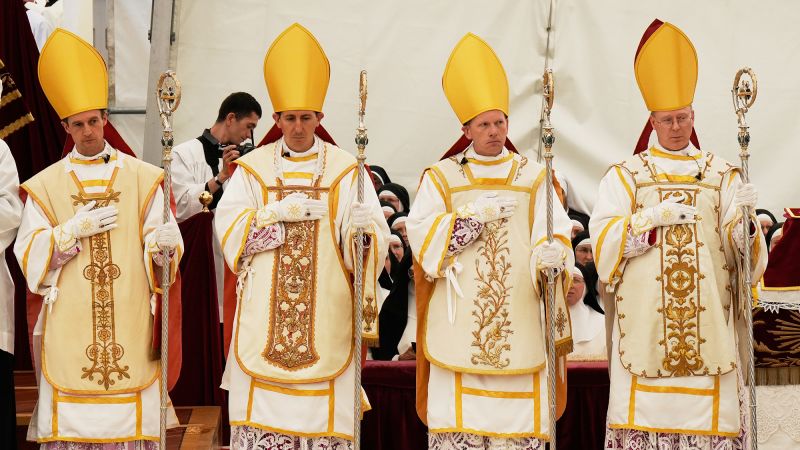
Vatican Excommunicates Breakaway Catholic Group After Defying Pope
Breakaway Catholic group excommunicated after defying – The Vatican has officially excommunicated a breakaway Catholic group following their defiance of Pope Leo XIV’s directives. The decision was announced on Thursday, targeting the Society of Saint Pius X, a traditionalist faction that has long resisted Vatican reforms. The group’s ordination of four new bishops on Wednesday, without papal approval, triggered the excommunication, marking a decisive step in the Vatican’s effort to maintain doctrinal unity. This action underscores the Pope’s commitment to enforcing authority over the Church’s structure and teachings, even at the cost of alienating dissenting members.
Excommunication and Its Implications
Under the latest decree, the Society of Saint Pius X’s members who support the ordination of the four bishops are now excluded from the sacraments, including marriage and confession. The Vatican emphasized that excommunication signifies a complete break with the Church’s hierarchy, reinforcing the severity of the group’s actions. The decision also affects the two bishops who presided over the ordination, solidifying their separation from mainstream Catholicism. The Church’s stance aims to clarify the boundaries of acceptable practices within its fold.
The excommunication process includes specific conditions for reintegration, such as submitting a letter of repentance to the Pope and affirming the Church’s teachings. These measures are intended to encourage members to reconcile with the Vatican, while also deterring further schismatic acts. Vatican News highlighted that the excommunication is part of a broader strategy to uphold the Church’s institutional cohesion and doctrinal purity, particularly in response to the group’s rejection of key reforms from the Second Vatican Council.
Historical Context of the SSPX
The Society of Saint Pius X, founded by French Archbishop Marcel Lefebvre in 1970, has been a vocal opponent of modern Catholic practices since its inception. Initially reprimanded in 1975 for resisting Vatican II changes, the group regained a degree of autonomy under Pope John Paul II. However, its recent ordinations have reignited tensions, leading to the latest excommunication. The group’s traditionalist views, which emphasize Latin Mass and a strict interpretation of Church doctrine, have remained consistent despite Vatican interventions over the decades.
The Vatican’s decision to excommunicate the group reflects a shift in its approach to addressing schism. While past actions targeted only clergy, this decree extends to lay members who formally associate with the SSPX. The move signals a more inclusive yet firm stance on obedience, ensuring that all participants in the group’s defiance face consequences. This reinforces the Pope’s authority and strengthens the Church’s ability to maintain unity amid growing dissent.
Pope’s Rationale for the Excommunication
Pope Leo XIV has consistently prioritized the Church’s doctrinal integrity and unity. During a June 16 press briefing, he described the recent ordinations as a “schismatic act” with “grave consequences for the Church’s authority.” The Pope emphasized that the group’s rejection of modern liturgical practices and their stance on religious freedom, ecumenism, and liturgical reforms have created a rift within the Catholic community. The excommunication is intended to clarify the Vatican’s position on these issues and to demonstrate the consequences of sustained resistance.
“The excommunication is not merely a punishment but a means to restore the Church’s spiritual and institutional coherence.”
Global and Domestic Impact
The excommunication has broader implications beyond the Society of Saint Pius X’s traditionalist base. In the United States, the group maintains a significant presence, with its headquarters located in Minnesota. The decree may affect the group’s ability to conduct sacraments, weakening their influence in local parishes. Meanwhile, the Vatican’s decision has sparked discussions about the balance between disciplinary action and pastoral care, as some members may seek reconciliation while others remain steadfast in their opposition.
Cardinal Pietro Parolin, the Vatican’s secretary of state, stressed the importance of unity, calling the ordinations a “serious breach of the Church’s unity.” He noted that excommunication is a specific tool to address such breaches, ensuring that all members adhere to the Pope’s leadership. The Vatican’s approach combines strict enforcement of rules with an open door for those willing to return to full communion, reflecting its dual commitment to discipline and reconciliation.
