
How Trump made more than $1 billion on crypto when most of his coin’s investors lost money
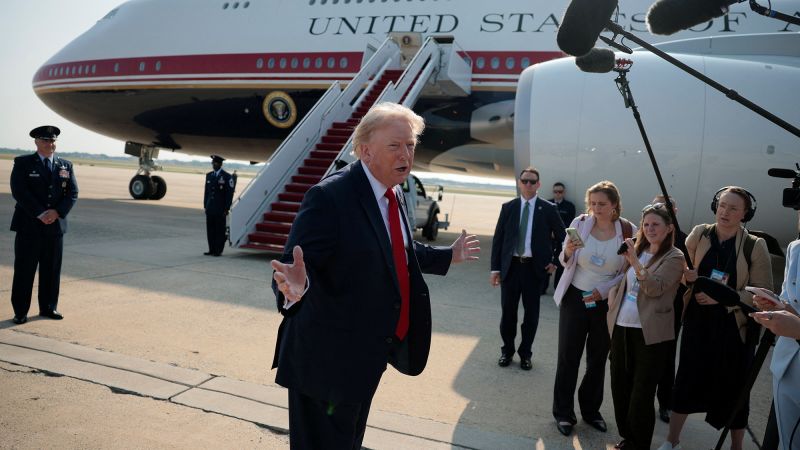
Trump’s Memecoin Surge and the Unseen Wealth Gains
How Trump made more than 1 billion – Donald Trump, then-president, unveiled his $TRUMP memecoin in the days before his second inauguration, sparking a new era of crypto engagement under his leadership. The token, designed to capitalize on his political influence, became a cornerstone of the family’s financial strategy, contributing significantly to his net worth growth in 2025. While most investors in the coin faced steep losses, Trump’s earnings from the venture far exceeded their own, highlighting the stark contrast between the fortunes of the president and those of the general public.
A Rapid Rise and a Dramatic Fall
Within months of its launch, the $TRUMP memecoin achieved a market valuation of $15 billion, according to CoinMarketCap. This rapid ascent positioned it as one of the most successful memecoins of the year. However, the euphoria was short-lived. By the end of 2025, the coin’s value had plummeted to just $400 million, marking a 97% decline. Despite this, Trump remained unfazed, as his wealth surged independently of the coin’s market performance.
Memecoins, known for their volatile nature, often experience dramatic price swings. This is due to their lack of inherent value and reliance on hype, social media traction, and speculative demand. The $TRUMP coin, while initially riding on the president’s popularity, became a prime example of this pattern. Investors who poured money into the token during its peak saw their portfolios shrink, but Trump’s financial gains from related activities continued to grow.
How Trump’s Crypto Ventures Netted Millions
Although Trump did not directly invest in cryptocurrencies, his companies played a central role in generating profits. The majority of his cryptocurrency-related earnings came from transaction fees, licensing deals, and other revenue streams tied to the coins his firm distributed to traders. This model allowed him to benefit from the coin’s success without necessarily holding large quantities of the token himself.
The Trump Organization’s affiliates, CIC Digital and Fight Fight Fight LLC, held 80% of the $TRUMP coin’s supply. This control ensured that the president and first lady could steadily cash out their gains, even as the coin’s market value fluctuated. Unlike traditional investments, where returns depend on the performance of the asset, Trump’s earnings were guaranteed with every trade involving $TRUMP. Whether the coin rose or fell, he continued to profit from its movement, creating a consistent income stream.
According to reports, Trump’s crypto ventures accounted for over $526 million in revenue in 2025. This figure includes not only the $TRUMP memecoin but also other tokens associated with World Liberty Financial LLC, a firm partially managed by his sons, Eric and Donald Trump Jr. The combined impact of these projects underscored the president’s ability to leverage his public persona for financial gains, even in a market where most participants struggled.
Supporters vs. Speculators
Some investors in $TRUMP were motivated by more than just profit. Many saw the token as a way to support Trump’s political agenda, contributing to his campaign or expressing loyalty to his brand. Others were drawn by the novelty of investing in a coin tied to a prominent figure. However, a smaller group of wealthy backers participated in a unique perk: a private dinner hosted by Trump in May 2025.
The event, described as a black-tie affair, was reserved for the top 220 holders of $TRUMP. Attendees, who had invested millions in the coin, received exclusive access to a VIP reception with the president. This gesture reinforced the idea that $TRUMP was not just a financial product but also a tool for cultivating relationships and securing political influence. While the coin’s market value later dropped, these early investors maintained a tangible connection to Trump’s world.
Despite the coin’s collapse, some investors still managed to profit. For instance, those who held onto their tokens during the initial surge and sold them at the peak could have reaped substantial returns. However, the majority of holders faced losses, with the coin’s value dwindling to a fraction of its original worth. The disparity in outcomes raised questions about the risks of investing in memecoins linked to political figures.
Rug-Pulls and the Promise of Stability
Memecoins are notorious for their speculative nature and the risk of “rug-pulls” — schemes where creators abruptly withdraw their funds, leaving investors with worthless tokens. To mitigate this risk, the $TRUMP and $MELANIA memecoins were marketed as rug-pull-proof, ensuring that Trump and his family could not unlock all their gains at once. Instead, they planned to stagger sales over three years, spreading out their rewards and reducing the likelihood of a sudden market crash impacting their earnings.
While this strategy protected Trump’s financial interests, it did not shield investors from the coin’s volatility. The $TRUMP memecoin’s dramatic drop reflected the broader instability of the market, where sentiment and hype often drive prices. For many, the investment was a gamble, with the potential for both high rewards and significant losses. Trump’s ability to profit from this uncertainty demonstrated the unique dynamics of his crypto ventures.
Analysts noted that the president’s wealth growth in 2025 was largely driven by crypto gains, even as the stock market provided modest returns. While the S&P 500 saw a 17.9% increase, Trump’s net worth benefited more from the memecoin’s activity. This highlighted the importance of crypto in his financial strategy, particularly during a time when traditional markets offered limited upside. The president’s public claims about his success in the stock market, however, were overshadowed by the reality of his crypto earnings.
The Ripple Effect of a Political Coin
The $TRUMP memecoin’s journey underscored the growing intersection between politics and finance. By aligning his brand with cryptocurrency, Trump tapped into a trend that saw billions of dollars flow into the sector in 2025. The coin’s initial success demonstrated the power of celebrity endorsements and political narratives in driving investment, even in the absence of concrete fundamentals.
Yet, the coin’s subsequent decline also exposed the risks of such ventures. Investors who relied on Trump’s popularity to justify their purchases found themselves facing a harsh reality when the market turned. The $TRUMP coin’s 97% drop served as a cautionary tale about the speculative nature of memecoins and the challenges of maintaining long-term value in a volatile environment.
Despite the losses, the coin’s story remains a testament to the potential of political memecoins. Trump’s ability to generate over $526 million in revenue from his crypto projects, even as most investors lost money, illustrated the uneven distribution of gains in this space. The president’s family and allies, through their control of the coin’s supply and their strategic timing of sales, ensured that they remained on the winning side of the market’s fluctuations.
As the crypto landscape continues to evolve, the $TRUMP memecoin serves as a case study in how political figures can shape market trends. While the coin’s value may have declined, Trump’s financial gains remain a focal point of discussions about the role of crypto in modern wealth creation. For him, the venture was a success — but for the majority of investors, it was a lesson in the unpredictable nature of the digital asset market.
