
Why the search for Lynette Hooker just resumed 2 months after her disappearance in the Bahamas
Why the search for Lynette Hooker just resumed 2 months after her disappearance in the Bahamas
Resuming the Search in a New Location
Why the search for Lynette Hooker – Two months after the mysterious vanishing of Lynette Hooker, an American woman, sparked a widespread search operation in the Bahamas, the Coast Guard has launched a renewed effort. This time, the search is taking place in a different area of the Sea of Abaco, a body of water surrounding the island where her husband claimed they were sailing. The decision to revisit the location reflects growing uncertainty about the initial events and highlights the ongoing investigation into her disappearance.
Initial Disappearance and Circumstances
The 55-year-old Hooker disappeared on the night of April 4, according to her husband, Brian Hooker. Police reports indicate that the couple had just finished dinner on the Abaco Islands before heading back to their yacht. Brian described the incident as an accident, stating that Lynette fell from an 8-foot dinghy when rough seas struck their small boat. However, discrepancies between his account and the available location data have raised questions about the accuracy of his statements.
“The wind blew me away from her and she swam towards the sailboat and we lost sight of each other pretty quickly as it was just about sundown,” Brian Hooker told his friend Daniel Danforth over Facebook Messenger.
Despite his claim, inconsistencies in the timeline and details of the incident have intensified scrutiny. These contradictions have led investigators to reevaluate the events and consider the possibility of foul play. A US official involved in the criminal investigation confirmed that the case is now focused on determining whether Lynette’s disappearance was accidental or intentional.
Early Search Efforts and Shift in Focus
Following her disappearance, authorities quickly mobilized resources. Police in the Abaco Islands, alongside the Royal Bahamas Defence Force and local fire teams, scoured the surrounding waters for clues. Within hours, the Coast Guard joined the operation, utilizing aerial support and deploying advanced technologies like drones and professional divers. The search initially prioritized locating Lynette alive, but it shifted to recovery mode on April 7 after no signs of her were found.
On the day the Coast Guard initiated its criminal investigation, Brian Hooker was arrested by Bahamian police. He was questioned repeatedly about his wife’s whereabouts but was later released. Soon after, he returned to the United States, leaving the search efforts to continue under the watch of Bahamian authorities. This arrest added a layer of complexity to his account, prompting investigators to cross-check his statements with physical evidence.
Electronic Data Contradicts Early Accounts
As the investigation progressed, new data emerged that challenged Brian Hooker’s initial narrative. The US official noted that location records from his electronic devices conflicted with his earlier claims about the course of the evening. For example, he had told investigators that the dinghy lost power because his wife held the engine safety key when she fell. Yet, the data suggested a different path, prompting a deeper dive into the circumstances.
Further analysis revealed that the route the couple took to Elbow Cay, a cay off Great Abaco, didn’t align with the timestamps from their devices. This discrepancy has led to a reexamination of the search area, with the Coast Guard now focusing on a new location. The agency has taken custody of the dinghy Brian Hooker described as the scene of the incident, allowing for a more thorough forensic review.
Current Search Operations and Challenges
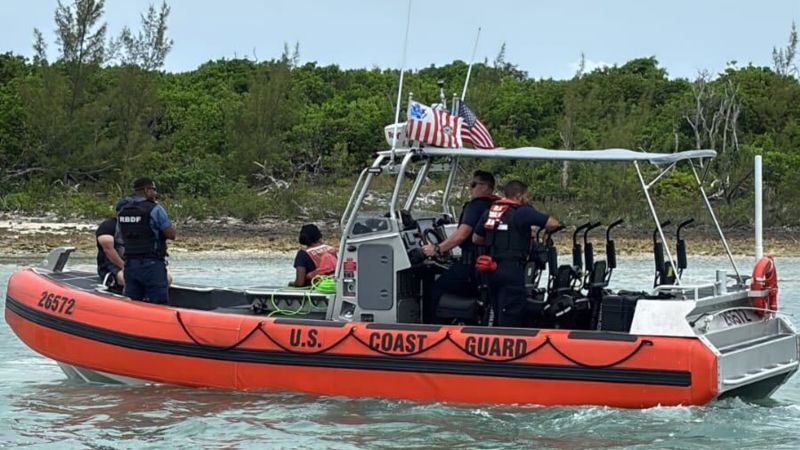
On Wednesday afternoon, a bright orange Coast Guard dinghy was seen navigating the waters near Hope Town, a key location in the search. Accompanied by a Royal Bahamas Defence Force vessel, searchers disembarked to wade into shallow waters, carefully combing the shoreline for any trace of Lynette. As of Thursday morning, divers had entered the Sea of Abaco, continuing the effort to uncover what happened in the early hours of April 4.
The search has faced logistical challenges, including unpredictable weather and the vastness of the water area. The Royal Bahamas Police Force recently granted the Coast Guard permission to expand the search, emphasizing the importance of covering new ground. Meanwhile, cadaver dogs have been deployed to sniff the land for any signs of the missing woman, adding a new dimension to the investigation.
Husband’s Statements Under Scrutiny
Brian Hooker has consistently denied any wrongdoing, asserting that his wife’s disappearance was an accident. However, his account of the evening has been scrutinized for inconsistencies. Initially, he claimed that strong currents pulled them away from the shore after the dinghy lost power. Yet, the data from his devices suggests the boat’s movement was different, raising doubts about his version of events.
Richard Cook, the fire team lead with Hope Town Volunteer Fire and Rescue, shared that Brian had described paddling for hours before reaching the shore. This detail, combined with the dinghy’s location, has created a puzzle for investigators. While the Coast Guard continues to gather evidence, the absence of a confirmed suspect has kept the case open and the search ongoing.
Broader Implications and Public Interest
The case has captured public attention, with media and residents alike following the developments closely. The return to the Sea of Abaco for a second search underscores the complexity of the investigation and the need to explore new possibilities. The Coast Guard’s role in the criminal probe highlights the intersection of maritime rescue and criminal investigation, as they now seek to uncover evidence that could reveal the truth about Lynette’s fate.
Authorities have stressed the importance of meticulous analysis, noting that even small details can lead to significant breakthroughs. The decision to resume the search two months after the initial incident reflects the determination of the teams involved and the hope that new methods or locations might yield the answers that have eluded investigators so far. With the search ongoing, the mystery of Lynette Hooker’s disappearance remains a focal point for both local and federal agencies.
Timeline of Events and Next Steps
To recap the timeline, Lynette vanished on April 4, and the search began immediately. By April 7, the effort had transitioned from active rescue to recovery, with the Coast Guard officially opening a criminal investigation. This step was taken after inconsistencies in Brian Hooker’s statements emerged, leading to renewed efforts last week. The new search, granted permission by the Royal Bahamas Police Force, marks a critical phase in the case.
As the Coast Guard delves deeper into the evidence, the next steps will likely involve cross-referencing data, analyzing the dinghy, and exploring potential leads from the shoreline. The challenge lies not only in uncovering what happened but also in piecing together a coherent narrative from conflicting accounts. The public and investigators alike will be watching closely as the search continues to unfold.
