Why Venezuela probably won’t solve America’s emergency oil problem

Daftar Isi
Venezuela’s Oil Windfall and the SPR Dilemma: Why a 65-Billion-Barrel Stake Won’t Fix America’s Energy Buffer Overnight
Earthguardiansonline.com – The United States Strategic Petroleum Reserve sits at its lowest fill level since November 1982, a fact that has made the emergency stockpile a recurring talking point in Washington. With 130 million barrels drawn down from the 172 million authorized capacity to stabilize supply during the Iran conflict, the question of how to replenish the caverns has become urgent. President Donald Trump has pointed to a sweeping new arrangement with Venezuela as the answer, claiming that America’s majority ownership in 17 Venezuelan oil fields unlocks access to 65 billion barrels of proven reserves — a figure more than twice the size of the nation’s own domestic reserves. Yet the mechanics of how Venezuelan crude would actually flow into the SPR reveal a mismatch that makes the near-term replenishment scenario deeply questionable.
The Architecture of the Deal
Announced by the White House on Monday and described as the “biggest oil deal in world history,” the arrangement channels investment through a little-known Pentagon unit called the Office of Strategic Capital. That office will acquire up to a 35 percent equity position in a holding company that controls North American Blue Energy Partners, or NABEP, which ranks as the second-largest private oil producer operating in Venezuela. The White House stated that NABEP intends to pour $100 billion into new infrastructure to bring its fields into production.
Beyond the equity slice, the State Department holds the right to purchase 20 percent of all Venezuelan oil NABEP produces, priced at cost of production. It also carries a right of first refusal on the remaining output. Taken together, the Trump administration characterizes the combined position as a 55 percent stake in the new joint venture.
The Man Behind the Company
NABEP is controlled by the family of Alejandro Betancourt López, a UK-based international businessman whose profile has drawn scrutiny in multiple jurisdictions. Spanish authorities have investigated him on fraud and money-laundering charges, though no formal indictment has been filed. A parallel inquiry in Switzerland was closed without charges. A spokesperson for NABEP did not respond to requests for comment ahead of the announcement.
The White House emphasized that NABEP will operate under US law and that the government retains veto power over any board-level appointment, a governance safeguard designed to insulate the venture from the kind of opaque control that has historically surrounded Venezuelan energy assets.
The Heavy-Oil Problem
Here the plan runs into a physical and regulatory wall. Venezuelan crude is predominantly heavy, high-sulfur oil — the kind that Gulf Coast refineries were purpose-built to process into asphalt, industrial lubricants, diesel, and jet fuel. That is precisely why Venezuela remains the second-largest source of imported crude for the United States, trailing only Canada. But the SPR’s underground salt caverns were engineered for a different product.
The Department of Energy’s storage requirements exclude Venezuelan-grade oil from the reserve. A 2016 long-term strategic review concluded that hardening the cavern materials to accommodate heavy crude would cost more than the operational benefit it would deliver and would introduce significant logistical complications. The department determined that the existing blend of light sour and light sweet crude is adequate for crisis response. Matt Smith, director of commodity research at Kpler, added that even if Venezuelan heavy oil were blended with lighter grades, residual problems would persist over the coming years.
“The current mix of light sour and light sweet oil is sufficient for a response to a crisis,” the Energy Department concluded in its strategic review.
Production Realities: Reserves Versus Output
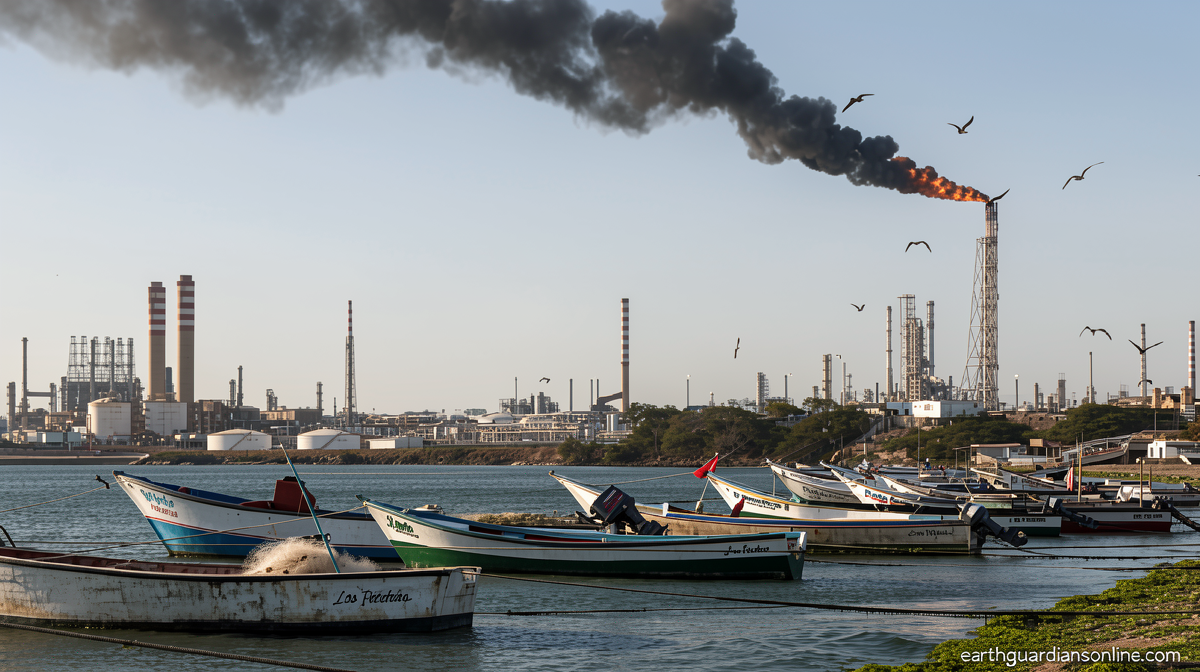
Reserve size and near-term production capacity are not interchangeable. Venezuela holds 303 billion barrels of proven oil reserves, the largest inventory on the planet. Yet translating that geological wealth into barrels at the pump requires functioning infrastructure, and Venezuela’s facilities have deteriorated over decades of underinvestment.
The country has lifted its export run-rate to roughly 1.2 million barrels per day, an increase of about 150,000 barrels per day from the start of the year, according to Luisa Palacios, former Citgo chair and current managing director of Columbia University’s Center on Global Energy Policy. Even so, that figure remains well below the 3.5 million barrels per day the nation produced before the socialist-era takeover of the oil sector in the late 1990s. Palacios cautioned that the dilapidated pipeline network, aging refineries, and depleted water-injection systems demand years of sustained capital before output could approach historical peaks.
What the Deal Actually Buys
In the longer horizon, the public-private structure could serve a legitimate strategic purpose: giving Gulf-based refiners a secured feedstock of heavy crude that their units are designed to crack. That access has value independent of the SPR question. But framing the arrangement as a fix for America’s depleted emergency stockpile conflates two different problems — one about refinery feedstock security, the other about the specific grade of oil the caverns can hold.
The Trump administration could conceivably engineer workarounds: blending Venezuelan crude with lighter grades before injection, or designating a separate storage protocol. None of those solutions has been announced, and none addresses the fundamental mismatch between the oil Venezuela produces and the oil the SPR was built to store. Until that gap is closed, the 65-billion-barrel headline number remains a geological fact rather than a near-term policy lever.
Related Reading
Frequently Asked Questions
What is Why Venezuela probably won t solve?
Why Venezuela probably won t solve is the main topic of this guide. The article explains the context, practical details, and next steps readers should understand.
Why does Why Venezuela probably won t solve matter?
Why Venezuela probably won t solve matters because readers are looking for a useful answer, not just a short summary. Good content should match search intent and help them decide what to do next.