Zelensky returns Poland’s highest honor amid escalating row over nationalist wartime unit

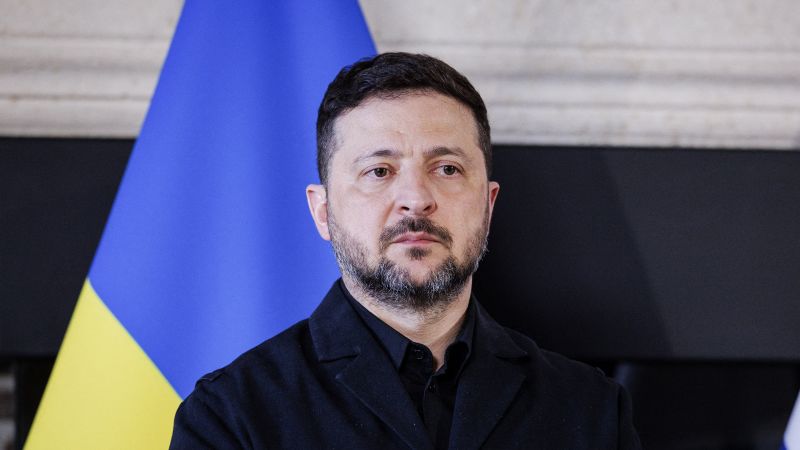
Zelensky Returns Poland’s Highest Honor Amid Historical Dispute
Zelensky returns Poland s highest honor – Ukrainian President Volodymyr Zelensky has returned Poland’s highest honor, the Order of the White Eagle, following a diplomatic rift over the legacy of World War II nationalist groups. The award, which was stripped from Zelensky by President Karol Nawrocki, has reignited tensions between the two nations. In a social media post, Zelensky emphasized that the honor symbolized recognition of the Ukrainian people’s resilience and military efforts. “Today, I sent the Order back to the President of Poland,” he wrote, “and I believe the future will confirm the respect Ukrainians deserve.” The gesture, accompanied by photos of the award and a receipt showing its shipment to the Polish presidential office, underscores the symbolic weight of the decision.
Historical Tensions and the UPA Controversy
The conflict centers on Zelensky’s May 26 decree, which honored a unit of Ukraine’s Special Operations Forces with the name of the Ukrainian Insurgent Army (UPA). This move sparked outrage in Poland, as the UPA is historically linked to massacres of civilians during the war. Nawrocki, a nationalist leader, criticized the decision, stating that the UPA was “a formation responsible for cruel crimes against the citizens of the Polish Republic during World War II.” His remarks were part of a broader campaign to highlight the group’s role in wartime atrocities, particularly in regions like Volhynia and Eastern Galicia.
“For the majority of Polish society, the Ukrainian Insurgent Army remains above all a formation responsible for cruel crimes against the citizens of the Polish Republic during World War II,” Nawrocki said in a 13-minute social media address.
Zelensky, however, defended the naming decision, arguing that the UPA’s actions were part of Ukraine’s struggle for independence against Nazi Germany and Soviet forces. He called the unit a “symbol of resistance,” while Poland’s parliament had previously classified the UPA’s activities as genocide in 2016. This historical divide has long influenced bilateral relations, even as both nations collaborate on Ukraine’s defense against Russia.
Political Motivations and Bilateral Implications
President Nawrocki’s decision to revoke the honor has been interpreted as a strategic political move. As a nationalist, he has capitalized on anti-Ukrainian sentiment to strengthen his public image, especially with Poland hosting millions of Ukrainian refugees. The act has also drawn criticism for potentially undermining solidarity with Ukraine, as some argue the gesture risks inflaming historical tensions. A statement noted, “Ukrainians in Poland have been facing increasing prejudice despite their contribution to the economy,” highlighting the delicate balance between cultural support and political disagreements.
While Nawrocki claimed the revocation would not affect Poland’s backing for Ukraine, Ukrainian officials view it as a symbolic blow. Kyrylo Budanov, head of the Ukrainian Presidential Office, called it “an unfriendly act toward our people” and “a gift to the Moscow aggressor, which will certainly use it against both of our countries.” This sentiment reflects broader concerns that the move could be exploited by Russian-backed narratives to fuel division.
“An unfriendly act toward our people”
Zelensky’s response to the revocation was measured, expressing gratitude for Poland’s support and openness to resolving historical differences. “I am proud of our people and of EVERY Ukrainian warrior,” he wrote, signaling a commitment to cooperation. Yet, not all in Ukraine shared this perspective. Former Prime Minister Arseniy Yatsenyuk criticized the move on social media, suggesting that Poland’s actions could not be corrected by Ukraine’s own decisions.
Broader Context and Reconciliation Efforts
The dispute over the UPA’s role in World War II has long shaped the relationship between Poland and Ukraine. Both nations acknowledge the UPA’s involvement in attacks against Polish civilians, while also recognizing its efforts to resist Soviet occupation. This dual perspective has complicated efforts to reach a consensus, with the UPA often seen as a symbol of resistance by Ukrainians and a perpetrator of ethnic violence by Poles. The recent revocation of the honor appears to deepen this divide, even as recent months have seen progress in bilateral cooperation.
In December, a meeting between Zelensky and Nawrocki in Warsaw marked a step toward reconciliation. The leaders discussed the exhumation of Polish victims, a collaborative effort that had raised hopes for resolving past grievances. Despite this, the return of the Order of the White Eagle has reignited debates about historical narratives, testing the resilience of the alliance between the two nations as they navigate shared challenges and divergent memories.