Iran claims the Strait of Hormuz is closed again. Few ships were leaving in the first place

Iran Claims Hormuz Strait Closed Again, Slowing Ship Traffic
Global Shipping Industry Faces Uncertainty
Iran claims the Strait of Hormuz is closed again, sending shockwaves through the global shipping industry. The strategic waterway, which links the Persian Gulf to the Arabian Sea, has become a focal point of maritime concerns following recent tensions. Ship operators have already reduced their activity, as data from Kpler, a leading marine intelligence firm, shows only 25 vessels traversed the strait on Thursday—far below the usual 100 to 120 tankers that transited the passage daily before the conflict. This decline underscores the lingering impact of the initial closure, even as negotiations between Iran and the U.S. stalled, creating a climate of hesitation among maritime stakeholders.
“It’s not like you’re suddenly seeing a mass exodus,” said Matt Smith, lead oil analyst at Kpler. “You’re seeing a pickup in traffic… but not material. We are still not at the point where a ‘first mover’ is emerging.”
The slow movement of vessels reflects a cautious approach by operators, who remain wary of security threats and operational risks. While the strait’s closure is a key factor, the underlying anxieties about safety and stability have already begun to affect transit volumes. The last time the strait saw such low activity was mid-April, when Iran briefly reopened it for commercial use. However, even that temporary respite did not restore pre-war conditions, as fears of renewed hostilities persist.
Maritime Stagnation and Operational Challenges
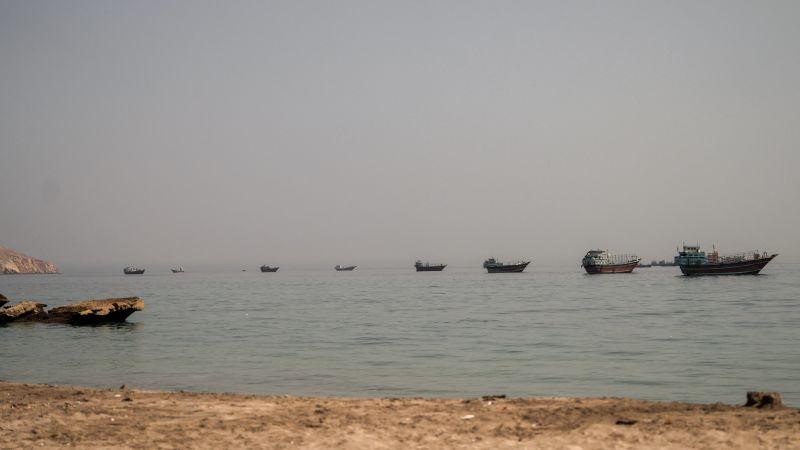
As of now, nearly 500 ships, including 220 oil tankers, are stranded in the Persian Gulf, according to recent reports. The Iran-U.S. ceasefire agreement has not yet fully restored confidence, leaving operators in limbo. “Despite the signing of the ceasefire agreement, we believe the security situation for the shipping industry remains volatile,” stated Jakob Larsen, chief safety and security officer at BIMCO, a major ship operator organization. His remarks highlight the ongoing uncertainty that has disrupted routine maritime operations.
“The central part of the Strait is mined and unnavigable, and only the inshore traffic zones close to Oman and Iran are reportedly free of mines,” Larsen added in a statement to CNN on Thursday.
Even in these safer zones, congestion and navigation difficulties continue, creating a fragile environment for shipping. Operators are now balancing the need to move cargo with the risk of delays or damage. This has led to prolonged anchoring periods, raising practical concerns about vessel readiness. For example, Ben Bailey, director of programs at Mission to Seafarers, noted that crews are eager to disembark but remain hesitant due to safety concerns.
Insurance Withdrawals and Industry Hesitation
The absence of insurance coverage has further complicated the situation. Maritime insurers, such as Lloyds of London, withdrew war-risk policies early in the conflict, leaving ship owners without financial protection. “It wasn’t just Iran that shut down the Strait of Hormuz; it was Lloyds of London and similar companies,” remarked Tom Kloza, an independent oil analyst and adviser to Gulf Oil. His statement emphasizes the combined impact of political and economic factors on the strait’s operations.
“We don’t know the answer to that,” Kloza said. “Maybe it gets viewed as a safe piece of water, but I think we’ve got a long way to go till we get to that.”
The lack of insurance has amplified operators’ reluctance to navigate the strait, as potential losses from damage or delays weigh heavily. Verification processes for ship readiness, such as checking operational status after months of inactivity, have become standard practice. These steps are critical to ensuring vessels can resume transit safely, but they also contribute to the sluggish pace of recovery in the region.
Slow Recovery and Crew Struggles
Restoring normal operations will require sustained peace and confidence in the strait’s safety. Kloza highlighted that oil production levels will only return to pre-war norms once the situation stabilizes. “Once it does, new tankers will need to travel back to pick up new shipments,” he explained, underscoring the slow rebuild of maritime infrastructure and routines. The process is further delayed by the need to address both physical and logistical challenges.
Meanwhile, the 20,000 seafarers still trapped in the region face dual hardships: waiting for safe passage and maintaining their vessels. Many have spent over three months in limbo, enduring the physical and psychological toll of prolonged maritime conditions. “It’s a kind of cautious optimism,” Bailey remarked on Friday, as crews scrape barnacles from their ships, a necessary step to ensure readiness for transit. These efforts reflect the resilience of maritime professionals amid ongoing uncertainty.
Strategic Implications and Future Outlook
The Strait of Hormuz’s closure has broader implications for global energy security, as it is a critical chokepoint for oil exports. With Iran claims the Strait of Hormuz remains closed, the reduced ship traffic has prompted discussions about alternative routes. However, these options are less efficient and more costly, potentially increasing energy prices. Analysts suggest that the situation could persist until a lasting agreement is reached, ensuring consistent and safe passage through the strait.
“The central part of the Strait is mined and unnavigable, and only the inshore traffic zones close to Oman and Iran are reportedly free of mines,” Larsen added in a statement to CNN on Thursday.
While the immediate risks may ease, the long-term effects of the closure could reshape maritime strategies. The global shipping industry is now preparing for a new normal, where the Strait of Hormuz’s status remains a variable in planning. As negotiations continue, the world watches closely for any sign of restored flow through this vital corridor.