
Russia’s latest attack on Kyiv was exceptionally deadly – here is why
Russia’s Latest Attack on Kyiv Was Especially Lethal – Here’s Why
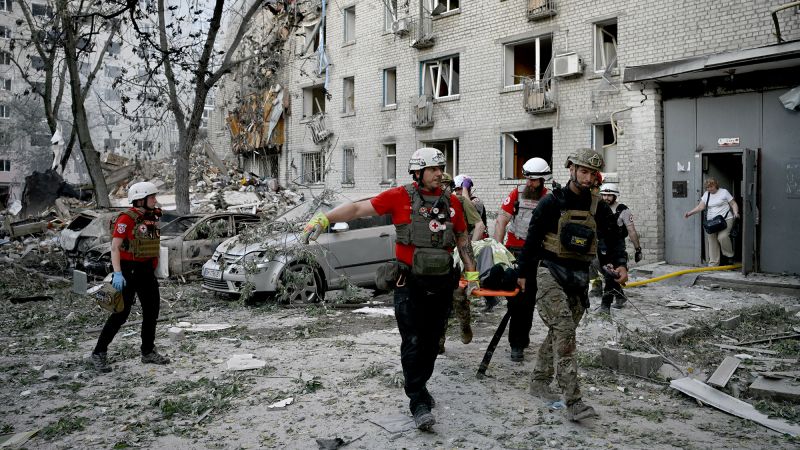
Russia s latest attack on Kyiv – On Thursday, a major Russian assault on Kyiv resulted in at least 30 fatalities, marking it as the third most deadly strike on the Ukrainian capital since the war began. This attack, which targeted residential zones with a mix of advanced weaponry, has raised concerns about the evolving tactics of Moscow’s military strategy. While Ukraine has faced numerous large-scale aerial assaults, the intensity of this week’s strike stands out due to the choice of targets and the arsenal deployed.
Weapons of Choice: Targeting Civilian Areas
The assault included a combination of ballistic missiles, loitering munitions, and jet-powered drones, all of which contributed to the high casualty count. Jet-powered drones, such as the Geran-4 UAV, have become a notable addition to Russia’s arsenal. First observed early in the year, these drones are capable of reaching speeds up to 500 kilometers per hour, surpassing the capabilities of Ukraine’s current defensive systems. Their speed complicates interception efforts, as Kyiv’s mobile fire units struggle to keep pace with their rapid movements. The only effective means of neutralizing such drones, according to Ukrainian Air Force spokesperson Yurii Ihnat, are ground-to-air missiles or fighter jets.
“The enemy is using them more and more frequently, and the percentage of jet-powered Shaheds in their arsenal is increasing; which depletes (our) resources,” Ihnat said on Friday.
Analysts from the Institute for the Study of War (ISW), a U.S.-based conflict monitoring group, noted that Russia’s reliance on faster drones reflects a broader pattern of tactical and technological advancements aimed at increasing civilian casualties. “Faster-moving drones that are harder for Ukraine to intercept will likely generate increased civilian harm, much as other strike package adaptations have in the past,” the ISW stated in a report released Thursday. This strategy not only maximizes damage but also disrupts Ukraine’s ability to respond effectively.
A Hypersonic Threat and Interception Challenges
Among the weapons used in Thursday’s attack was the Zircon hypersonic cruise missile, designed for both anti-ship and land-attack missions. Ihnat highlighted that this missile operates at speeds comparable to ballistic missiles, requiring the sophisticated Patriot system for successful interception. Despite Ukraine’s possession of several Patriot batteries, the system remains a critical resource, and shortages have placed a strain on defense operations.
The conflict in Iran has exacerbated Ukraine’s missile supply issues. Originally intended for Ukraine, some deliveries of Patriot systems have been redirected to the Middle East, leaving Kyiv’s forces with limited options. While the Ukrainian Defense Ministry has contracts for future deliveries, it is currently in a race against time to replenish its stockpiles. To address the shortage, the ministry has reached out to nearly 40 countries, requesting immediate access to their existing Patriot missile reserves in exchange for promised future support.
Residential Targets and Escalated Impact
Ukrainian authorities confirmed that 25 locations across Kyiv were hit, with a significant proportion located in residential neighborhoods. This targeting likely intensified the damage, as civilians were caught in the crossfire. One missile struck a residential complex housing 64 apartments, resulting in multiple deaths and displacing dozens of families. The Russian Ministry of Defense claimed the attack was a retaliatory measure, citing the destruction of military-industrial facilities and energy infrastructure. However, the extent of civilian damage contradicts this narrative, underscoring the dual-purpose nature of the strike.
Tactical Planning and Future Threats
ISW analysts suggested that Russia had been preparing for Thursday’s assault for weeks, stockpiling drones and missiles in June. From January to May, Moscow averaged one major strike and several smaller attacks per week, but the frequency dropped in June, indicating strategic planning. This shift highlights Russia’s growing capacity to produce thousands of drones monthly, enabling large-scale operations at regular intervals. “Russian forces may be stockpiling drones, particularly for a higher frequency of large-scale strikes at a later time of the Kremlin’s choosing,” the ISW noted in its report. The rationale behind this buildup appears to be to further wear down Ukrainian air defenses, especially as the war enters a critical phase.
President Volodymyr Zelensky reiterated his accusations against Russia, stating that the attack damaged over 130 residential buildings and targeted civilian infrastructure with alarming regularity. He emphasized the need for international support to counter these strikes, which have increasingly focused on disrupting daily life and morale in Kyiv. The Ukrainian Defense Ministry, meanwhile, reported that more than 90% of cruise missiles and Shahed-type drones were successfully intercepted, a feat attributed to improved coordination and defensive readiness. However, the remaining 10% that slipped through underscores the persistent challenges faced by Kyiv’s air defense network.
The combination of new technologies and strategic targeting has turned Kyiv into a focal point for Russia’s efforts to cripple Ukraine’s civilian population. With each attack, the pressure on Kyiv’s resources grows, forcing the Ukrainian military to adapt quickly. The use of jet-powered drones, in particular, has introduced a new dimension to the conflict, as their speed and maneuverability make them difficult to counter. Analysts suggest that this trend will continue, with Moscow likely escalating its use of such weapons to maximize impact and force Ukraine into a defensive posture.
As the battle for Kyiv intensifies, the implications of this attack extend beyond immediate casualties. The strategic choice to focus on residential areas signals a shift in Moscow’s approach, aiming to erode Ukraine’s ability to sustain its resistance. The ISW’s analysis reinforces this, pointing to a deliberate effort to leverage technological advancements in drone systems to achieve greater civilian harm. With the war entering a new phase, the balance of power between Kyiv and Moscow remains precarious, and the outcome will depend on how effectively Ukraine can respond to these evolving threats.
