How Tim Cook made Apple one of the world’s most valuable companies

Daftar Isi
Apple’s Next Chapter Begins as a 15-Year Era of Quiet Dominance Closes
Earthguardiansonline.com – On September 1, John Ternus, Apple’s hardware engineering chief, steps into the most scrutinized executive chair in the technology industry. He inherits a company whose market value briefly touched $5 trillion in July — a threshold only one other firm in history has crossed — and a product ecosystem that has woven itself into the daily routines of billions of people. The man who built that ecosystem over fifteen years, Tim Cook, departs leaving behind a legacy defined less by a single breakthrough device and more by the quiet, relentless expansion of Apple’s influence across commerce, communication, and geopolitics.
From Supply-Chain Architect to Global Power Broker
Cook assumed the CEO role in August 2011, stepping into a vacuum left by Steve Jobs, whose name remains synonymous with radical product innovation. The transition was never expected to be seamless. Yet Cook, whose professional identity had been forged in logistics and supply-chain management rather than design studios, proved that operational mastery could sustain — and amplify — a company already at the apex of consumer technology.
Ron Johnson, who ran Apple’s retail division from 2000 through 2011, recalled the weekly strategy sessions in which Cook sat alongside Jobs and the broader executive team. In those rooms, Johnson observed a pattern: Cook spoke rarely, but when he did, his remarks carried weight.
“He was perhaps the most thoughtful of the executive team members,” Johnson recalled. “He would always listen first and speak when he had something to add.”
That restraint, paired with what Johnson characterized as genuine intelligence and strategic acumen, became the template for a leadership style that prioritized long-term positioning over spectacle.
The Numbers Behind the Quiet
The financial trajectory under Cook’s stewardship defies easy comparison. Apple’s share price climbed by more than 2,000 percent across his tenure, transforming the company from a large-cap technology stock into a global asset class unto itself. The brief $5 trillion market-cap milestone reached in July placed Apple alongside only one other entity in history to breach that valuation wall.
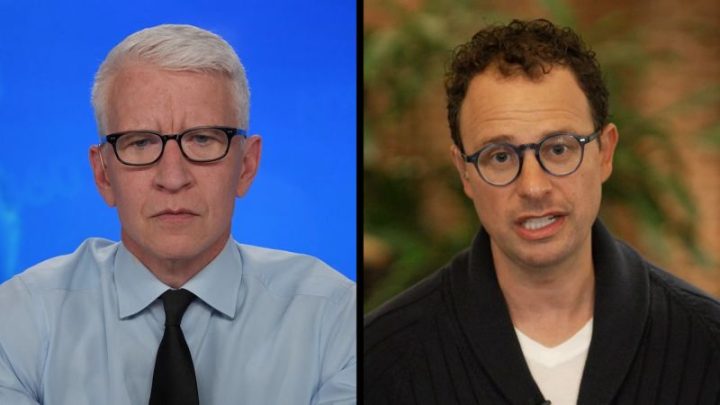
David Yoffie, a professor at Harvard Business School who authored a case study examining Cook’s leadership, framed the achievement in terms of scale rather than invention:
“(Cook) managed to scale the iPhone to a level that no one would have thought was likely or possible over that period of time.”
The mechanism behind that scaling was not a single hardware leap. It was the decade-long maturation of web services, accessory ecosystems, and platform integrations that turned the iPhone from a phone into a payment terminal, a fitness tracker, a music gateway, and a retail checkout. Every coffee purchase, gym session, and credit-card payment now routes through infrastructure Cook’s teams built and refined.
Negotiating Between Capitals
Perhaps the least visible dimension of Cook’s tenure was diplomatic. Apple’s manufacturing base sits overwhelmingly in China, while its largest consumer markets span the United States and China itself. Navigating those two poles during a period of escalating bilateral tension required a skill set closer to statecraft than to product management.
Gene Munster, managing partner at Deepwater Asset Management and a watcher of Apple since 2004, described Cook as functioning simultaneously as chief executive and “a statesman.” The distinction mattered: Cook’s mild-mannered negotiation style and rapid decision-making kept the iPhone supply chain operational through tariff threats, pandemic disruptions, and regulatory friction that would have derailed a less flexible operation.
One concrete example illustrates the calculus. Facing pressure from the Trump administration to manufacture phones domestically, Apple committed to a $600 billion investment in American operations, including production of critical iPhone components on U.S. soil. The move sidestepped the administration’s highest tariff rates while preserving the company’s margin structure. Even during Trump’s first term, the president acknowledged that Cook was among the handful of corporate leaders who personally phoned him.
“In terms of CEOs that Trump has come to respect, Tim Cook would be very high on the list,” said Jeffrey Sonnenfeld, senior associate dean for leadership studies at the Yale School of Management and a former White House advisor.
Cook also pushed incremental diversification of production away from China while maintaining commercial and political goodwill with Beijing — a balancing act Munster called almost paradoxical.
“I don’t know how you do that,” Munster said. “I don’t know if that dynamic makes sense.”
What Ternus Inherits
The challenges awaiting the new CEO are structural rather than cyclical. Europe, Apple’s second-largest market, has forced changes to App Store operations and, under current EU rules, will not receive the company’s revamped Siri. The pandemic and successive tariff regimes have exposed the fragility of a supply chain concentrated in one geography. And the artificial-intelligence race has created a memory-chip shortage that is pushing hardware prices upward across the industry.
Apple’s most recent major hardware bet, the Vision Pro spatial computer, failed to generate the consumer momentum its price tag implied, intensifying pressure to deliver a visible AI breakthrough. Ternus must answer questions about where the company’s next platform leap will come from while managing a regulator in Brussels, a tariff architect in Washington, and a manufacturing partner in Shenzhen — all simultaneously.
A Parting Instruction
During one of his final earnings calls as CEO, in April, Cook offered his successor a single guiding principle. Strip away the geopolitics, the chip shortages, and the regulatory minefields, and the advice reduced to a product philosophy:
“If you keep focusing on that and make your decisions around that, it will produce a great business,” he said, urging the team to build products that “enrich” customers’ lives. “And we’ll be able to build more products and do it all over again.”
Whether that instruction proves sufficient against the converging pressures of 2026 and beyond remains the central question of Apple’s next chapter. What is no longer in question is the magnitude of the platform Cook leaves behind — a company whose value, reach, and political gravity now shape industries far beyond consumer electronics.
Related Reading
Frequently Asked Questions
What is How Tim Cook made Apple one?
How Tim Cook made Apple one is the main topic of this guide. The article explains the context, practical details, and next steps readers should understand.
Why does How Tim Cook made Apple one matter?
How Tim Cook made Apple one matters because readers are looking for a useful answer, not just a short summary. Good content should match search intent and help them decide what to do next.