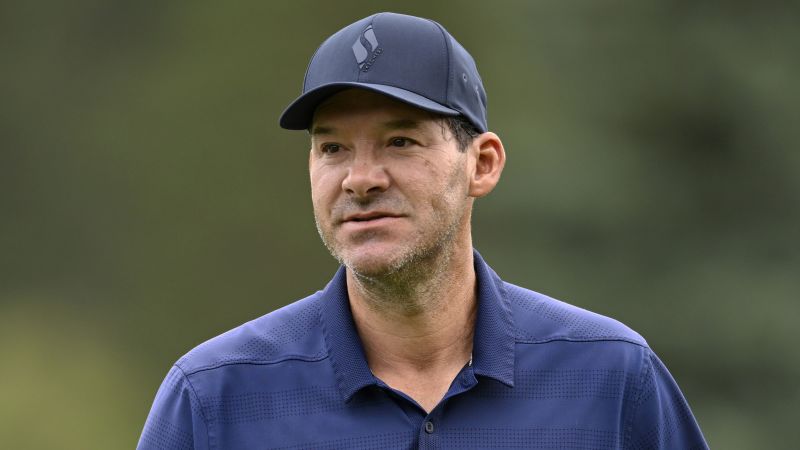
Tony Romo was brutally honest about his arrest and revealed a painful truth about life after football

Daftar Isi
After the Final Whistle: Tony Romo’s Candid Account of Pain, Addiction, and Life Beyond the Gridiron
Earthguardiansonline.com – There is a particular silence that settles over a professional athlete’s life once the contracts expire, the stadiums empty, and the cameras turn elsewhere. For decades, the public narrative surrounding elite competitors has leaned heavily toward invincibility — the notion that years of physical dominance grant some kind of immunity from the ordinary struggles of daily existence. That mythology cracked open this summer when Tony Romo, the former Dallas Cowboys quarterback now serving as a lead analyst on CBS’s NFL coverage, stepped forward with an unflinching account of what happens when the body finally demands its debt.
In July, Romo was taken into custody in Wisconsin on suspicion of operating a vehicle while intoxicated. Bodycam footage released by the Milwaukee County Sheriff’s Office captured the moment of his arrest, a scene that jolted fans who had grown accustomed to seeing him as the affable, polished voice in the broadcast booth. The incident tarnished the carefully maintained image of the clean-cut football personality who had become one of the most trusted on-air figures in the sport.
A Statement That Broke the Silence
Romo subsequently announced that he had entered a no-contest plea to a civil offense for operating while intoxicated. But the statement accompanying that announcement did far more than explain a legal outcome. It laid bare a chain of causation that many retired athletes experience in private, far from public view.
“Multiple back surgeries ended my career earlier than I expected and left me with constant, debilitating pain. That pain led to a dependence on pain medication, and my efforts to get off those medications led to an over-reliance on alcohol.”
Those words articulate a pattern that sports-medicine researchers and former-athlete advocacy groups have long documented: the cumulative toll of high-impact competition leaves players with chronic conditions that persist well beyond their final season. When the cheering stops and the sponsorship dollars dry up, the athlete is left alone with a body that no longer functions as it once did, and the temptation to medicate the discomfort — first with prescriptions, then with something more accessible — becomes a quiet, persistent pressure.
The Tiger Woods Parallel
Romo’s experience is not an isolated anomaly. Just days after his statement, Tiger Woods was scheduled to return to court on Wednesday to face a criminal case stemming from an earlier arrest this year following a car crash. Police at the scene accused Woods of being inebriated and discovered prescription painkillers in his pocket. The golfer subsequently sought treatment and spent several weeks in Switzerland recovering. Woods, whose career was built on the violent, repetitive mechanics of a golf swing, has long dealt with chronic back and knee damage. Multiple prior crashes have each been linked to prescription painkillers in his possession.
Golf and football occupy opposite ends of the athletic spectrum in terms of contact, speed, and physicality. Yet the post-career trajectory both men have navigated follows a nearly identical arc: peak performance built on years of physical sacrifice, followed by a slow erosion of the body, followed by the struggle to manage pain without surrendering to substances that merely mask the symptom.
Turning Toward Recovery
Romo framed his next chapter not as a retreat from public life but as a continuation of lessons learned on the field. He pointed to the values embedded in team sport as the scaffolding for his recovery.
“The power of relationships, the strength of a team and the toughness to face failure head-on with honesty, resilience and the determination to do better.”
He directed those principles toward his three young sons, offering them — and, by extension, his audience — a framework for accountability.
“As I have taught my three young sons: when you fall short, you stand up and take full responsibility. That is an important first step. The harder and more important step is examining the path that brought you here and making the changes necessary to move forward.”
He was explicit that no external factor absolved him of agency.
“That path requires honesty. None of this is an excuse. These are my failures, and I take responsibility for them.”
Looking Ahead
Romo described the month following his arrest as both difficult and personally formative. He said he is now working closely with a team of doctors to address his chronic pain and implement lifestyle changes that will allow him to return to the broadcast booth. He expressed gratitude toward his family, friends, and the broader NFL community — players, coaches, and owners alike — for their encouragement during what he called a period of public reckoning.
“The past month has been difficult, but it has also been personally significant. It has required me to confront and own my mistakes fully—to the Lord, to myself, to my family, and now to the public.”
His candor carries implications that extend well beyond one man’s legal record. By naming the specific medical and psychological cascade that led from surgical recovery to medication dependence to alcohol overuse, Romo has given a vocabulary to a conversation that professional sports organizations have historically handled with institutional opacity. For the thousands of former players managing chronic injuries without the safety net of a current contract, his statement functions as both validation and a roadmap: acknowledge the pain, seek structured medical help, lean on relationships, and treat accountability not as a final destination but as the first step in an ongoing process of repair.
Related Reading
Frequently Asked Questions
What is Tony Romo was brutally honest about?
Tony Romo was brutally honest about is the main topic of this guide. The article explains the context, practical details, and next steps readers should understand.
Why does Tony Romo was brutally honest about matter?
Tony Romo was brutally honest about matters because readers are looking for a useful answer, not just a short summary. Good content should match search intent and help them decide what to do next.