Trump’s new CDC director ordered delay in counting 2 measles-related deaths

Daftar Isi
CDC Withholds Two Pennsylvania Measles Deaths From National Tally, Citing Insufficient Evidence
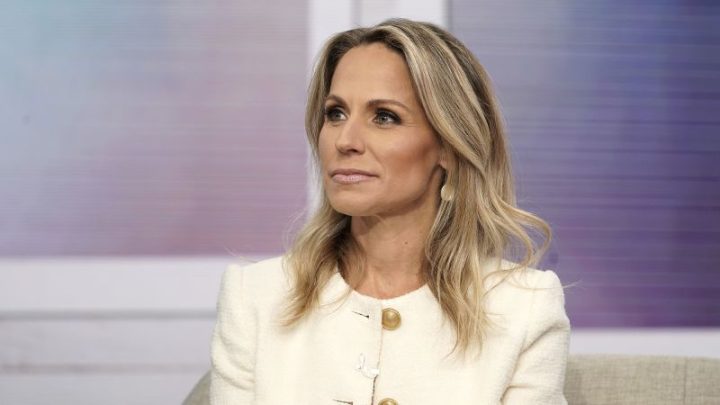
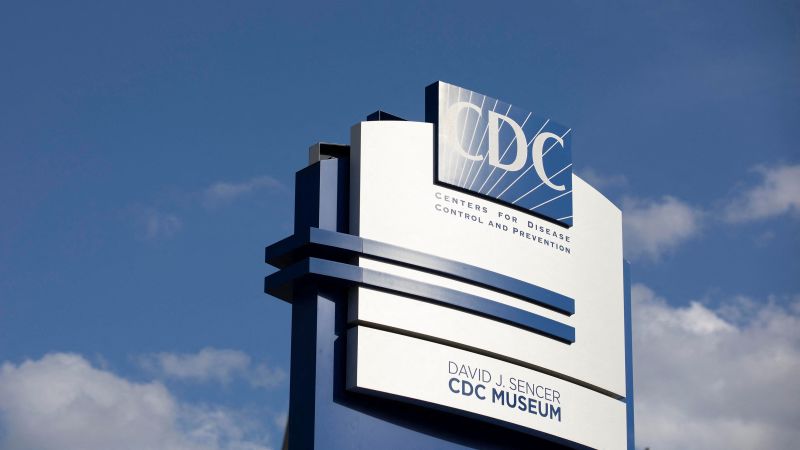
Earthguardiansonline.com – The federal agency tasked with tracking infectious disease across the United States has taken an extraordinary step: it is refusing to include two measles-linked fatalities reported by Pennsylvania in its official death count. The Centers for Disease Control and Prevention told the public that it lacks adequate information to conclude whether the virus caused or contributed to either death, and it has placed an asterisk beside the 2026 national figure with a footnote explaining the hold. The decision, made by the agency’s newly installed director Dr. Erica Schwartz, has drawn sharp criticism from former CDC leadership and intensified a public clash between the White House’s health chief and Pennsylvania’s governor over how the state’s worsening measles outbreak should be handled.
A Delayed Update and a Footnote Where a Number Should Be
The CDC’s weekly measles data release, normally published every Friday, was pushed past its usual window. When the update finally appeared over the weekend, the entry for 2026 deaths carried no figure at all. In its place sat an asterisk and a lengthy explanatory note:
“This week’s measles outbreaks update will not include the two measles-associated deaths reported by the Pennsylvania Department of Health on August 25 while CDC reviews additional information regarding the circumstances and causes of death. At this time, available information does not establish whether measles caused or contributed to the deaths or whether the individuals died from other causes while infected with measles. CDC will update the national count as additional information becomes available.”
Two individuals familiar with the internal deliberation confirmed that the call originated with Schwartz herself, who took the helm of the agency in mid-August. The CDC’s own press office, when asked to comment, routed the inquiry to the office of Health and Human Services Secretary Robert F. Kennedy Jr., signaling that the matter now sits at the highest level of the administration’s health portfolio.
Pennsylvania Pushes Back
State health officials in the Keystone State have maintained that both deaths underwent a full epidemiological investigation before being announced to the public. Neil Ruhland, press secretary for the Pennsylvania Department of Health, issued a statement emphasizing the thoroughness of the review process:
“Every reported measles case is thoroughly reviewed to confirm it meets the Centers for Disease Control and Prevention’s (CDC) case definition for a measles case. To date, DOH has provided all required epidemiological data to the CDC regarding the two measles-associated deaths in Pennsylvania.”
The state’s position is that once a patient tests positive for measles and dies within a short window of that positive result, the death is counted as measles-associated under long-standing surveillance conventions. Pennsylvania’s Democratic governor, Josh Shapiro, has been publicly pressing the federal government to cooperate in containing the outbreak, and the death-count dispute has become the most visible flashpoint in that friction.
Former CDC Leaders Call the Move Unprecedented
Public-health veterans who spent years inside the agency described the decision as a break from decades of established practice. Dr. Nirav Shah, who served as the CDC’s principal deputy director before departing his post in February 2025, called the episode remarkable in its implications.
“The idea that you would second-guess the determination of the state epidemiologist is pretty remarkable.”
Shah explained that the national death tally for any infectious disease has long functioned as an umbrella metric. It captures individuals who test positive and then die in close temporal proximity to that positive result, typically within ten days. Under that framework, the tally does not hinge on a definitive causal determination of whether the person died “with” the infection or “from” it. For the agency’s director to overrule a state-level epidemiological judgment and substitute vague qualifying language on a public webpage, in Shah’s view, goes well beyond normal scientific disagreement.
“For the CDC, let alone the CDC director, to overrule that sort of determination and just put that vague language up on the website, it’s more than atypical. It is the definition of the politicization of public health.”
Dr. Deb Houry, who held the role of CDC chief medical officer before resigning in protest over Kennedy’s August 2025 decision to remove Schwartz’s predecessor, Dr. Susan Monarez, offered a parallel example. Last year, New Mexico reported a measles-associated death in a person whose positive test was obtained postmortem. That death was folded into the national total even though the investigation was still ongoing. Houry stressed that the standard operating procedure has always been for states to conduct the investigation, notify the CDC, and allow the agency to aggregate the national picture in collaboration with the Council of State and Territorial Epidemiologists.
“States notify the CDC, who then pulls the national picture together. States are the ones who do the investigation and this has been a standard protocol in collaboration with the CDC and the Council of State and Territorial Epidemiologists and states.”
The Administration’s Justification
Grace Davis Jamison, a press secretary at HHS, defended the hold in a written statement, framing it as an exercise in scientific caution rather than political maneuvering.
“CDC has a responsibility to ensure its reporting accurately and transparently reflects what is known and what remains unconfirmed. The two measles-associated deaths announced by Pennsylvania have not been confirmed based on the information currently available to CDC.”
She added that the posted information “reflects the best available information and our commitment to transparency and telling the American people the truth – a foundational principle of the Trump Administration.”
Why the Dispute Matters Beyond Two Names
The episode lands at a moment when measles is resurging across multiple states, driven largely by pockets of low vaccination coverage. Accurate, timely death counts are not mere bookkeeping; they shape public perception of severity, guide allocation of vaccine doses and outbreak-response teams, and inform decisions by state legislatures considering school-entry requirements. When the federal tally lags behind state reporting, communities in the affected area receive mixed signals about how dangerous the outbreak truly is.
Swartz’s tenure has been watched closely since her mid-August arrival. A practicing physician who, in earlier roles, voiced strong support for vaccination and evidence-based medicine, she has nonetheless drawn scrutiny over public remarks made after her nomination that raised questions about her independence from the political leadership above her. The two-Pennsylvania-death episode is now the first concrete test of whether she will act as a scientific gatekeeper or as an extension of the administration’s messaging apparatus.
Until the CDC revises its footnote or Pennsylvania retracts its reporting, the two deaths remain in a bureaucratic limbo: acknowledged by the state, withheld by the feds, and visible to the public only as an asterisk where a number ought to be.
Related Reading
Frequently Asked Questions
What is Trump s new CDC director ordered?
Trump s new CDC director ordered is the main topic of this guide. The article explains the context, practical details, and next steps readers should understand.
Why does Trump s new CDC director ordered matter?
Trump s new CDC director ordered matters because readers are looking for a useful answer, not just a short summary. Good content should match search intent and help them decide what to do next.