At least 11 killed after avalanche hits climbers in Russia’s North Caucasus

Daftar Isi
North Caucasus Avalanche Claims at Least 11 Lives Among Group of 33 Climbers
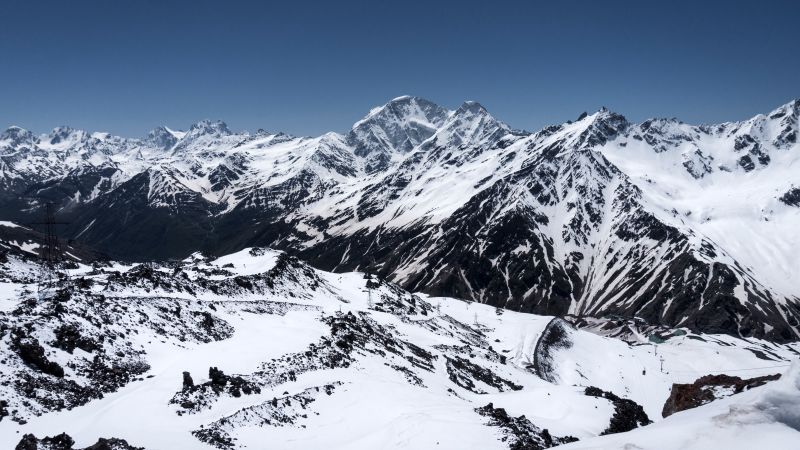
Earthguardiansonline.com – A devastating avalanche tore through a party of mountaineers on one of Russia’s most formidable peaks, leaving at least 11 people dead and six more wounded in what has become one of the deadliest alpine disasters in the country’s North Caucasus in recent years. The incident struck in Kabardino-Balkaria, a mountain republic where rugged terrain and rapidly shifting weather make every ascent a negotiation with gravity and ice.
The scale of the tragedy is staggering: a single slab of snow and ice descended from the upper slopes of Mount Mizhirgi and engulfed a climbing group of 33 individuals. Local emergency services confirmed the death toll and injury count in the hours following the event, while continuing to search for survivors trapped beneath the debris field.
Rescue Workers Race Against Terrain and Time
As of 9 a.m. local time on Monday, ten members of the climbing party had managed to descend the mountain on their own, navigating the unstable slopes without external assistance. The whereabouts and condition of six additional climbers remained unconfirmed, according to emergency authorities coordinating the operation.
More than 50 rescue personnel were deployed to the site in the hours after the slide. Their work, however, was constrained by two compounding factors: the sheer difficulty of accessing the upper reaches of the mountain, and the persistent threat of secondary avalanches that could strike at any moment. In mountainous terrain of this kind, every minute spent digging through fresh snow carries the risk that the slope above will fail again, burying both victims and rescuers alike.
Emergency services emphasized that conditions on the mountain remained volatile. The combination of steep gradients, residual snowpack from earlier in the season, and the physical exhaustion of workers operating at altitude made each phase of the search slower and more hazardous than standard urban rescue operations.
The Event Itself
The avalanche released at approximately 5 p.m. local time on Sunday — roughly 9 a.m. Eastern Standard Time — sending a wall of snow cascading down the face of Mount Mizhirgi. The slide struck the climbing group while they were positioned on the mountain’s upper slopes. Witnesses and later official accounts described the event as sudden and total: the group was caught in the path of the debris flow before any member could react or move to shelter.
Mount Mizhirgi rises to approximately 4,090 meters above sea level, making it one of the tallest summits in the North Caucasus range. Though it does not rival the famous twin peaks of Elbrus and Kazbek in international recognition, Mizhirgi commands respect among regional climbers for its exposed ridgelines, variable snow conditions, and the difficulty of establishing reliable anchor points on its upper sections.
Kabardino-Balkaria and the Culture of High-Altitude Climbing
The Kabardino-Balkarian Republic sits in the westernmost stretch of the Greater Caucasus, a mountain chain that forms a natural barrier between the Russian plateau and the Black Sea coast. The republic’s peaks have long drawn mountaineers from across Russia and beyond, offering routes that range from straightforward day hikes to multi-day technical ascents requiring ice axes, crampons, and rope work.
For local climbing communities, the North Caucasus represents both a backyard and a proving ground. Groups of this size — three dozen climbers moving together — are not uncommon during the shoulder seasons when snowpack is present but conditions appear manageable. What makes a group of 33 particularly vulnerable is the simple geometry of the slope: when a slab releases, the debris field can span hundreds of meters, and a tightly packed party offers little opportunity for individuals to scatter or seek natural protection.
The region’s emergency infrastructure, while improved over past decades, still faces the fundamental challenge of reaching high-altitude sites quickly. Helicopter access is limited by weather windows, and ground teams must often approach from lower valleys, adding hours to any response timeline.
Broader Implications and Safety Considerations
The disaster underscores a recurring pattern in mountain rescue worldwide: the most dangerous moments are not always the summit push, but the periods when conditions shift beneath a group that has already committed to a route. Avalanche risk in the Caucasus can spike without obvious warning, particularly when warm air moves over cold snowpack or when wind loads concentrate snow on leeward slopes.
Authorities in Kabardino-Balkaria have not yet announced whether the climbing group held permits, carried avalanche transceivers, or followed a registered itinerary. Such details will inform any subsequent review of the incident. In the interim, regional mountaineering associations are expected to reissue advisories urging climbers to check snow-stability reports before committing to upper-slope routes, particularly during periods of rapid temperature change.
For the families of the eleven who did not survive, and for the six whose fate remained uncertain as rescue teams continued their work, the mountain offered no comfort. The North Caucasus, for all its beauty and the centuries of human passage across its passes, remains indifferent to those who underestimate its capacity to bury a slope in minutes.
Related Reading
Frequently Asked Questions
What is At least 11 killed after avalanche?
At least 11 killed after avalanche is the main topic of this guide. The article explains the context, practical details, and next steps readers should understand.
Why does At least 11 killed after avalanche matter?
At least 11 killed after avalanche matters because readers are looking for a useful answer, not just a short summary. Good content should match search intent and help them decide what to do next.