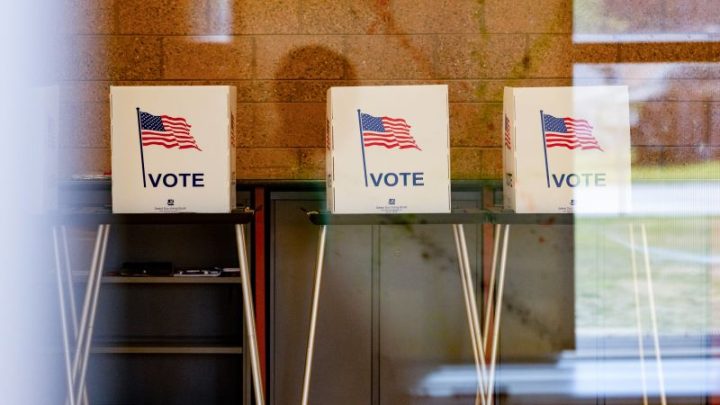
Democrats fear slippage with Black voters makes Michigan Senate race feel ‘far closer than it should’

Daftar Isi
Michigan Senate Contest Tests Democratic Strength With Black Voters
Earthguardiansonline.com – Michigan Democrats are confronting a difficult question as the campaign for the state’s open US Senate seat reaches its final stretch: can Abdul El-Sayed broaden the party’s coalition without weakening the support it has long relied on in Detroit, Flint and other heavily Black communities?
The answer could shape more than one race. Democrats need a net gain of four Senate seats on November 3 to take control of the chamber, and holding the seat being vacated by retiring Democratic Sen. Gary Peters is central to that goal. A loss in Michigan would leave the party seeking victories in states that are considerably more Republican-leaning than this longtime Midwestern battleground.
El-Sayed, a progressive and former public health official, emerged from a hard-fought August primary with a one-point victory over Rep. Haley Stevens. His winning coalition drew substantial backing from young voters, progressives in college communities, and Arab American and Muslim voters. But Stevens had meaningful advantages of her own, including strong support among Black voters in Detroit-area communities and among Jewish voters who have voiced persistent concerns over El-Sayed’s sharp criticism of Israel’s conduct in Gaza.
Those divisions have given Republican nominee Mike Rogers an opening. The former congressman has concentrated his closing argument on constituencies that traditionally vote Democratic but were not uniformly aligned behind El-Sayed during the primary.
A narrow margin leaves little room for weaker turnout
More than $280 million has already gone toward Michigan television advertising during the 2026 midterm cycle. Campaign signs and billboards have become common sights across the state as autumn advances, yet some local political figures remain unsure whether enthusiasm for El-Sayed is strong enough among Black voters so late in the contest.
“It only takes this much of Detroit to defect. It only takes this much of Flint to defect,” said the Rev. Charles Williams II, pastor of Detroit’s Historic King Solomon Baptist Church, holding his fingers about an inch apart. “If even a sliver of people don’t turn out, you run into a huge challenge in trying to get your candidate over that line.”
That concern reflects the mechanics of a close statewide election. Democratic candidates do not necessarily need to lose Black voters outright for the consequences to be serious. A modest decline in turnout or a small shift in support in population centers that provide large Democratic vote totals can erase an advantage elsewhere.
The party’s previous performance illustrates why Michigan is viewed as so consequential. In 2018, the last midterm election held while President Donald Trump was in office, Democrats captured four statewide races in Michigan by margins ranging from roughly seven to nine percentage points. The current Senate race appears much tighter, heightening the importance of coalition-building and voter mobilization.
Rogers makes a case for a broader Republican coalition
Rogers has argued that his campaign can appeal to voters who might not normally support a Republican. At a Detroit Economic Club forum Tuesday, he described the alliances he has assembled as unusually broad for a GOP candidate.
“We’ve spent a lot of time here in Detroit, Flint, Pontiac,” Rogers said, naming cities with substantial Black populations. “I think if we’re going to get our state right, we have to have everybody included in its forward progress.”
His agenda in Detroit includes proposals to encourage home construction, link building projects with high school apprenticeship opportunities, and address food deserts. Rogers also said he has heard concerns from Democrats about the growing influence of democratic socialists within their party.
For Rogers, the strategy is not simply to win over large numbers of Democratic voters. In a race that may be decided by narrow margins, persuading even a limited share of voters to cross party lines—or making some voters less likely to participate—could alter the statewide result.
Democrats bring prominent voices to Michigan
Democratic leaders are responding with a high-profile effort aimed at reassuring voters and strengthening turnout. Former President Barack Obama is scheduled to attend a Saturday rally in Detroit alongside El-Sayed and Michigan Secretary of State Jocelyn Benson, the Democratic nominee for governor.
Other nationally known Black Democrats have also campaigned in the state in recent weeks. Former Vice President Kamala Harris joined El-Sayed for a roundtable on Black maternal health care. Georgia Sen. Raphael Warnock is expected to campaign with him, as are multiple members of the Congressional Black Caucus.
El-Sayed has dismissed the idea that Rogers can make decisive gains with Black voters, portraying his opponent as closely tied to Trump.
“As much as he thinks he’s making inroads, folks are smart,” El-Sayed said. “Mike Rogers is simply a rubber stamp on what Donald Trump wants. They understand exactly who Mike Rogers is.”
Conversations with Black voters and community leaders in Detroit have shown substantial backing for the Democratic nominee. Still, some concerns remain below the surface about whether questions related to El-Sayed’s personal background could affect participation or support. Longstanding tensions between some Arab American and Black communities have also been raised as a source of anxiety.
“In a close race, even a sliver of doubt about Abdul could lead to defeat,” one prominent Black leader said while speaking anonymously. “And this race feels far closer than it should.”
The Michigan contest therefore presents a familiar but increasingly urgent challenge for Democrats: maintaining established support while adding new voters to the coalition. El-Sayed’s primary win showed his ability to energize progressive, Muslim, Arab American and younger voters. The general election will test whether that coalition can be expanded enough to retain the voters and turnout levels Democrats need in the state’s pivotal urban centers.
Related Reading
Frequently Asked Questions
What is Democrats fear slippage with Black voters?
Democrats fear slippage with Black voters is the main topic of this guide. The article explains the context, practical details, and next steps readers should understand.
Why does Democrats fear slippage with Black voters matter?
Democrats fear slippage with Black voters matters because readers are looking for a useful answer, not just a short summary. Good content should match search intent and help them decide what to do next.