Frustration grows as Houthis widen Middle East conflict with US unwilling to intervene

Daftar Isi
Houthi gains intensify pressure on Saudi Arabia as Washington holds back
Earthguardiansonline.com – The Iran-backed Houthi movement is expanding its reach across Yemen and the Red Sea at a moment when the Middle East is already strained by the US war with Iran and a deepening energy crisis. Its recent capture of a strategically valuable Red Sea island has heightened fears that the group could move closer to controlling the Bab al Mandeb Strait, one of the world’s most important commercial shipping routes.
For Gulf governments, the advance has raised an urgent question: who will stop the Houthis if Saudi Arabia cannot do it alone? The United States is increasing intelligence-sharing and providing targeting information for Saudi operations, but President Donald Trump has ruled out direct American offensive strikes against the group.
That position has frustrated officials in Saudi Arabia, the Gulf and the United States. Saudi-backed forces have struggled to prevent Houthi fighters from taking strategically significant towns along Yemen’s coast, despite years of training and support. Doubts are growing over whether Riyadh can halt the group’s momentum without a more active US military role.
A vital maritime chokepoint
The Bab al Mandeb links the Red Sea with the Gulf of Aden and the Indian Ocean. It is a narrow passage used by commercial vessels moving between Europe, Asia and the Middle East, including ships carrying energy supplies and consumer goods. Any sustained disruption there could add further pressure to shipping, insurance and energy markets already affected by conflict elsewhere in the region.
US officials have recognized that the Houthis are advancing with the longer-term objective of exerting influence over the waterway. Intelligence assessments had warned for months that the group might try to threaten another major shipping route after Iran moved earlier this year to disrupt maritime traffic.
Washington’s view is that Saudi Arabia has the support it needs. American assistance has recently included more intelligence and targeting data intended to improve Saudi strikes. Saudi officials had also conveyed confidence in their forces after roughly a decade of military preparation involving Yemen’s government forces.
Yet the fighting on the ground has underscored the limits of that approach. The weaknesses of the Saudi-backed Yemeni forces were widely understood by regional figures and former diplomats long before the latest Houthi advance.
A conflict returning to full intensity
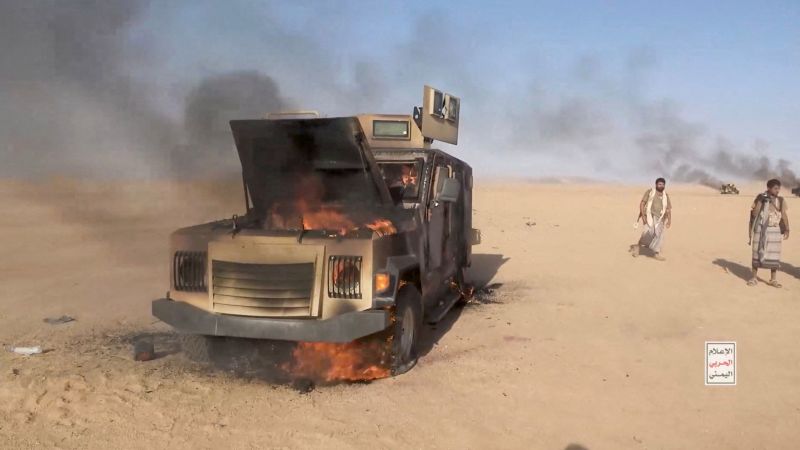
Saudi-backed government forces have been fighting the Houthis for more than a decade, during Yemen’s devastating civil war. The Houthis receive support and training from Iran’s Islamic Revolutionary Guard Corps. A United Nations-brokered truce in 2022 reduced hostilities for a period, but the conflict has resumed with greater intensity in recent weeks.
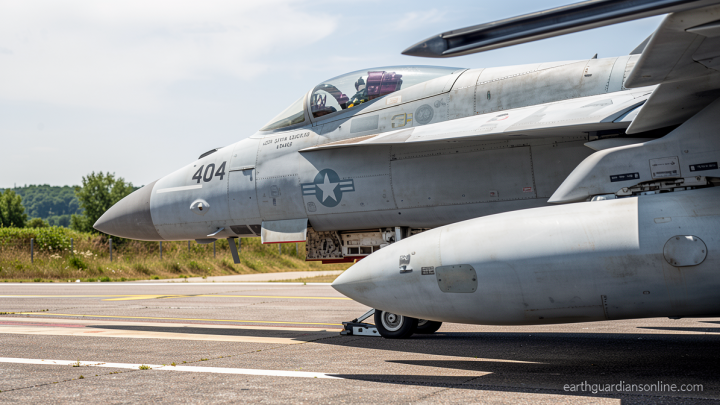
The latest escalation has brought the war’s consequences closer to Saudi territory. Saudi authorities accused the Houthis of aiming at Mecca, Islam’s holiest city. The Houthis, meanwhile, said they had downed a Saudi F-15 fighter jet.
Alerts sounded across Riyadh during the past day, the first direct threat to the Saudi capital since the current phase of escalation began in July. The Houthis said they launched missiles and drones at what they described as “sensitive” locations in Riyadh and at an Aramco facility in Yanbu on Saturday.
The group did not identify specific locations inside Riyadh. Footage showed a large plume of black smoke near the city’s main airport, though the cause of the fire was not immediately clear. Late Saturday, Saudi Arabia’s military said its air defenses destroyed a ballistic missile fired toward Riyadh at dawn and stopped other attempted attacks in different parts of the country.
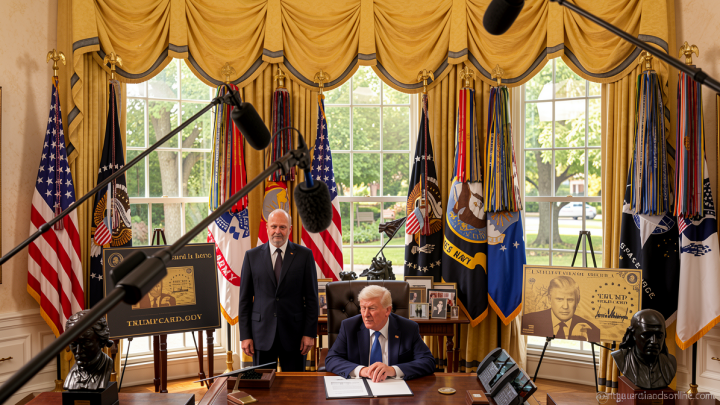
Trump draws a line on US military action
Trump has set a clear limit on American involvement: the United States will not take part directly in kinetic attacks against the Houthis. US military assistance remains confined to intelligence and targeting support for Saudi operations.
“No offensive strikes,” said a US official.
The president’s public comments have also added to the concern among US partners. During remarks to reporters in Ireland last weekend, Trump indicated that the Houthis had made contact and did not want a conflict with the United States.
“The Houthis called us and they don’t want to fight with us,” Trump said. “They don’t want us to go after them and would much prefer not having us involved and they’re letting most ships go through.”
Trump suggested the group’s main dispute was with Saudi Arabia rather than Washington.
“It’s just one country they’re not too happy with,” Trump said, referring to Saudi Arabia, “and we’ll get that straightened out.”
For Saudi Arabia and other Gulf states, that language risks signaling that the US is unwilling to use force in defense of regional partners even as attacks become more direct. The concern is not simply military. It also affects deterrence, since adversaries may judge whether threats to a US ally will bring a meaningful American response.
Strain on a close partnership
Barbara Leaf, a former US diplomat with extensive Middle East experience, sharply criticized Trump’s approach. She described his remarks about the Houthis as “shocking,” particularly because the administration designated the group a Foreign Terrorist Organization in March 2025.
“It’s a pretty harsh way to treat your relationship with a close partner, to appear to privilege your agreement with a group you’ve designated as (a foreign terrorist organization) that attacked that partner,” Leaf said.
Saudi Crown Prince Mohammed bin Salman spoke with Trump twice last week to seek US strikes on Houthi positions. The request has so far been rejected.
The immediate challenge for Riyadh is to defend its cities, energy infrastructure and maritime interests while attempting to reverse Houthi gains inside Yemen. For Washington, the challenge is balancing its desire to avoid a new direct military campaign with the strategic cost of allowing a hostile Iran-aligned group to increase pressure on a crucial sea lane.
As the Houthis broaden their operations, the absence of a shared and credible counterstrategy is becoming increasingly difficult to ignore. The group’s gains are testing Saudi military capacity, US commitments to its partners and the security of a maritime corridor whose stability matters far beyond the region.
Related Reading
Frequently Asked Questions
What is Frustration grows as Houthis widen Middle?
Frustration grows as Houthis widen Middle is the main topic of this guide. The article explains the context, practical details, and next steps readers should understand.
Why does Frustration grows as Houthis widen Middle matter?
Frustration grows as Houthis widen Middle matters because readers are looking for a useful answer, not just a short summary. Good content should match search intent and help them decide what to do next.