Putin wants Africa on his side. African leaders are playing their own game

Daftar Isi
Africa’s leaders keep their options open as Moscow seeks influence
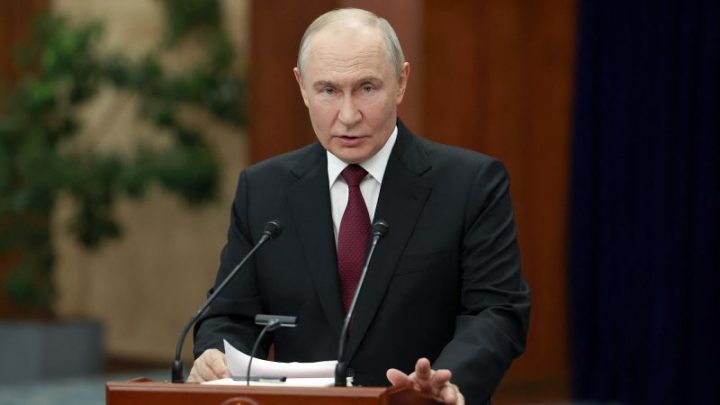
Earthguardiansonline.com – Russia’s effort to strengthen its international position is increasingly focused on Africa, where President Vladimir Putin is presenting Moscow as an alternative to Western powers while the war in Ukraine continues and sanctions isolate the Kremlin from many traditional partners.
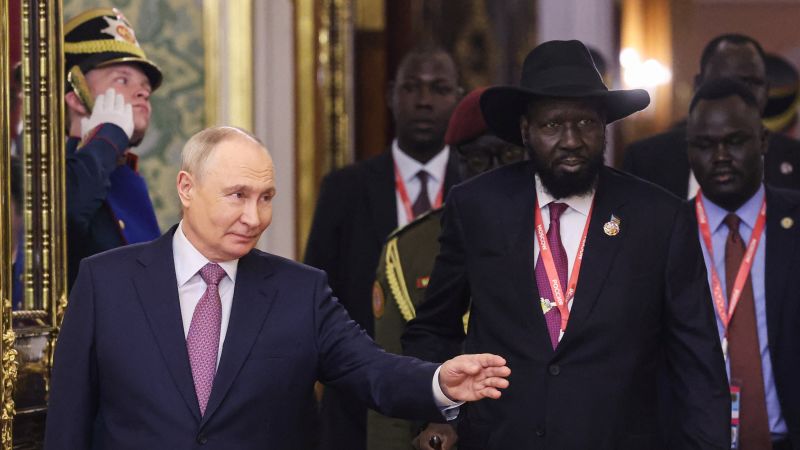
At the third Russia-Africa Summit in Moscow, Putin argued that Russia could offer a more equitable relationship than countries he accused of extracting African wealth and preserving colonial-era attitudes. He framed closer cooperation in trade and technology as beneficial to both sides.
“Our business does not engage in the predatory, neo-colonial exploitation of natural and human resources,” Putin said, adding that Russian companies supported local job creation and tax revenues.
The summit drew delegations from 48 of Africa’s 54 nations. Kremlin aide Yury Ushakov said 22 countries sent heads of state, up from 17 at the 2023 gathering. The first Russia-Africa summit, held in 2019, brought representatives from 43 countries.
For Moscow, the images and attendance carry diplomatic value at a time when it wants to demonstrate that its relationships extend well beyond Europe and North America. Will Brown, an Africa policy specialist at the European Council on Foreign Relations, said the summit’s public narrative could prove more significant than its formal announcements, because Russian influence networks can use such imagery across Africa and the broader Global South.
Partnerships without permanent alignment
Yet African governments are not uniformly moving into Russia’s orbit, nor are they simply deciding between Moscow and Western capitals. Tighisti Amare, director of the Africa Program at Chatham House, describes the approach as “diversified non-alignment.” Governments seek relationships with multiple outside powers while avoiding exclusive commitments to any one bloc.
That strategy reflects very different national needs. Some leaders are looking for military assistance or political backing. Others are interested in food and agricultural supplies, investment in energy, technology links, or new trade opportunities. Competition among outside partners can also give African governments greater room to negotiate and seek improved terms from Western states.
This makes Russia’s appeal highly practical rather than purely ideological. Moscow’s message about sovereignty and resistance to Western pressure can resonate in some settings, but African leaders are also assessing what Russia can actually deliver in security, investment and diplomatic support.
The Sahel becomes a central arena
Russia has made its strongest gains in Mali, Burkina Faso and Niger, where military-led governments distanced themselves from former Western security partners and turned to Moscow for help. The security relationship has expanded during a period of deep instability across the Sahel, the semi-arid region stretching south of the Sahara.
Africa Corps has become a key instrument of that expansion. The paramilitary force took on much of the role previously played by Wagner after Wagner’s 2023 mutiny against the Kremlin. Its emergence marked more than a rebranding: the new organization operates more openly under Russia’s Defense Ministry and military intelligence structures.
Many of its personnel previously served with Wagner, but Africa Corps places greater emphasis on training local forces, providing advisers and guarding strategically important locations. The shift gives Moscow more direct control over an activity once associated with a powerful and autonomous mercenary organization.
Anna Ida Rock, a researcher at the Swedish Defense Research Agency, said Africa Corps has a reported presence in Burkina Faso, the Central African Republic, Equatorial Guinea, Libya, Mali and Niger. Russian military instructors have also been linked to the Republic of Congo, Madagascar and Togo, though the claims involving Togo remain contested.
Moscow is also pursuing access to the Red Sea through a proposed naval facility in Sudan. Such a foothold would be strategically important because the Red Sea is a major maritime route connecting the Mediterranean, the Middle East, East Africa and the Indian Ocean.
Security assistance brings uneven outcomes
Russia’s military partnerships have produced mixed results. In Mali, Russian forces helped government troops regain control of Kidal, a major north-eastern city. At the same time, insecurity has continued to deteriorate, and Africa Corps has sustained substantial losses.
In Burkina Faso, Russian personnel have concentrated on protecting the government during a period of political uncertainty. Their role in Niger has been more restrained. In the Central African Republic, Russian forces have helped preserve the government’s position, although violence and insecurity remain entrenched in parts of the country.
The Central African Republic illustrates the limits of judging these partnerships solely by whether a government survives. Russian support may strengthen the authorities in the capital, but that does not necessarily mean civilians elsewhere experience greater safety. Wagner also remains active in the country because its government has resisted a full transition to Africa Corps.
For African governments, security support can be valuable when insurgencies, coups and political unrest threaten state control. But military cooperation alone does not resolve the underlying conflicts that have destabilized large parts of the Sahel and Central Africa.
Political reach exceeds commercial weight
Russia’s political and security profile on the continent is larger than its commercial relationship with Africa. Trade between Russia and African countries was estimated at $27 billion, a figure that underlines the gap between Moscow’s strategic ambitions and its economic footprint.
That imbalance presents a challenge for the Kremlin. Summit diplomacy, military advisers and political messaging can create visibility, but durable influence also depends on long-term investment, reliable trade ties and projects that produce clear benefits for local economies.
African leaders are likely to continue using a broad mix of international partners. Russia may remain an important option, particularly in countries seeking security cooperation or diplomatic support, but no single external power is likely to determine Africa’s political direction. The continent’s governments are pursuing their own interests, using global competition to secure the partnerships they consider most useful.
Related Reading
Frequently Asked Questions
What is Putin wants Africa on his side?
Putin wants Africa on his side is the main topic of this guide. The article explains the context, practical details, and next steps readers should understand.
Why does Putin wants Africa on his side matter?
Putin wants Africa on his side matters because readers are looking for a useful answer, not just a short summary. Good content should match search intent and help them decide what to do next.