Oil prices jump amid record tanker attacks in Hormuz

Daftar Isi
Oil Markets Surge as Strait of Hormuz Attacks Deepen Supply Fears
Earthguardiansonline.com – Oil prices moved sharply higher Thursday as an unprecedented wave of attacks on commercial tankers raised fresh concerns over the security of energy shipments through the Strait of Hormuz. The vital waterway, a key route for crude exports from the Gulf, has seen vessel traffic fall to its weakest level in more than two months.
Brent crude, the international benchmark, briefly rose by more than 5% before easing slightly. It was still up 4.8% at $105 a barrel at 8:30 a.m. ET. West Texas Intermediate, the main US benchmark, gained by a comparable amount to reach $92.48 a barrel.
The price rise reflects a market caught between additional barrels leaving Gulf producers and the growing danger facing ships, crews and cargoes moving through the region. Supply can increase on paper, but concerns remain over whether tankers can safely transport that oil to customers.
Tanker Traffic Falls to Two-Month Low
Only seven tankers passed through the Strait of Hormuz on Tuesday, preliminary Kpler figures showed. That total was below half of the seven-day average and represented the lowest daily count since July 23.
The initial transit figures can later be revised upward. Some vessels turn off identification equipment while crossing the strait in an effort to reduce their visibility, creating a growing number of “dark” transits. Even with that uncertainty, the decline in visible traffic has underscored the heightened risks facing commercial shipping.
Kpler said 10 tankers were hit in the strait between September 28 and October 4, setting a new weekly record. The previous high for a single week had been six attacks. The scale of the incidents has made the route a central concern for oil traders and governments monitoring global energy supplies.
In the most recent attack, a tanker said it had been hit by “multiple projectiles” on Wednesday, resulting in casualties, the UK Maritime Trade Operations agency said.
“There is a clear tug-of-war at the moment between improving supply from the region and lingering threats to supply,” commodities strategists at ING wrote in a note Wednesday.
“The only way to see prices trade sustainably lower is for lingering risks to be addressed,” they added.
Hurricane Threat Adds Pressure on US Energy Operations
Concerns over the Gulf shipping route have been compounded by the approach of Hurricane Isais toward the US Gulf Coast, home to a major concentration of refining capacity. Shell and Chevron said they would reduce production in the region and remove nonessential personnel.
A major storm can disrupt offshore output, damage infrastructure and limit refinery operations. Such disruption would be especially significant while energy markets are already dealing with uncertainty over international oil flows and the availability of refined products.
Refineries turn crude oil into fuels used by motorists, airlines, freight operators and industry. Any interruption at US Gulf Coast facilities can therefore affect more than crude prices, potentially tightening supplies of gasoline, diesel and other petroleum products.
Diesel and Natural Gas Prices Also Rise in Europe
The market tension has spread beyond crude. European natural gas prices climbed close to their mid-September peak earlier Thursday before retreating. Diesel prices also advanced, adding to inflation worries across a region heavily dependent on imported energy.
ICE Gasoil Futures, a major European diesel benchmark, finished 6% higher Wednesday. The move followed an International Energy Agency statement that member governments would not add to the 400 million barrels of oil they agreed to release in March.
Roughly 325 million barrels from that effort have already reached the market, while about 100 million barrels remain to be delivered, the IEA said Wednesday. The agency said it would work to “accelerate” those remaining releases. The outstanding volume includes diesel supplies that G7 countries agreed to release last week.
“IEA Member governments still have significant levels of publicly held emergency oil stocks – equivalent to around 1.1 billion barrels, including over 200 million barrels of diesel,” the Paris-based energy body said.
“The IEA stands ready to release more of these stocks to the market if and when required.”
Emergency stockpiles can help cushion sudden supply shocks, but their effectiveness depends on how quickly fuel can be made available and delivered to areas experiencing shortages. The continuing instability around Hormuz means traders are focused not only on the amount of oil available, but also on the reliability of shipping routes.
What Consumers Are Seeing at the Pump
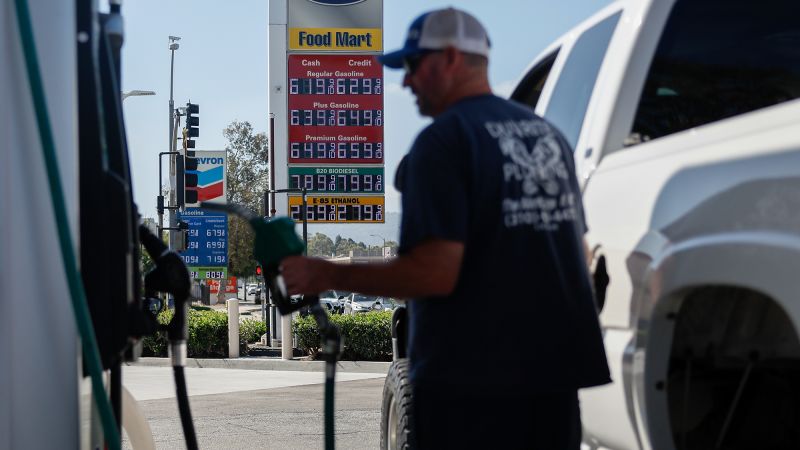
US diesel prices edged lower Thursday from the previous day, averaging $6.28 a gallon at gas stations. Regular gasoline held steady at an average of $4.36 a gallon, AAA data showed.
Those prices illustrate how crude-market volatility does not always translate immediately into changes for drivers. Retail fuel costs are influenced by refinery output, transport, inventories, local competition and taxes as well as movements in global oil benchmarks. Still, sustained increases in crude and diesel prices can eventually place added pressure on households and businesses.
For now, the combination of tanker attacks, reduced visible shipping traffic, hurricane-related production curbs and concern over European fuel supplies is keeping energy markets on edge. A durable retreat in prices is likely to depend on a clearer reduction in the risks surrounding both Gulf shipping and US refining operations.
Related Reading
Frequently Asked Questions
What is Oil prices jump amid record tanker?
Oil prices jump amid record tanker is the main topic of this guide. The article explains the context, practical details, and next steps readers should understand.
Why does Oil prices jump amid record tanker matter?
Oil prices jump amid record tanker matters because readers are looking for a useful answer, not just a short summary. Good content should match search intent and help them decide what to do next.