Inside BYU’s unique surge to the top of college football

Daftar Isi
BYU’s rise is being powered by an identity few programs can replicate
Earthguardiansonline.com – Before sunrise in Provo, Utah, Kalani Sitake delivered an image that captured the spirit of his football program: relaxed, joyful and unmistakably itself. Alongside Cosmo, Brigham Young University’s mascot, Sitake danced during ESPN’s “College GameDay,” blending movements influenced by his Tongan heritage with a carefree, modern rhythm.
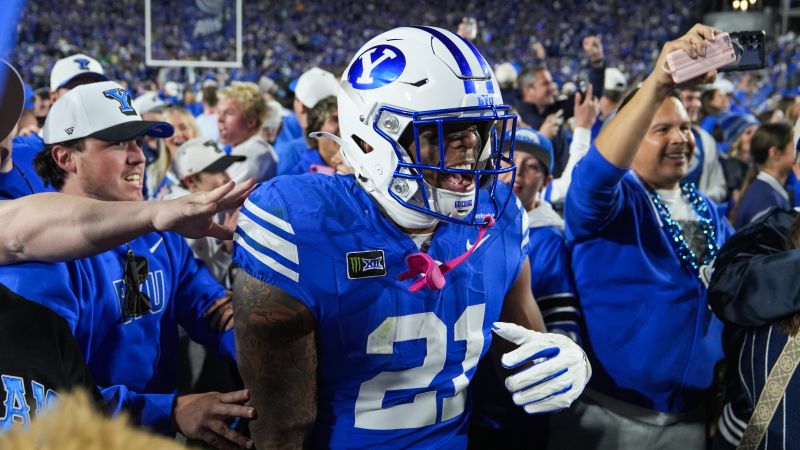
Hours later, the stakes became much more serious. BYU was preparing to host No. 2 Notre Dame, a visit of major significance for a campus that had not welcomed the Irish since 2004. The Cougars went on to beat Notre Dame and now sit at No. 2 nationally, an achievement made more striking by the unusual circumstances surrounding the program.
For Sitake, though, the pregame dancing was not a distraction from the pressure. It was an expression of a team comfortable with its own character. Nick Saban, watching from the set, admitted that his own approach to major games had been far less loose.
“My hat’s off to you,” Saban said. “You’re up here dancing before a game. I was so nervous before a big game, I couldn’t even spit.”
A program with a distinct place in the sport
BYU is hardly a newcomer to national football relevance. The program built a lasting reputation under LaVell Edwards, whose offensive innovations helped shape the passing attacks now common throughout college football. The Cougars have remained visible through conference changes, a period of independence and their eventual position in a major conference setting.
Still, the current surge arrives during a college sports era defined by rapidly changing player movement and escalating spending. BYU is owned and operated by The Church of Jesus Christ of Latter-Day Saints, an institution whose teachings include self-reliance and financial restraint. Its student-athletes must also follow an honor code that prohibits premarital sex, alcohol, tobacco, coffee and profanity.
Those boundaries can make BYU look like an outlier. In a transfer-portal environment where players may move when their roles or circumstances change, the school asks recruits to embrace a campus culture with clearly defined expectations. Yet the program’s leaders and supporters see that clarity as an advantage rather than a limitation.
BYU’s roster also complicates simplistic assumptions about the university. Nearly 98% of its undergraduate students are Mormon, while much of the school’s diversity is tied to geography. The Cougars, however, are led by a quarterback raised Catholic, whose Thai mother gave him the name Bear. After the win over Notre Dame, he made clear how much the moment meant to the team.
“We put our balls on the chopping block,” he said.
Certainty in an unsettled college football landscape
Steve Young, the former BYU quarterback and three-time Super Bowl champion who graduated in 1984, believes the school’s firm identity provides a useful framework at a time when many programs are still adapting to the realities of name, image and likeness opportunities.
“In some ways, because of the realities of being a religious institution with firm beliefs and principles in the wild west of NIL, we have a clearer vision of what we can and can’t do and who we are,” Young said. “In a sort of frictionless system, it’s about, who are you willing to be? We’re willing to be something unique. The complexity is really the beauty of it.”
That perspective is central to the school’s momentum. BYU cannot simply operate as a generic version of a football powerhouse. Its recruiting pitch, its student life and its relationship with supporters are all shaped by the university’s religious mission. The program’s challenge is not to erase those differences, but to show that championship-level football can coexist with them.
The current success suggests that an established culture can have real value. Players know what they are joining, coaches can recruit around a consistent message, and supporters understand the broader purpose they believe athletics serves. That does not remove the demands of competing against programs with vast resources, but it does give BYU a clearer definition of what it wants to be.
Ryan Smith represents a new kind of influence
Ryan Smith’s connection to BYU began long before he became a billionaire and major figure in Utah sports. His father, Scott Smith, was a marketing research professor at the university, and attending home games in Provo was simply part of family life.
“It’s just what you did,” Smith said.
Smith left BYU during his undergraduate years to work with his father on a startup intended to make sophisticated research easier to use. When Scott Smith was diagnosed with throat cancer, Ryan joined him in helping bring the project forward. In 2018, a German company acquired Qualtrics for $8 billion.
Since then, Smith has purchased the NBA’s Utah Jazz, relocated the Arizona Coyotes and helped establish Utah’s first NHL franchise, the Mammoth. He has also been involved with Salt Lake’s MLS team and helped the city secure the 2034 Winter Olympics. During the Notre Dame weekend, he added $1 million to raise the reward available to a student kicker participating on “GameDay.”
His presence illustrates the tension and opportunity surrounding modern BYU athletics. Smith is a wealthy sports investor, recognizable for his backward baseball cap and ranked No. 1,285 on Forbes’ billionaire list. He is also a church member committed to its principles, a combination that challenges the idea that financial success and Mormon values must be in conflict.
For decades, BYU has treated athletics as part of its larger mission. Football gives the university a prominent national stage, particularly important for an institution that has often faced stereotypes and misunderstandings. A major victory, a national ranking and a memorable morning dance do not change everything about that mission. But they offer a powerful reminder that the Cougars’ unusual path may be precisely what makes them difficult to ignore.
Related Reading
Frequently Asked Questions
What is Inside BYU s unique surge?
Inside BYU s unique surge is the main topic of this guide. The article explains the context, practical details, and next steps readers should understand.
Why does Inside BYU s unique surge matter?
Inside BYU s unique surge matters because readers are looking for a useful answer, not just a short summary. Good content should match search intent and help them decide what to do next.