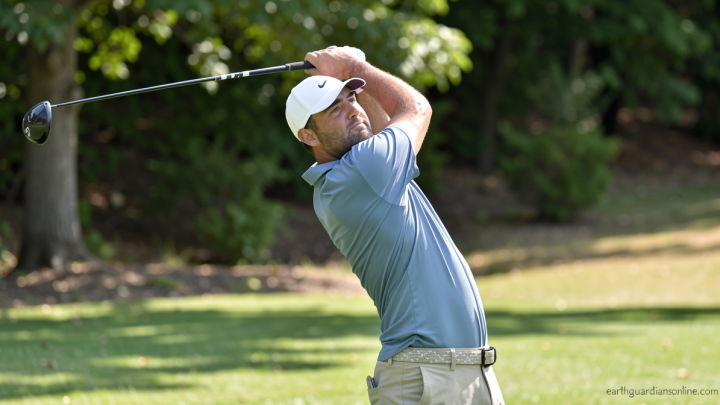
This Olympian battled porn addiction for years. He now wants to help others suffering in silence

Daftar Isi
From Olympic Pool to Personal Crisis: A British Diver’s Long Road Out of Digital Addiction
Earthguardiansonline.com – Freddie Woodward’s path to the 2016 Rio Olympics was anything but ordinary. Identified as a raw talent while still in school, the young Briton was funneled into an elite development programme designed to produce medal contenders for Team GB. His training schedule demanded four to six days per week of rigorous aquatic work from the earliest stages of his career. Yet beneath the surface of that disciplined athletic existence, a quieter struggle was taking shape — one Woodward would not fully name for years.
The Early Exposure
Like most boys of his generation, Woodward encountered adult imagery at a young age. What began as casual glances at printed magazines or material passed between schoolmates evolved, as he matured, into regular consumption of online video content. The dopamine feedback loop was immediate and easy to access. By his own later admission, nothing about that trajectory was unusual; millions of people worldwide follow a comparable arc from curiosity to habitual viewing.
Woodward kept diving through that period. He competed at school level, progressed through regional and national squads, and ultimately earned the final available berth on the British Olympic team for Rio 2016. He placed 19th in the men’s springboard event. The achievement meant everything to him personally, even though he entered the Games without medal expectations.
“I always say diving found me; I didn’t find diving. Immediately, I was in this elite pathway. It was never recreational diving. From the get-go, we’re trying to make Olympic athletes from this and so it was four, five, six days a week almost immediately.”
He also acknowledged the weight of competing within what he called a golden generation of British divers, a cohort that included Olympic champion Tom Daley. Woodward never fully believed he would crack the squad until the selection was confirmed.
“It was an insane feeling, and in a sense, I wasn’t there with medal-winning expectations, so while it felt like such a big deal for me, there was a bit of pressure off.”
The Insidious Pattern
What Woodward describes is not the stereotypical image of an athlete hiding in a bedroom for hours at a time. His relationship with adult content was subtler, woven into the margins of an otherwise active social life. He still dated, went out with friends, and maintained a sense of normalcy. The habit crept in as a near-daily occurrence without triggering any single dramatic alarm.
The first cracks appeared during his teenage exam years. Revision sessions kept being interrupted by an internal pull toward the screen. He noticed the productivity gap but filed it away without acting on it.
“I first had these little niggles about it as a slightly older teenager trying to go through exams. Any time I came to do any sort of revision, porn was just constantly like: ‘I’m here, I’m here, I’m here,’ and so that was when I first noticed it was a problem because I could actively see that I was not being as productive.”
“Something felt a bit off, but I kind of just pushed that to one side and didn’t really think much of it.”
He later recalled searching online to determine whether “porn addiction” was even a recognized phenomenon. An article he found suggested a threshold of roughly ten hours of daily viewing before a clinical concern might apply. His own average fell well below that line, which gave him permission to continue.
Escalation and the Leak
As with many behavioural addictions, the pursuit of a stronger neurological reward drove Woodward toward riskier behaviour. He began exchanging personal images of himself for videos and photographs of other people. The anticipation of an incoming message became its own stimulant, and he stopped weighing the potential fallout.
“Looking back now, it was kind of addict behavior really. Not being honest with yourself and justifying things in a strange way to sort of get what you want. But it was never enough.”
In 2017, the year following his Olympic appearance, that personal material surfaced publicly online. Woodward was still competing at elite level and had already been attempting to reduce his consumption. The leak forced a confrontation he could no longer postpone.
“That was one of the worst moments of my life. It really, really, really crushed me. Obviously, it was incredibly embarrassing, and I didn’t know how to deal with that. But it was also just this mirror to myself; what I’d been, what I’d been doing, my actions and how careless I was.”
Despite the emotional devastation, he found himself unable to stop. That inability became the definitive signal: the habit had moved beyond preference into dependency.
Recovery and a New Chapter
Recognising the problem marked the turning point. As his competitive career wound down, Woodward took a position with a cruise line, performing diving stunts aboard vessels operating around the Caribbean. The physical distance from his old environment offered the breathing room he needed to rebuild his sense of identity outside of both the pool and the screen.
His story resonates with a broader conversation about how elite sport’s relentless schedule and isolation can mask behavioural addictions until they reach a crisis point. Athletes who train six days a week, travel constantly, and live under intense public scrutiny often lack the private space in which small habits become visible. Woodward’s experience underscores that addiction does not require dramatic secrecy to cause damage; it can operate quietly inside a life that looks, from the outside, perfectly functional.
Now working to help others who suffer in silence, Woodward brings the credibility of a former Olympic athlete to a topic that still carries stigma in many sporting and medical circles. His message is straightforward: the problem does not need to be extreme to deserve attention, and acknowledging it is the first act of recovery.
Related Reading
Frequently Asked Questions
What is This Olympian battled porn addiction for years?
This Olympian battled porn addiction for years is the main topic of this guide. The article explains the context, practical details, and next steps readers should understand.
Why does This Olympian battled porn addiction for years matter?
This Olympian battled porn addiction for years matters because readers are looking for a useful answer, not just a short summary. Good content should match search intent and help them decide what to do next.