
South Carolina lawmakers reject for now Trump’s push to eliminate James Clyburn’s seat
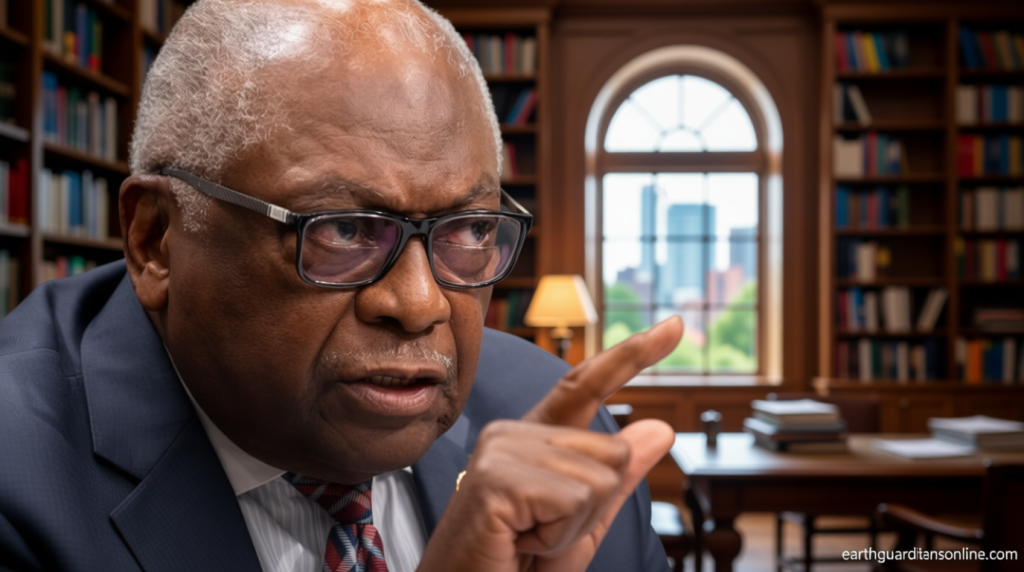
South Carolina Lawmakers Reject Trump’s Redistricting Push
Senate Vote Halts Effort to Remove Democratic Seat
South Carolina lawmakers reject for now Trump’s push to eliminate James Clyburn’s seat as the state Senate narrowly voted against a redistricting proposal. On Tuesday, the Senate failed to secure the two-thirds majority required to advance the plan, which aimed to redraw congressional boundaries to favor Republicans in the November elections. The measure, backed by a coalition of Republican legislators, sought to eliminate the last Democratic-held seat in the U.S. House of Representatives, held by Rep. James Clyburn. With the vote at 29-17, the rejection signaled a temporary pause in the effort to reshape the state’s electoral landscape.
The proposed map would have consolidated Democratic voters into a single district, increasing the likelihood of a Republican win in the 1st Congressional District. This strategy aligns with national redistricting trends, where gerrymandering is used to maximize partisan advantages. However, the Senate’s decision to table the plan highlights growing resistance within the Republican ranks, as some lawmakers questioned whether the changes would deliver the desired outcome. Clyburn, a key Democratic leader and staunch ally of President Joe Biden, remains a pivotal figure in the state’s politics, with his seat seen as a potential swing point in the broader national race.
While the House of Representatives had previously shown support for revisiting the congressional map, the Senate’s rejection left the initiative stalled. The House’s conditional approval depended on Senate backing, and without it, the redistricting effort could not proceed. Critics argue that the plan might have backfired, shifting power away from Clyburn in one district while inadvertently strengthening Democratic candidates in others. This debate underscores the complexity of redistricting and the political risks associated with altering district boundaries.
Trump’s Advocacy and the Redistricting Debate
President Donald Trump had actively championed the redistricting initiative, calling on South Carolina lawmakers to act decisively. In a Monday social media post, he urged senators to “be bold and courageous” in their decision-making, framing the move as essential to securing a stronger Republican majority in the House. His support added momentum to the effort, but the Senate’s hesitation revealed a divide between the administration’s goals and the lawmakers’ cautious approach.
Trump’s campaign for redistricting centered on the belief that adjusting boundaries could dilute Democratic influence and create a more favorable environment for Republican candidates. The proposed map was designed to consolidate Democratic voters in a single district, aiming to give Republicans an edge in the 1st Congressional District. However, the Senate’s rejection suggests that even with Trump’s backing, the Republican majority is not entirely unified in its strategy. Some senators raised concerns about the potential unintended consequences of the plan, including its impact on voter turnout and representation.
Despite the setback, the redistricting effort remains a focal point in South Carolina’s political strategy. Lawmakers continue to weigh the benefits of a more Republican-leaning map against the risks of alienating voters or creating a backlash. The debate over Clyburn’s seat has intensified as both parties recognize its significance in shaping the House’s composition. With the state’s congressional map still under discussion, the outcome of this contest will likely influence the broader national election dynamics.
State-Level Resistance and Political Consequences
South Carolina Senate Majority Leader Shane Massey voiced skepticism about the proposal, emphasizing that the decision should prioritize the state’s interests over external pressure. “I got too much Southern in my blood,” he stated in a blockquote, “I’ve got too much resistance in my heritage.” His remarks reflect a growing sentiment among some lawmakers that redistricting should be driven by local concerns rather than partisan or national ambitions. This resistance could lead to further delays or modifications in the process.
“I got too much Southern in my blood. I’ve got too much resistance in my heritage.”
While most Republican senators supported the plan, a few expressed doubts about its long-term viability. They argued that the new boundaries might not guarantee a Republican victory and could instead fragment the party’s support across multiple districts. This uncertainty has fueled debates about the effectiveness of redistricting as a tool for political control. For now, South Carolina lawmakers reject for now Trump’s push, leaving the fate of Clyburn’s seat in limbo as the legislative session continues.
The rejection of the redistricting proposal also highlights the challenges of aligning state and national strategies. While Trump’s administration seeks to reshape electoral maps to bolster Republican chances, state leaders like Massey are wary of overreaching. The outcome of this debate could set a precedent for other states facing similar redistricting challenges, demonstrating the balance between partisan goals and state-level decision-making. As the process evolves, the focus remains on whether South Carolina lawmakers will ultimately support or oppose the effort to reshape the congressional map.
