
Barney Frank, liberal icon who regulated a ‘too big’ financial industry, dies at 86
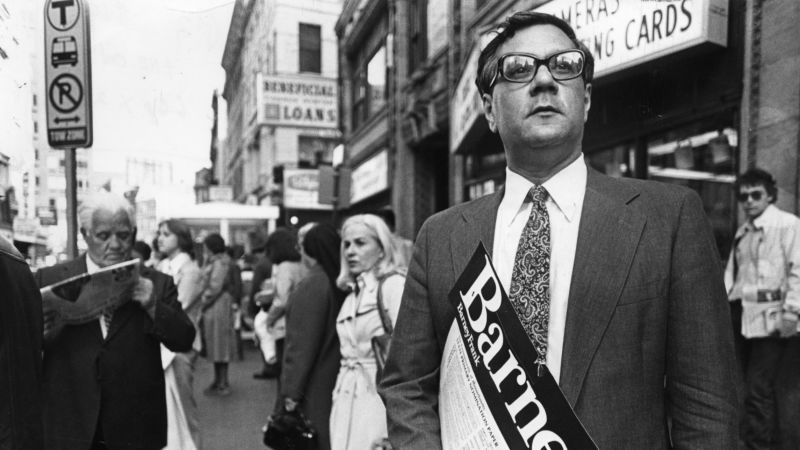
Barney Frank, Liberal Icon Who Regulated Financial Sector, Dies at 86
Barney Frank liberal icon who regulated – Barney Frank, a prominent liberal figure known for his pivotal role in reshaping the financial industry, has died at the age of 86. His sister, Doris Breay, announced the news to CNN, reflecting on his legacy with a mix of sorrow and admiration. “He was a wonderful brother and a true advocate for justice,” she said, highlighting the personal and political impact of his work. Frank’s final days were spent in hospice care, where he received treatment for congestive heart failure, as reported by recent media outlets.
A Champion of Progressive Values
Barney Frank’s congressional career was defined by his unwavering support for progressive causes. As the first openly gay member of Congress in 1987, he became a symbol of LGBTQ advocacy during the AIDS crisis. His decision to publicly disclose his sexuality was met with skepticism, yet he remained steadfast in his belief that transparency was essential for authenticity. “I am a much better openly gay man than I was a closeted one,” he once told Men’s Journal, illustrating his commitment to personal and political integrity.
Frank’s efforts extended to broader social issues, including his fight against discriminatory policies. He was a key voice in pushing to repeal the “Don’t Ask, Don’t Tell” policy, which restricted LGBTQ service members. In 2012, he made history by becoming the first sitting member of Congress to marry a same-sex partner, a landmark moment that underscored his advocacy for equality. These actions cemented his reputation as a bold leader who championed marginalized communities through legislative action.
Leadership in Financial Regulation
Barney Frank’s most notable contribution lay in his leadership of the House Financial Services Committee. Appointed ranking member in 2003 and later chair in 2007, he spearheaded reforms to address the systemic risks that had led to the 2008 financial crisis. His work emphasized the need for stricter oversight of banks and stronger consumer protections, aiming to prevent future collapses. “We are taking steps to ensure they won’t face this problem again,” he stated, reinforcing his vision for a more stable financial system.
The liberal icon who regulated financial institutions was instrumental in the creation of the Dodd-Frank Act, a cornerstone of post-crisis reforms. This legislation, signed by President Barack Obama in 2010, established the Consumer Financial Protection Bureau (CFPB) to safeguard consumers from predatory practices. It also included the Volcker Rule, which limited banks’ ability to use customer funds for high-risk investments. Frank’s advocacy for these measures was rooted in his belief that large banks had become too powerful to fail without catastrophic consequences.
Legacy and Ongoing Influence
Even after retiring from Congress in 2013, Barney Frank continued to influence policy debates. His sharp intellect and candid personality made him a frequent guest on political panels and media outlets. As a liberal icon who regulated the financial sector, he remained a vocal critic of efforts to weaken regulatory frameworks. “We need to ensure no institution is too big to collapse,” he often emphasized, underscoring his lifelong dedication to systemic accountability.
Frank’s work left a lasting mark on American governance, blending social progressivism with economic reform. While some argue that his regulations imposed excessive costs on financial institutions, others credit him for preventing future crises. His passing marks the end of an era for a leader who consistently prioritized the public good over political expediency. “He believed in the power of policy to change lives,” said one colleague, capturing the essence of his career and the enduring impact of his efforts.
