
Why did T. rex have tiny arms? A new study may finally have the answer
Why did T. rex have tiny arms? A new study may finally have the answer
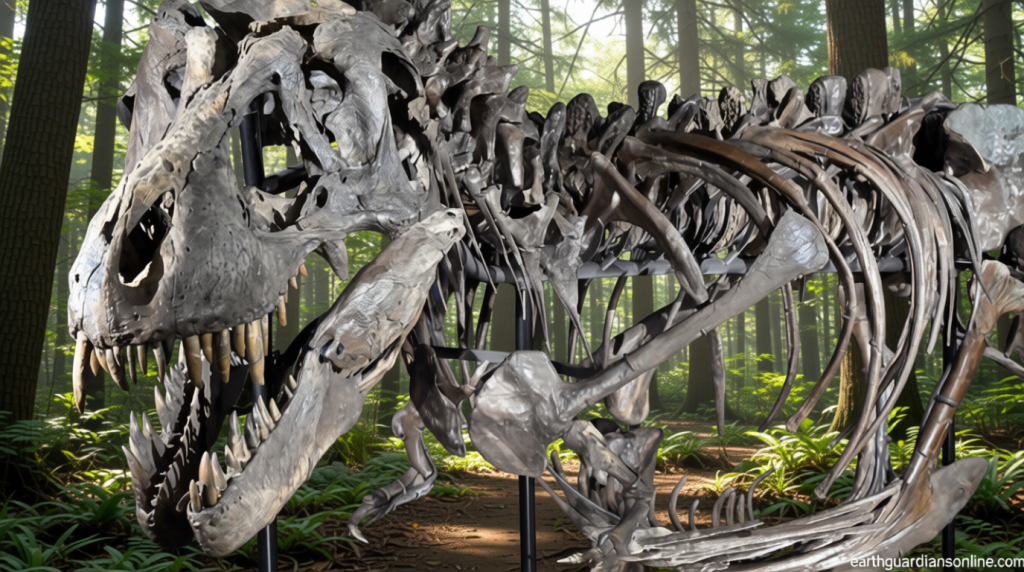
Why did T rex have tiny – Tyrannosaurus rex, the apex predator of the late Cretaceous period, has long puzzled scientists with its disproportionately small arms. These appendages, measuring roughly 3 feet in length, were less than a third the size of the dinosaur’s legs, creating a striking contrast in its massive, over-40-foot frame. For decades, the question of their function has sparked both scientific curiosity and popular humor, with theories ranging from practical hunting tools to evolutionary leftovers. A recent breakthrough, published in the journal Proceedings of the Royal Society B on May 20, 2026, offers a unifying explanation that could end the century-long debate.
The Evolutionary Trade-Off
According to the study, the tiny arms of T. rex were not a random trait but an adaptive compromise driven by the development of a dominant skull. Researchers analyzed 85 dinosaur species, uncovering a consistent pattern: as skulls grew larger and stronger, forelimbs tended to shrink. This trend, previously noted in some groups, now appears to be a widespread evolutionary strategy across multiple lineages. The lead author, Charlie Roger Scherer, a doctoral student in Earth sciences at University College London, explained the phenomenon as a result of resource allocation priorities.
“Evolution doesn’t like having everything at once,” Scherer said. “When a dinosaur focuses on developing a powerful skull, it naturally redirects energy away from maintaining large limbs. The arms become relatively smaller because they’re no longer necessary for survival, especially if the skull is the primary tool for subduing prey.”
The study’s findings challenge earlier hypotheses that suggested the arms were vestigial or used for tasks like gripping prey or courtship displays. Instead, the research highlights a broader trend in carnivorous dinosaurs, where the skull’s evolutionary advancements overshadowed the need for robust forelimbs. Scherer emphasized that this trade-off was not limited to T. rex but occurred in several unrelated groups, indicating a common selective pressure.
Methodology and Scope
To test their hypothesis, the research team combined fossil records with data from existing scientific literature, analyzing 85 species across different eras. They measured both the size of skulls and the dimensions of forelimbs, creating a comparative framework that accounted for variations in body structure and hunting behavior. A novel approach involved quantifying skull strength through factors such as bone density, structural integrity, and bite force. This allowed the scientists to establish a clear correlation between skull development and limb reduction.
The results revealed that T. rex was among the top contenders for having the most formidable skull among dinosaurs. Its counterpart, Tyrannotitan, a massive predator from Early Cretaceous Argentina, also ranked highly, demonstrating that this trend was not isolated to a single group. The study identified the same relationship in four other categories of dinosaurs: ceratosaurids, megalosaurids, abelisaurids, and carcharodontosaurids. These species, which lived across the globe from the Triassic to the Cretaceous, all shared a common evolutionary strategy of prioritizing skull strength over limb size.
Scherer noted that the process of shrinking forelimbs varied among groups. Some species reduced the size of their fingers first, while others focused on shortening the forearm itself. Despite these differences, a unifying theme emerged: all these dinosaurs hunted prey that required significant force to immobilize. The skull, acting as the primary weapon, became the focal point of evolutionary adaptation, allowing the rest of the body to streamline its resources.
A Legacy of Adaptation
The study’s scope is particularly impressive, spanning 180 million years of dinosaur evolution. From the Triassic period, when the first carnivorous dinosaurs emerged, to the Cretaceous era, which ended with the mass extinction event that wiped out most non-avian dinosaurs, the pattern of skull and limb development persisted. This suggests that the trade-off was a recurring strategy in various ecological niches, adapting to the demands of prey size and environmental pressures.
One of the study’s most significant contributions is its statistical validation of the correlation between skull size and forelimb reduction. By quantifying this relationship across multiple groups, the researchers provided a robust framework for understanding the evolutionary dynamics at play. This is especially notable given that previous studies had only hinted at the connection in individual lineages, without a comprehensive cross-group analysis.
The implications of this research extend beyond T. rex. It challenges the assumption that all carnivorous dinosaurs evolved similarly, highlighting the role of specific traits in shaping their anatomy. For example, the development of a powerful skull allowed these creatures to tackle larger prey, reducing the need for extensive forelimb development. In doing so, the arms became more of a byproduct than a functional adaptation, a detail that aligns with the concept of evolutionary trade-offs.
The Role of the Skull in Predation
Scherer’s analysis also sheds light on the mechanics of hunting. He argued that the skull’s dominance in the dinosaur’s anatomy was not coincidental but a result of the need to deliver a decisive blow. “When prey becomes larger, the head is the first point of contact,” he explained. “That’s where the force is concentrated, making it the most effective tool for subduing animals that are too big to be held down by limbs alone.”
This perspective shifts the focus from the arms to the skull, suggesting that the tiny forelimbs were a secondary adaptation. The study also highlights how the evolution of strong skulls might have influenced other aspects of dinosaur physiology, such as the positioning of the jaws and the overall body structure. For instance, the increased skull size could have affected the balance and mobility of the dinosaur, further reinforcing the arms’ diminished role.
While the study provides a compelling explanation, it does not entirely dismiss the possibility that the arms had some utility. Scherer acknowledged that their function might have been secondary, such as aiding in grasping small prey or stabilizing the body during movement. However, the primary evidence points to the skull as the driving force behind the reduction in arm size, making the arms an evolutionary afterthought in the grand scheme of survival.
Overall, this research represents a major step forward in understanding the evolutionary pressures that shaped T. rex and its relatives. By linking the development of the skull to the reduction of forelimbs, the study offers a unified theory that could reshape our perception of dinosaur anatomy. As Scherer’s work demonstrates, even the most enigmatic features of these ancient creatures can be explained through careful analysis of their evolutionary history and ecological roles.
