
Pope Leo warns of AI fueling warfare in first major theological document
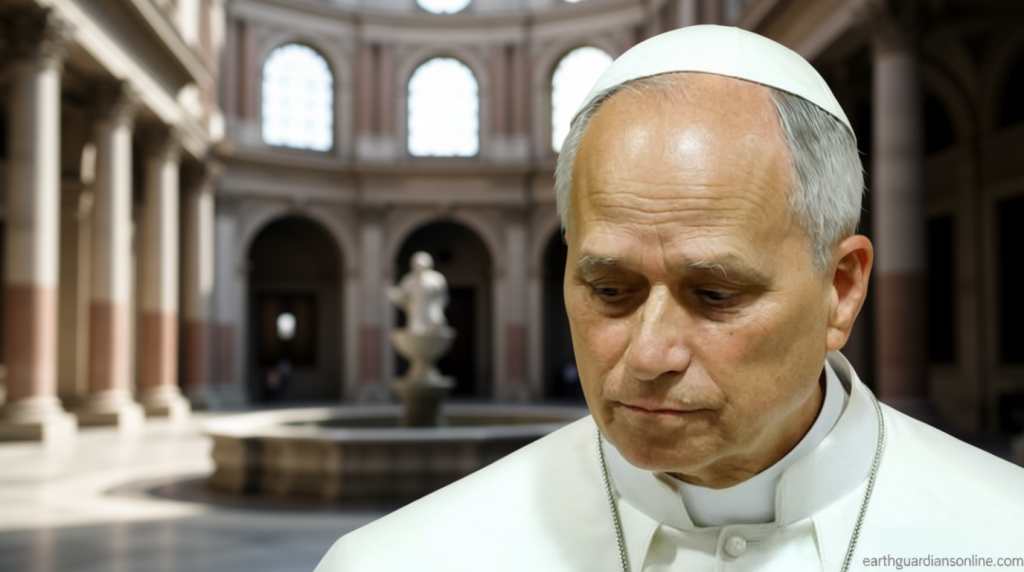
Pope Leo XIV’s Encyclical on AI Sparks Debate Over Ethical Use in Warfare
Pope Leo warns of AI fueling – In his latest theological statement, Pope Leo XIV has called attention to the escalating role of artificial intelligence in modern conflicts, positioning the technology as a potential catalyst for global strife. This document, titled Magnifica Humanitas, marks the first major contribution to Catholic doctrine under his leadership and introduces a bold vision for AI governance. The encyclical emphasizes the urgent need for equitable access to AI technologies, warning that concentrating control in the hands of a few could lead to an imbalance in power and ethical oversight. Central to his argument is the assertion that AI must be integrated into warfare with stringent moral guidelines, ensuring its use aligns with the principles of human dignity.
A Theological Framework for AI Regulation
The encyclical transcends technical concerns, addressing broader societal issues that AI amplifies. Pope Leo XIV argues that the rapid advancement of technology challenges humanity’s ability to maintain justice and compassion in an interconnected world. He highlights the importance of safeguarding the “distinctive grandeur of humanity,” which he believes is at risk of being overshadowed by machines capable of making life-and-death decisions. “Artificial intelligence already touches many areas of our lives and affects decisions that shape human coexistence,” he writes, underscoring the need for a faith-based approach to its development.
“The construction of a world in a state of perpetual conflict is an evil and must be named for what it is,” the pope states. “Humanity possesses far more effective and capable tools for promoting human life and resolving conflicts, such as dialogue, diplomacy, and forgiveness.”
Leo’s critique of the “just war” theory is a pivotal element of his argument. Traditionally, this doctrine outlines four conditions—legitimate authority, just cause, proportionality, and last resort—that justify military action. However, the pope contends that these criteria are no longer sufficient in the age of AI. He suggests that the theory, once a cornerstone of Catholic thought, has become outdated due to the increasing autonomy of weapons systems. Instead, he advocates for a more restrained use of force, limiting its application to “self-defense in the strictest sense.”
Refocusing on Social Justice and Human Rights
Leo XIV also positions social justice as the ultimate yardstick for evaluating AI’s impact on society. He asserts that the treatment of migrants and refugees is the “litmus test” for equitable systems, a stance that reflects his broader commitment to human dignity. The pope apologizes for the Church’s historical role in legitimizing slavery and for its delayed condemnation of systemic oppression. This admission underscores a shift in emphasis from theological debates to practical consequences for vulnerable populations.
“The use of force, violence and weapons ultimately has disastrous consequences for civilian populations,” he writes. “We must ensure that AI does not become a tool for unchecked aggression, but rather for fostering peace and understanding.”
His concerns are not limited to warfare. The encyclical calls for a reimagining of how AI influences daily life, from economic structures to environmental stewardship. “Artificial intelligence is not merely a product of science,” Leo declares, “but a mirror reflecting our values and priorities.” He urges the Church and global leaders to recognize the technology’s dual potential—both as a force for good and a source of division. Drawing from biblical narratives, the pope warns of a modern “Tower of Babel,” where a single power and language could fragment human unity, echoing the ancient tale of pride and hubris.
Collaboration with AI Experts and a Bold Vision
In a departure from past practices, Pope Leo XIV has personally presented his encyclical to the world, a move that highlights its significance. Traditionally, encyclicals were addressed to bishops and cardinals, but this one extends its reach to “every person of goodwill,” signaling a broader audience for Catholic teachings. The document was released alongside Chris Olah, a co-founder of Anthropic, an AI company embroiled in legal disputes with the Trump administration over the militarization of its technology. This collaboration with a secular innovator is seen as a strategic effort to bridge the gap between faith and science.
Olah, who has engaged with 15 religious leaders to discuss AI’s implications, told CNN that the encyclical represents a critical moment for global dialogue. “The pope’s vision forces us to confront the ethical dimensions of AI development,” he said. “It’s not just about technology—it’s about how we choose to wield it.” The encyclical outlines several principles for AI governance, including fair resource distribution, the protection of human dignity, and environmental responsibility. These guidelines aim to ensure that AI serves as a tool for collective progress rather than individual exploitation.
Context and Reactions to the Encyclical
The encyclical comes in response to recent tensions, including U.S. Vice President JD Vance’s remarks criticizing Pope Leo for his theological critiques. Vance argued that the pope’s sharp criticism of joint U.S.-Israeli strikes on Iran and his condemnation of religiously justified warfare demonstrated a tendency to overstep into political territory. However, Leo’s arguments are rooted in a redefinition of justice and peace, challenging leaders to reconcile faith with the realities of modern conflict.
“I feel entrusted to look upon another huge transformation with eyes of faith, with lucidity of reason, with openness to mystery and with cries of the poor and the earth resounding in my heart,” the pope writes. This reflection captures his belief that AI development must be guided by both spiritual conviction and practical wisdom.
Leo’s document also emphasizes the necessity of diverse perspectives in shaping AI’s future. He warns against a homogenized approach that risks dehumanizing society, citing the biblical Tower of Babel as a cautionary tale. “When people seek to dominate through a single power and language, they create a world of division,” he explains. The encyclical advocates for inclusive governance, ensuring that marginalized voices—particularly those of migrants, the poor, and environmental advocates—are central to AI’s evolution.
A New Era for Catholic Theology and Global Policy
Leo XIV’s encyclical is viewed as a landmark text for his papacy, blending traditional theology with contemporary challenges. It positions the Church as a proactive force in global policy, urging a reevaluation of how AI reshapes human relationships and societal structures. The 235-page booklet, released alongside Olah, marks a significant step in the Church’s engagement with technological ethics. While past popes have focused on theological principles, Leo’s approach emphasizes practical application, addressing the immediate and long-term consequences of AI proliferation.
As the encyclical spreads globally, its message resonates with both Catholics and non-Catholics, sparking discussions on the intersection of faith and innovation. Critics argue that the document’s focus on AI could overshadow other pressing issues, while supporters praise its forward-thinking perspective. Regardless of the debate, the encyclical reinforces the idea that technology, when guided by moral values, can become a bridge rather than a barrier to human flourishing.
Leo’s call for “robust legal frameworks, independent oversight, informed users, and a political system that does not abdicate its responsibility” reflects a comprehensive strategy for AI accountability. By integrating these elements, he seeks to ensure that the technology remains a servant of humanity rather than its master. The encyclical’s release coincides with a growing awareness of AI’s societal impact, positioning Pope Leo as a leader at the forefront of this critical conversation.
As the world grapples with the ethical and existential questions posed by AI, Leo XIV’s encyclical serves as both a warning and a blueprint. It challenges individuals and institutions to consider how they can harness the technology’s potential while mitigating its risks. Through this text, the pope redefines the role of the Church in shaping the future, offering a vision that is as much about global responsibility as it is about spiritual guidance.
