
How Villanova shaped the New York Knicks’ dominant run to the NBA Finals
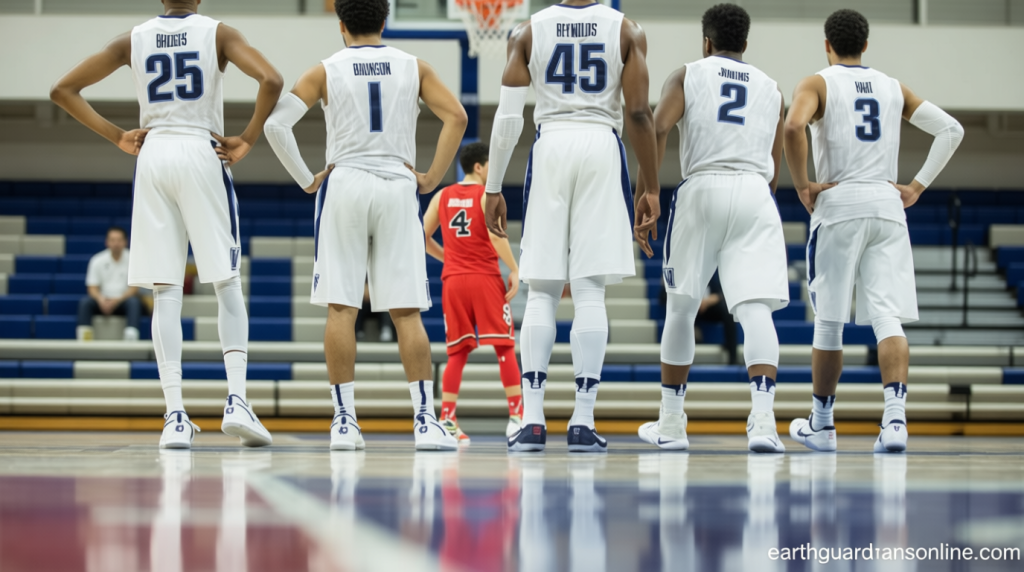
The Nova Knicks: A Legacy Forged in College and a Journey to the NBA Finals
How Villanova shaped the New York – As the final buzzer sounds, Kris Jenkins leans forward, captivated by the arc of the ball, the 2016 championship shot etching itself into memory. Mikal Bridges, still fresh off the bench, sprints toward the court, while Josh Hart piggybacks onto Phil Booth’s shoulders. In that chaotic moment, Jalen Brunson lies on the hardwood, his jersey peeking through the pile of players as they celebrate Villanova’s triumph. A decade later, those same three men could rewrite history. If Hart, Bridges, and Brunson lead the New York Knicks to an NBA title, they’ll become the first trio to claim both college and pro championships as teammates—a feat that bridges two eras of basketball excellence.
A College Connection to NBA Stardom
The Knicks’ current roster carries an unexpected link to the 2016 NCAA title team, a bond that defies conventional expectations. For years, the connection between college and professional basketball has been more of a pipeline than a partnership. Players typically leave for the NBA after their final season, rarely remaining in the same group for years. But Hart, Bridges, and Brunson, once rivals in the Big East, have defied the norm. Their journey from suburban Philadelphia to Madison Square Garden has been anything but smooth, yet it mirrors the resilience of the college teams that paved the way for their success.
Consider the trio’s college careers. Mikal Bridges, a redshirt freshman, was thrust into the spotlight during Villanova’s 2016 championship run. Despite playing just 40 games that year and starting none, his contributions were critical. A first-round draft pick in 2018, Bridges now commands a four-year, $150 million contract, a testament to his perseverance. Josh Hart, who earned Big East Tournament MVP and sixth-man honors as a junior, only began to thrive in the NBA after years of waiting. His $81 million extension, signed three years ago, reflects the patience required to reach the pinnacle. And Jalen Brunson, the lone McDonald’s All-American on his Villanova team, spent his rookie season as a second-round pick, a label that once defined his career. His foundation, the Second Round Foundation, now supports underdogs, a nod to his own journey from overlooked rookie to three-time All-Star.
Historical Precedents and a New Chapter
Before the Knicks, history books highlight two iconic college-NBA trios. In 1951, Frank Ramsey, Lou Tsioropoulos, and Cliff Hagan led Kentucky to a national title, later joining the Boston Celtics for multiple championships. Ramsey and Tsioropoulos shared two titles, while Hagan’s success came with the Hawks. Decades later, in 1960, Jerry Lucas, John Havlicek, and Larry Siegfried claimed Ohio State’s glory, with Havlicek and Siegfried later dominating the Celtics. Yet, these groups never reunited in the NBA, a fact that makes the current Knicks’ situation all the more remarkable.
Unlike those past teams, the Nova Knicks have not followed a straightforward path. Their college careers were marked by struggles and sacrifices, traits that define the spirit of the team’s name. The “Nova Knicks” moniker, a nod to Villanova’s 2016 championship, has become a symbol of their resilience. While other players sprint to the NBA, these three took a longer route, each facing hurdles that tested their commitment. Bridges, for instance, endured a redshirt season and a bench role, proving that success often requires patience. Hart’s late blooming in college—a late first-round pick who didn’t secure a starting spot until his junior year—mirrors his NBA trajectory. Brunson, once labeled a second-round talent, has carved a niche as a reliable floor general, his journey embodying the idea that potential is not always immediate.
The College Basketball Pipeline: A Shift in Focus
This week, the college basketball portal has closed, sealing the fate of countless players who once dreamed of making the leap. Over 4,000 athletes entered the fray, seeking better opportunities, more playing time, or larger paychecks. The goal is clear: find the fastest path to the NBA. In this era, college basketball has become a stepping stone rather than a destination. The game’s intensity is often measured by its ability to produce NBA-ready talent, a standard that has reshaped how teams and players view the sport.
Yet, the Nova Knicks offer a counterpoint to this trend. Their college careers were not defined by immediate success but by overcoming adversity. In 2015, Hart’s rise was gradual, his standout performance coming after years of playing behind the scenes. Bridges, meanwhile, had to wait for his shot, while Brunson’s early struggles were a reminder that even the most heralded prospects can face setbacks. Their journey underscores a shift in college basketball’s culture—one where the thrill of the game is overshadowed by the pursuit of professional glory. As the portal dwindles, the question remains: does the Knicks’ story represent a new model, or is it an anomaly in a system increasingly focused on the NBA?
A City’s Dream and a Player’s Sacrifice
New York City, a metropolis that prides itself on being the basketball capital of the world, has long been synonymous with dreams and opportunities. Yet, its basketball legacy has been shaped by decades of overlooked potential. The Knicks’ recent success, however, has rekindled that dream. With their journey, the city’s fans are reminded that greatness can emerge from the most unexpected places. The “Nova Knicks” nickname, though clever, is more than a gimmick—it’s a celebration of their shared roots and unyielding determination.
Mayor Zohran Mamdani’s recent executive order, temporarily “repealing kids’ bedtimes,” highlights the city’s deep investment in the team’s triumph. “As mayor, you’re forced to make many difficult decisions,” Mamdani remarked on X. “This was not one of them.” The order, a humorous nod to the demands of NBA fandom, reflects the city’s unwavering support. For parents and fans, the wait for a Knicks championship has been long, but the reward is bittersweet. Tyneeha Rivers, a mother on the other end of the phone, recalls the day her son, now 29, made it to the NBA. “I was sniffling more than sobbing because I didn’t really want to cry,” she said. “He’s a man now, but the little boy who couldn’t see over the ball still lives in my memories.”
The Knicks’ path to the Finals is a story of grit, a narrative that challenges the notion that college basketball is just a training ground. While others prioritize speed, these players chose endurance, proving that the journey itself can be as meaningful as the destination. Their story is a reminder that in a sport driven by analytics and immediate results, the human element—resilience, teamwork, and the will to persevere—remains invaluable. As the city celebrates their potential, the Nova Knicks stand as a beacon of what college basketball once was: a crucible for growth, not just a factory for talent.
“This was not one of them.” — Zohran Mamdani, New York City Mayor
“I was sniffling more than sobbing because I didn’t really want to cry.” — Tyneeha Rivers, mother of Josh Hart
Whether the Nova Knicks’ success is a fleeting moment or a lasting legacy depends on how the story is told. But one thing is certain: their journey, from the bench to the Finals, has redefined the relationship between college and professional basketball. In a world where the portal is closed and the focus is on the NBA, they’ve shown that the road less traveled can still lead to glory. And for a city that once had empty sandlots and now has a shot at history, it’s a reminder that the game is more than numbers—it’s about the people who play it, the stories they create, and the dreams they dare to chase.
