
SpaceX sets the stage for a record $75 billion IPO
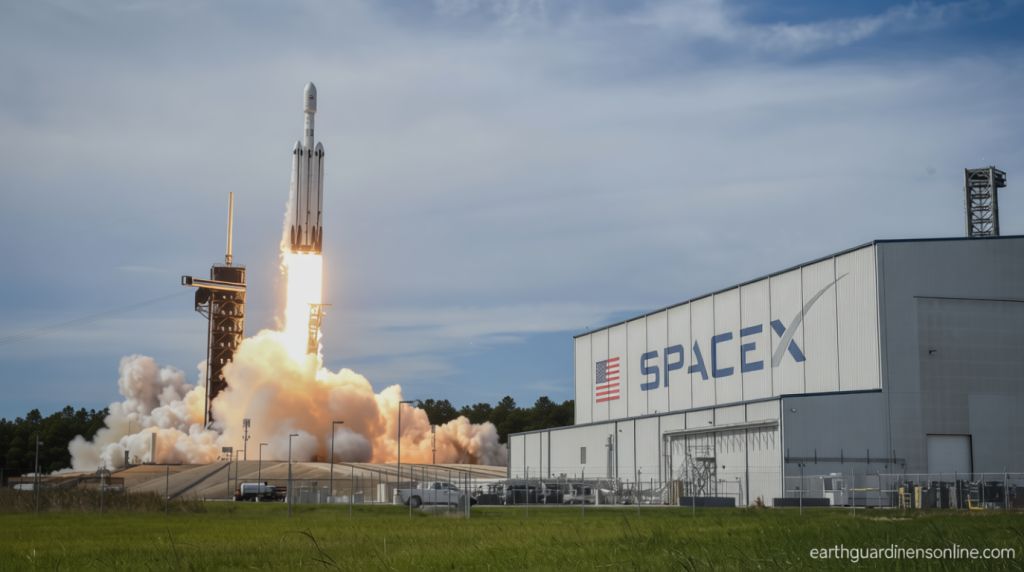
SpaceX sets the stage for a record $75 billion IPO
A Bold Move in the High-Flying Tech Sector
SpaceX sets the stage for a record – Elon Musk’s aerospace company, SpaceX, is preparing for an unprecedented initial public offering (IPO) that could reshape the business landscape. The filing with the Securities and Exchange Commission (SEC) reveals plans to raise $75 billion, valuing the firm at approximately $1.77 trillion. This monumental debut might propel Musk, already the world’s wealthiest individual, to become the first trillionaire. The IPO, set to begin trading next Friday, marks a pivotal moment for the commercialization of space travel and underscores the growing allure of technology-driven ventures.
SpaceX intends to issue 555.6 million shares at $135 each, a move that signals confidence in its future growth. Unlike traditional IPOs, which often include a price range, the company has opted for a fixed target, a strategy that reflects the current enthusiasm for AI and the aggressive expansion of tech firms. This approach highlights the intense competition in the market and Musk’s penchant for ambitious, large-scale initiatives.
Ownership Dynamics and Market Implications
Musk currently holds a 50% stake in SpaceX. Even after the IPO, he will retain nearly half of the company’s shares, though some are classified as special voting shares. The filing states that Musk’s influence will remain substantial, with 82.4% of the voting power post-IPO. This concentration of control is significant, as it ensures his vision for space exploration and AI development remains central to the company’s trajectory.
The IPO’s scale is staggering, surpassing the previous record set by Saudi Aramco in 2019, which raised $29.4 billion. SpaceX’s valuation is not just a reflection of its rocket and satellite operations but also its emerging role in artificial intelligence. Wall Street’s recent focus on AI has driven valuations for startups even before they go public, creating a climate where speculative investment is rampant. Musk’s stake alone could be worth $841 billion if shares trade at $135, a figure that would dwarf the combined net worth of the next three wealthiest individuals, including Google founders Larry Page and Sergey Brin, and software mogul Larry Ellison, according to Forbes’ real-time billionaire tracker.
AI and Space: A Dual-Purpose Strategy
SpaceX’s ambitions extend beyond rockets and satellites. The company has increasingly positioned itself as a leader in artificial intelligence, a sector that has fueled a surge in investor interest. This shift is part of a broader trend where tech firms are leveraging AI to drive innovation, even as profitability remains elusive. The IPO documents emphasize not only the expansion of human space exploration but also the integration of AI technologies and the establishment of data centers in space, which could revolutionize how data is processed and stored globally.
The merger of SpaceX with xAI, Musk’s AI venture, in February highlights the company’s strategic pivot toward this sector. xAI, which also encompasses his social media platform X, is now a cornerstone of SpaceX’s valuation. While the company’s rockets dominate the space industry, launching everything from satellites to astronauts, its AI initiatives are gaining traction. Investors are wagering that these technologies will eventually enhance productivity and generate substantial profits, despite the potential for job displacement in the short term.
Historical Context and Future Prospects
Founded in 2002, SpaceX initially focused on developing reusable rockets and securing payloads for space missions. By 2021, the company had expanded into telecommunications with the launch of Starlink, a satellite-based internet service. This diversification has allowed SpaceX to explore new revenue streams while maintaining its core mission of interplanetary exploration. The upcoming IPO is a testament to the company’s ability to scale operations and attract massive capital, a feat that could accelerate its plans for lunar and Martian outposts.
SpaceX’s IPO also highlights the intersection of space and AI. As the artificial intelligence race intensifies, companies like Anthropic and OpenAI are preparing to enter the public market, further amplifying the sector’s influence. These offerings could generate thousands of millionaires, even if profitability is not yet a reality. The potential for rapid growth and high valuations continues to captivate investors, who are betting on the transformative power of AI to redefine industries.
A Billionaire’s Vision and Market Hype
Musk’s combined stakes in Tesla and SpaceX could elevate his net worth to over $1.1 trillion, surpassing the next three richest individuals and Jeff Bezos, the fifth on the list. This financial leap is driven by the dual success of both ventures, with SpaceX’s IPO serving as a catalyst for further investment. The company’s ability to attract such massive funding underscores the current market sentiment, which favors high-risk, high-reward ventures tied to cutting-edge technology.
Despite the hype, challenges remain. The AI sector is still in its early stages, with practical applications and profitability yet to be fully realized. However, the IPO represents a bold step forward, positioning SpaceX as a pioneer in both space exploration and AI innovation. As the offering nears, it will be crucial to monitor how the market reacts to such a massive valuation and whether it can sustain the momentum in the long term.
Broader Trends and Speculative Investing
The SpaceX IPO is part of a larger pattern where tech giants are leveraging IPOs to secure funding for ambitious projects. This trend mirrors the energy sector’s boom in the early 2000s, where speculative bets on future growth led to massive valuations. For SpaceX, the IPO is not just about raising capital but also about signaling its readiness to compete on a global scale. The company’s ability to dominate the space industry while expanding into AI reflects its adaptability and forward-thinking strategy.
Investors are drawn to SpaceX’s potential to revolutionize space travel and create new markets. The IPO’s success could serve as a blueprint for other startups aiming to scale rapidly. However, the market’s reliance on AI-driven valuations also raises questions about sustainability. Will the speculative fervor translate into long-term profitability, or is it simply a reflection of the current financial climate? As SpaceX prepares to go public, these questions will dominate discussions in both the tech and financial sectors.
“The IPO is a testament to the transformative potential of AI and space exploration, even in the face of uncertainty,” said a financial analyst cited in the filing. “Musk’s vision continues to captivate markets, and his ability to execute on grand ambitions is the key to success.”
With the IPO set to unveil next week, the world watches closely to see how this historic event unfolds. Whether it solidifies Musk’s status as a trillionaire or sparks a new wave of investment in AI and space ventures, the implications are vast. The story of SpaceX’s public debut is far from over, and its impact on both the space industry and the global economy is just beginning to take shape.
