
Fact check: The many lies Trump told the New York Post
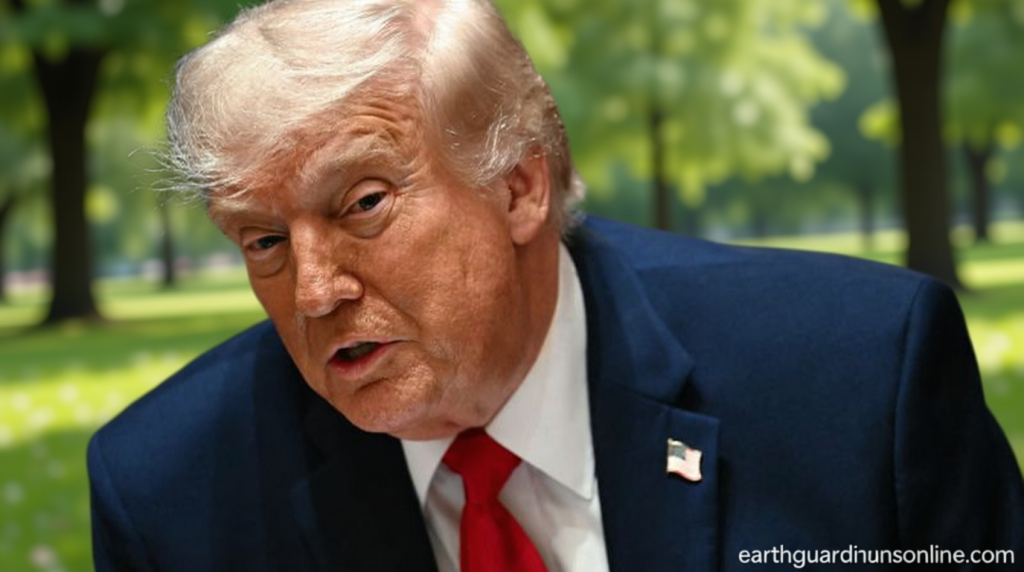
Fact Check: The Many Lies Trump Told the New York Post
Trump’s Claim About Mail-in Ballots
Fact check – During a recent interview with Miranda Devine, a conservative journalist and podcaster for the New York Post, President Donald Trump reiterated a long-standing claim that the United States is unique in its use of mail-in voting. He stated,
“We’re the only country in the world that has mail-in ballots. No other country does it anymore.”
This assertion, however, is far from accurate. Multiple nations, including Canada, the United Kingdom, Australia, Germany, and Switzerland, have established systems allowing voters to cast ballots by mail. While the specifics of these programs differ from the U.S. model, they all serve the purpose of enabling remote voting, often with varying degrees of automation and oversight.
The 2020 Election: A Rigged Narrative?
Trump’s remarks about the 2020 election continued to echo his familiar refrain of “rigged” outcomes. In the Post interview, he declared,
“It’s been proven to be rigged.”
This claim lacks substantial evidence, as the election results were validated through multiple recounts, audits, and legal proceedings. Trump lost to Joe Biden by a decisive margin, securing 306 electoral votes to Biden’s 232. Additionally, Biden received over 7 million more popular votes than Trump, a fact that underscores the legitimacy of the outcome. Despite this, Trump persists in labeling the election as fraudulent, even five-and-a-half years later, without presenting credible proof.
Trump’s criticism of Biden extended beyond the election itself. He claimed,
“He should have never been president. He lost the election in a landslide.”
This statement, while emphasizing the margin of victory, does not align with the election’s actual result. The Electoral College awarded Biden a clear majority, and his victory was not merely a landslide but a well-documented triumph across all major states. Trump’s assertion that Biden’s win was a result of “cheating” is not only unfounded but also dismissive of the electoral process itself.
California Ballots: Excess Claims?
Another recurring theme in Trump’s comments was his assertion about ballot distribution in California. He stated,
“You know, in California, they mail out 38 — I think 38 million ballots.”
This figure is misleading, as the state had approximately 22.6 million registered voters just two weeks before the previous presidential election. Even in the lead-up to recent primaries, the number of registered voters was closer to 23.2 million. The idea that 15 million excess ballots were distributed in any election is a distortion of the facts, as every active voter in California receives a mail-in ballot regardless of party affiliation.
Trump further accused the system of partisan bias, saying,
“Some people get three, four, five ballots. Republicans get, oftentimes, none.”
This claim ignores the fact that mail-in ballots are designed to be impartial, with distribution based on voter registration rather than political leaning. While occasional administrative errors may occur, they do not support the notion of a widespread anti-Republican bias in ballot handling. The state’s election infrastructure is robust, with safeguards in place to ensure accuracy and transparency.
The 2024 Election: “Rigging” Revisited
Trump’s comments about the 2024 election highlighted his continued reliance on the “rigged” narrative. He called the election “a great one” but quickly added,
“They had a lot of rigging going on there too. There were areas that were just rigged. I could see it. In other words, rigged against me.”
This statement suggests a lack of confidence in the electoral process, even though the 2024 results were confirmed through rigorous auditing and reporting. Trump’s claim that the election was rigged is not supported by any concrete evidence, yet it remains a central argument in his political messaging.
Trump’s account of the 2020 election also included a false credit to his influence. He stated,
“Without me, he wouldn’t have been elected. It was my endorsement that got him elected. He was losing by a lot, I endorsed him, and he won the election quite easily along with everyone else.”
This claim overlooks the fact that Senator Mitch McConnell, the Republican leader in Kentucky, had been reelected for decades without Trump’s endorsement. In 2020, McConnell’s victory was by nearly 20 percentage points, a result that was not contingent on Trump’s support but rather on his own strong campaign and the state’s political landscape.
Democrats and the “Cheating” Hypothesis
Trump’s interview also featured his ongoing critique of the Democratic Party, suggesting that their success was due to electoral fraud. He claimed,
“Democrats couldn’t win without cheating. If they didn’t cheat, they couldn’t win because their policies are so bad. If they didn’t cheat, you wouldn’t have them in.”
This argument is circular, implying that the only way Democrats can achieve victories is through dishonest means. However, historical data shows that Democrats have won elections legitimately, including in states where they have maintained consistent support for decades. Their policies, while debated, are not inherently flawed enough to prevent electoral success without fraud.
A Masked Candidate: The Talarico Allegation
Another absurd claim from Trump concerned James Talarico, the Democratic Senate candidate in Texas. He insisted,
“A couple of months ago, he was wearing a mask.”
This statement was later expanded to suggest Talarico had been masked “six months ago,” a timeline that stretches the original claim. CNN’s investigation found no evidence supporting Trump’s assertion, as Talarico’s mask-wearing was limited to a single event in 2022. The claim appears to be a deliberate exaggeration, used to discredit Talarico and shift focus from the election’s merits to his appearance.
Trump’s tendency to fabricate or amplify minor details is a hallmark of his rhetoric. By focusing on Talarico’s mask, he diverts attention from the broader issues of voter turnout and policy impact, reinforcing his strategy of using selective facts to shape public perception. This tactic underscores the importance of scrutinizing his statements to distinguish between truth and political theater.
Conclusion: A Pattern of Misinformation
Trump’s interview with Miranda Devine exemplifies a recurring pattern of misinformation. From claiming the U.S. is the only country using mail-in ballots to asserting the 2020 election was “proven rigged,” his remarks are often rooted in repetition rather than evidence. The lack of challenge during these interviews, whether with Fox News or the New York Post, allows his falsehoods to gain traction without scrutiny. As the political landscape evolves, such claims continue to be a key part of his strategy to question the integrity of democratic processes and undermine public trust in institutions.
In the end, Trump’s statements highlight the need for fact-checking in political discourse. While his words may resonate with certain audiences, they often lack the factual foundation required to support their claims. By revisiting old assertions and weaving them into new narratives, Trump keeps his base engaged, even as the truth remains unchallenged and accessible to those willing to seek it.
