
This 71-year-old jockey has saddled up in more than 53,000 races. He doesn’t plan to stop soon
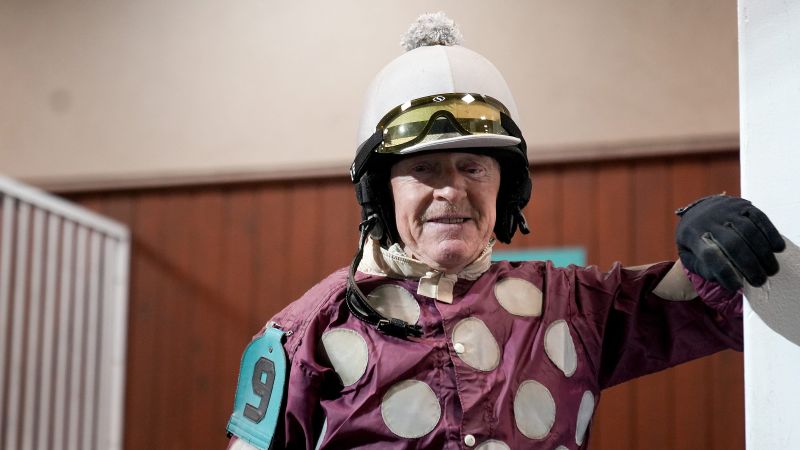
71-Year-Old Jockey’s 53,000+ Races: No Signs of Retirement
This 71 year old jockey has saddled – This 71-year-old jockey, Perry Wayne Ouzts, has ridden in over 53,000 races, a staggering number that highlights his extraordinary career in the world of horse racing. Despite his advanced age, he remains a vibrant presence in the sport, challenging conventional expectations about the limits of professional jockeying. Ouzts’ dedication to his craft has earned him a reputation as one of the most enduring figures in the industry, with his schedule still packed with six to seven races per day. His story is not just about longevity; it’s about passion, discipline, and an unyielding commitment to the saddle.
A Record That Defies the Norm
At 71, Perry Wayne Ouzts holds the record for the most career starts by a North American jockey, with 53,736 rides to his credit. This achievement is remarkable because the typical career span for a jockey is often measured in decades, not nearly as many. New Zealand veterinarians once estimated the average professional lifespan in the industry to be between 10.9 and 15.9 years, but Ouzts’ career has surpassed these expectations. His persistence and adaptability have allowed him to stay competitive, proving that longevity is possible with a strong work ethic and love for the sport.
The Path to the Saddle
Ouzts’ journey into jockeying began in childhood, when he declared his desire to become a professional rider at age 10. By 18, his dream had materialized, and he has since devoted over five decades to the sport. His resilience is evident in the challenges he has faced, from injuries to missing races for family vacations. Even during the Vietnam War era, he found a way to continue his passion, as his small stature spared him from the draft. “They said I was too light and too thin,” he recalls, “but I knew that wasn’t a limitation—it was a gift.”
Though his immediate family didn’t share his enthusiasm for racing, his cousins became his support system. Growing up in Riverdale, Arkansas, Ouzts drew inspiration from their diverse paths in the sport—some became trainers, others pursued show jumping, and one even joined the jockey ranks. These early connections shaped his trajectory, and he refined his skills in Chicago before achieving a milestone in 1973. That year, he won his first race, a moment that coincided with the historic Kentucky Derby victory of Secretariat, which captivated the nation and set the stage for his own enduring legacy.
Ouzts’ discipline extends beyond the racetrack, as he meticulously maintains his physique to meet the demands of jockeying. For over 50 years, he has kept his weight at 110 pounds, a requirement that has influenced his daily routines. His mornings begin with a light workout, followed by a breakfast of coffee and Sweet‘N Lo paired with two sweet rolls. Midday, he refers to this as supper, enjoying cheese and crackers or a ham and cheese sandwich. If an afternoon snack is needed, fruit suffices. His evenings are more flexible, though he occasionally treats himself to ice cream. “I’ve quit drinking for more than 25 years,” he says. “The only vices I’ve ever had were weight and time.”
On the track, Ouzts is known for his explosive start, a skill that earned him the nickname “Scoot ‘N Boot.” This ability to dart from the gate with precision has been a hallmark of his career, allowing him to stay competitive in an age where physical demands often outpace endurance. His meticulous approach to weight management and diet not only sustains his performance but also reflects his mindset: “You can’t just eat whatever you want,” he explains. “It’s a job, and you have to treat it like one.”
The physical toll of jockeying is undeniable, yet Ouzts’ philosophy remains rooted in contentment. “I never found anything better than being on horseback,” he says in a
quote from CNN Sports
. “It just always felt like home.” For him, the unpredictability of the sport is part of its allure. While many riders struggle to stay on their feet after years in the profession, Ouzts continues to ride with the same vigor, his face etched with the lines of someone who has spent a lifetime in motion. “I see guys I knew, they can barely walk,” he notes. “They look like shadows of who they were. I’m still out there, moving like I did the day I started.”
