
Ukraine’s deadly strikes are bringing the war home to Russians, and discontent is bubbling up
Ukraine’s Drone Strikes Shake Russian Cities, Sparking Growing Discontent
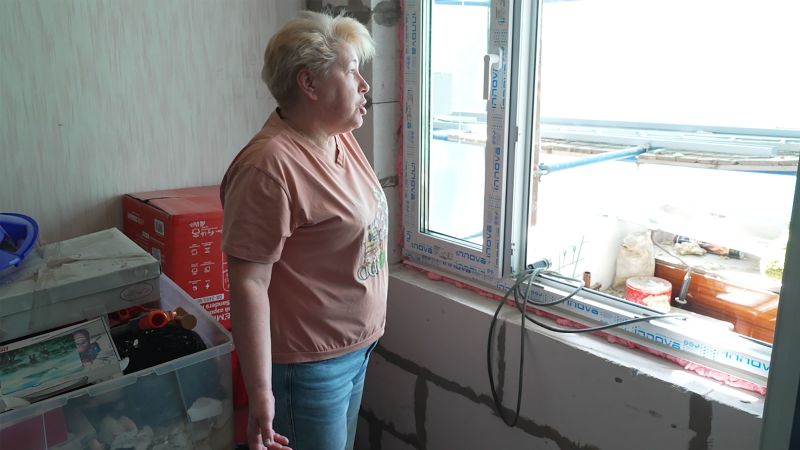
Ukraine s deadly strikes are bringing – At 4 a.m. on May 17, Elena Vladimirovna awoke to the sound of persistent buzzing overhead. She had just stepped onto her balcony in Zelenograd, a suburban district of Moscow, when the sky was illuminated by the streak of a drone. The noise subsided briefly, but within minutes, a sharp explosion shattered the calm. “Below us, under the balcony, there is a canopy like a ledge,” she recounted. “The drone fell on this canopy, and then it burst into flames, black smoke started coming,” she said, describing the chaos that unfolded in her fifth-floor apartment. As the fire spread, Elena and one of her sons rushed with buckets of water, but the sound of another blast forced them to grab the family dog and flee. Their building was among dozens affected by a coordinated series of Ukrainian drone attacks that day, marking a shift in the war’s reach beyond Ukraine’s borders.
For years, the daily toll of Russia’s conflict with Ukraine had remained largely invisible to Moscow’s urban populace. However, as Ukraine’s strikes grow more precise and long-range, the war’s shadow is increasingly falling on Russian cities. This week, the disruption became tangible for many when Ukrainian drones struck key infrastructure in the Moscow region, causing fires and panic among residents. Elena, a 56-year-old mother, shared her ordeal with CNN, emphasizing how the attack brought the war’s realities to her doorstep. “I hope no more of them come,” she said, her voice steady but tinged with concern. “We’re still alive. That’s the most important thing.” Yet, the damage to her home—a gaping hole where a windowpane once stood—reminded her of the war’s encroachment, even as it left daily life unchanged for now.
The strikes also targeted St. Petersburg, the second-largest Russian city and the hometown of President Vladimir Putin. Ukrainian drones descended upon the city hours before the start of the Kremlin’s flagship economic forum, SPIEF, casting a pall over the event. Black smoke drifted across the sky as thousands of attendees arrived, their faces reflecting unease. The attacks underscored Ukraine’s ability to strike deep into Russian territory, disrupting routines and casting doubt on the government’s narrative of a distant conflict. On Saturday, the final day of the forum, residents were told to remain indoors after a second wave of strikes rattled the city. “The walls of my home were shaking and vibrating at 3 a.m.,” said a resident of Kronstadt, a port city near St. Petersburg. “I could hear the drones flying around. It was impossible to sleep.” Despite her awareness of the military targets, the fear of a direct hit lingered.
These strikes are part of a broader strategy that has intensified since the war entered its fifth year. Ukraine’s attacks on oil refineries have exacerbated fuel shortages in Russia, forcing drivers in Crimea to ration gasoline. The economic strain has deepened as well, with new restrictions on internet access and blocks on popular messaging apps like Telegram and WhatsApp. These measures, combined with state surveillance, have fueled a sense of growing unease among Russians. Polling data reveals a widening disconnect between the war’s impact and public sentiment, with many citizens in major cities now questioning the cost of supporting the conflict.
According to Russian officials, at least three people were killed in the Moscow region on May 17 as part of a larger campaign involving over 500 drones. While Elena’s building suffered structural damage, no serious casualties were reported. Ukrainian President Volodymyr Zelensky defended the strikes, calling them “entirely justified.” “This time, Ukraine’s long-range strikes have reached the Moscow region, and we are sending a clear message to the Russians: their government must end this war,” he said. The message is clear—by targeting Russian cities, Ukraine aims to pressure the regime and erode public support for the war effort.
For Russians living in the capital, the war has become an ever-present reality, though it has not yet fully disrupted their lives. Elena’s experience reflects this duality: the violence feels distant but unavoidable. “The years of war and sanctions have shaped the background of daily life for me,” she noted. “It’s like a constant hum, something I can’t escape, yet I still manage to go about my day.” This subtle shift in perception is evident in many others, as the war’s impact grows more tangible. For Ukrainians, the conflict is a direct assault; for Russians, it is an invasion of their comfort, their homes, and their sense of security.
Experts like Alexandra Arkhipova, a social anthropologist at the Paris-based École Normale Supérieure, suggest a new dynamic is emerging. “An informal social contract has formed between the Kremlin and Moscow’s residents,” she explained. “The authorities seem to be telling people, ‘There is no war for you, dear Muscovites.’” This agreement, however, is fraying as the war’s consequences seep into everyday life. The strikes on civilian areas, coupled with economic hardships and surveillance, are challenging the notion that Russians are insulated from the conflict’s effects. “The war is no longer a distant event,” Arkhipova said. “It’s creeping closer, and people are starting to feel its weight.”
As the strikes continue, the question remains: how long can this balance hold? For Elena, the answer is uncertain. She watches the bare, unfinished walls of her apartment, a stark reminder of the war’s proximity. “I hope the conflict ends soon,” she said, her voice quiet but resolute. “Even if it means more nights of fear, I want this to be over.” Her hope mirrors that of many Russians who are beginning to see the war not as a far-off struggle, but as a battle that touches their lives directly. The drones that once hovered over Ukraine are now a constant threat in Russia, and the message is clear—this war is no longer confined to borders, but is shaping the lives of those at home in ways that are hard to ignore.
