
Charlotte train stabbing federal case delayed over suspect’s mental competency
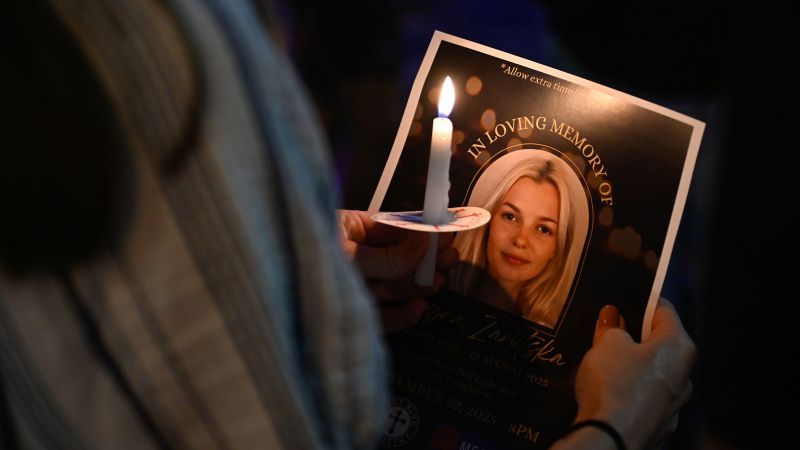
Charlotte Train Stabbing Case Postponed as Defendant’s Competency Assessed
Charlotte train stabbing federal case delayed – The federal trial of Decarlos Brown Jr., charged with the fatal stabbing of Ukrainian refugee Iryna Zarutska on Charlotte’s light rail system last year, has been delayed after a court determined he lacks the mental capacity to stand trial. This decision came following a competency evaluation, which concluded that Brown is currently unable to fully comprehend his legal proceedings. On Tuesday, he was transferred to the attorney general’s custody to be taken to a federal medical facility for treatment, with a four-month timeline set to assess whether he can regain the ability to participate in his trial.
Mental Health and Legal Proceedings
US District Judge Kenneth Bell’s court order outlined that Brown’s condition requires further evaluation. The judge noted that while the prognosis for restoring his competency through medication is positive, a new hearing may be necessary if involuntary treatment is required. During the brief Tuesday hearing, Brown displayed erratic behavior, interrupting the proceedings with shouts and demands for a copy of his statement. He claimed to have written a letter to former President Donald Trump, alleging that an external force was controlling his body and urging an investigation into his “body emergency.”
“Someone has full access to my body and they are controlling me wrongfully,” Brown insisted in a statement filed with the court. “Law enforcement refuses to investigate it. And it requires for an investigation. When describing the technology someone was using, I was misdiagnosed with schizophrenia.”
Brown’s attorneys emphasized that the four-month treatment period will provide mental health experts with sufficient time to evaluate his progress. “This window allows professionals to determine if Mr. Brown is likely to achieve competency and continue with the federal criminal case,” they stated in a court filing. The family’s involvement in the case has been significant, with Brown’s mother present during the hearing. His sister, Tracey Brown, told CNN in September that he had previously been diagnosed with schizophrenia, a condition that seemed to affect his behavior after five years in prison for robbery.
Victim’s Background and the Incident
Iryna Zarutska, a 32-year-old Ukrainian refugee, was killed in an unprovoked attack on August 22, 2025. She had fled Ukraine in 2022 due to the ongoing conflict, eventually settling in Charlotte. At the time of her death, Zarutska was employed at a pizzeria and pursuing studies in veterinary assistant training. Her background as a college graduate with a degree in art and restoration added depth to the case, highlighting the contrast between her peaceful life and the violent act that ended it.
The incident has sparked broader discussions about crime and immigration policy in Charlotte. In November, the Department of Homeland Security initiated a targeted immigration crackdown, which caused confusion and frustration among local immigrant communities. Critics argue that the city’s leadership, under Democratic control, has failed to address rising crime rates, with former President Trump and other administration officials citing the stabbing as evidence of this trend. The case has become a symbol of the debate over how cities handle criminal activity, particularly in areas with significant immigrant populations.
Legal and Political Implications
Brown’s case is also tied to the recent passage of “Iryna’s Law” by the North Carolina legislature. The law aims to streamline the prosecution of violent crimes, including those involving refugees. State prosecutors have delayed their case against Brown for at least six months, pending the resolution of the federal proceedings. “Our number one goal here is justice for Iryna Zarutska and her family,” said Russ Ferguson, the US attorney for the Western District of North Carolina. “That’s what’s on the top of our minds and our hearts every day, and this is a step in that process.”
The federal prosecutors remain hopeful that Brown will eventually be ready to face trial. While he is not being released from custody, the ordered treatment is expected to provide clarity on his mental state. Brown’s defense team has highlighted the importance of the four-month window, arguing it will allow for a thorough assessment of his condition. If the treatment proves effective, the federal case may resume; otherwise, further intervention could be necessary.
During the hearing, Brown’s outbursts underscored his emotional state and the urgency he placed on the case. He wore a black and gray jumpsuit with orange shackles on his wrists and ankles, a visual reminder of his current status as a defendant. His insistence on submitting a statement to the court reflects his determination to explain his actions and the circumstances surrounding his alleged body emergency. The statement also called for a court order directing law enforcement to investigate his condition, a demand that has drawn attention to the intersection of mental health and criminal justice in his case.
The delay in the federal trial has raised questions about the balance between ensuring a fair legal process and pursuing justice for the victim. While the state case remains paused, the family of Zarutska continues to advocate for swift action. The incident serves as a focal point for debates on immigration, urban governance, and the role of mental health in criminal liability. As the legal system works to assess Brown’s competency, the community watches closely, hoping for a resolution that honors Zarutska’s memory and addresses the broader issues at play.
